When a repair shop uses generic tools instead of OEM ADAS calibration procedures, your vehicle’s safety systems may appear functional but operate outside factory tolerances. Sensors react incorrectly, documentation fails insurers, and liability exposure is real if a system fails on the road. At Minnesota ADAS Solutions, we follow strict OEM procedures on every vehicle so you never have to wonder if the job was done right.
What Does a Generic Calibration Actually Miss?
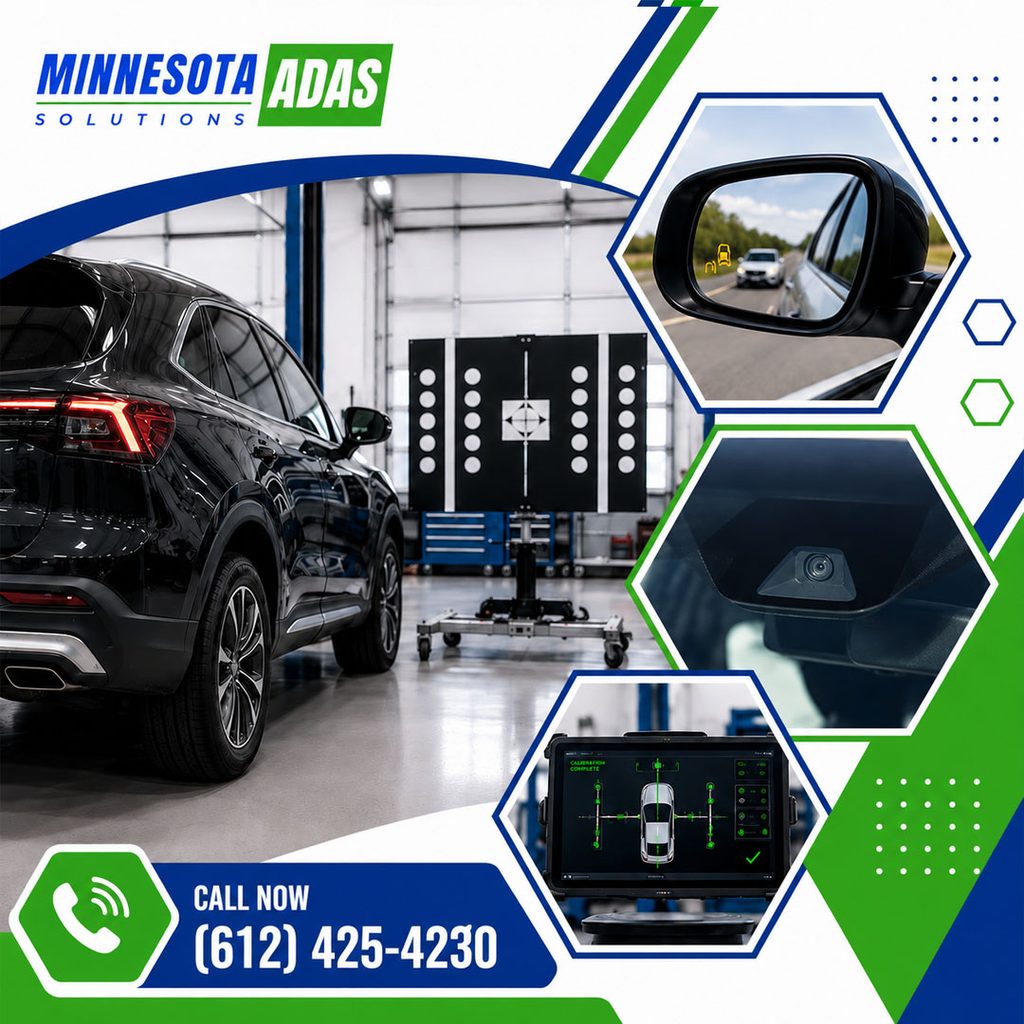
Generic tools complete a calibration cycle and close without error codes, which looks like success. But no errors only means the tool detected no fault, not that the sensor is aligned to manufacturer specifications.
OEM software sends verification triggers directly to the vehicle’s control module and confirms the response. Generic tools often lack access to those triggers, especially on newer model years. The gap between “no error” and “correctly calibrated” is where safety failures happen.
How Does a Misaligned ADAS System Behave on the Road?
A vehicle with improperly calibrated ADAS will show no dashboard warnings. Issues only surface in real driving conditions:
| System | How Misalignment Appears While Driving |
| Automatic Emergency Braking | Brakes too late, unnecessarily, or does not respond |
| Lane-Keeping Assist | Corrects toward the wrong side or fails to correct |
| Blind-Spot Monitoring | Misses vehicles in adjacent lanes at highway speeds |
| Adaptive Cruise Control | Holds incorrect following distance in slow traffic |
| Forward Collision Warning | Alert triggers are too late to allow a safe stop |
These failures won’t appear on a post-repair scan, which is exactly why post-collision ADAS calibration must meet manufacturer standards, not general aftermarket procedures.
Why Can’t Shops Use What They Already Have?
General-purpose equipment works for most repairs. ADAS calibration requires more for four reasons:
- Environment matters: Static calibration requires a level surface, controlled lighting, and precise target placement. A standard shop floor does not meet these conditions reliably.
- Software must match the model year: OEM procedures update when manufacturers revise sensor behavior. Generic databases lag.
- Verification requires OEM tools: Confirming calibration was accepted by the control module requires manufacturer-level software, not just scan completion.
- Replaced components need more than calibration: When a sensor or camera is replaced, ADAS programming and coding must integrate that part into the vehicle’s network first. Generic tools frequently skip this.
This is why we built our ADAS diagnostics in Bloomington, MN, inside a dedicated, controlled facility. The environment is part of the procedure.
What Should You Ask After a Collision Repair?
Ask your shop three direct questions before accepting your vehicle:
- Was calibration performed using OEM procedures or an aftermarket tool?
- Was it completed in a controlled environment meeting manufacturer specifications?
- Can you provide ADAS system verification and documentation showing that the control module accepted the calibration?
MN ADAS Solutions, Bloomington, provides written documentation for every calibration. Without it, insurers can reduce or deny reimbursement, and liability for any system failure falls on the shop. Repairer Driven News confirms OEM-standard adherence is what protects a shop’s legal standing when a claim is disputed.
Frequently Asked Questions
- My shop says the vehicle “passed all checks.” Does that mean calibration was done correctly?
Not necessarily. A vehicle can pass a diagnostic scan while ADAS systems sit outside manufacturer tolerances. Scan results confirm no active fault codes — not calibration accuracy. Ask for OEM-standard documentation.
- What repairs require ADAS calibration even after a minor collision?
OEM requirements are based on what was replaced, not impact severity. Windshield replacements, bumper work, mirror replacements, and suspension adjustments on ADAS-equipped vehicles often trigger mandatory calibration regardless of how minor the incident was.
- Does using generic calibration affect my vehicle’s warranty?
Yes. Non-OEM procedures can void manufacturer warranty coverage on ADAS components. OEM-standard calibration preserves that coverage.
Your Safety Systems Should Work Exactly as Designed
A collision repair is only complete when every safety system operates at factory performance. Generic tools can close a job without ever confirming that. Minnesota ADAS Solutions serves vehicle owners and collision shops across the Twin Cities from our certified facility at 9555 James Ave S, Bloomington, MN 55431. Call us at (612) 425-4230 or email info@mnadas.com to schedule a consultation.