Modern vehicles rely on connected driver assistance systems that depend on both hardware alignment and software configuration. After repairs, you cannot rely on calibration alone to restore full system function. This is where ADAS programming and coding become necessary to match electronic modules with factory settings.
At MN ADAS Solutions, Bloomington, you work with technicians who handle ADAS diagnostics in Bloomington, MN, to identify system faults before any adjustment begins. Once repairs involve sensors, cameras, or control units, post-collision ADAS calibration is often paired with programming work to restore system communication and accuracy.
You also depend on OEM ADAS calibration procedures to guide every step of alignment and configuration based on manufacturer requirements. After service completion, ADAS system verification and documentation records confirm that all systems respond within expected parameters. This topic explains why calibration alone does not complete the repair cycle and how programming supports full system readiness after vehicle repair work.
ADAS Programming and Coding vs Calibration
Two different service actions support ADAS performance after repairs. One focuses on electronic communication between modules, while the other focuses on physical alignment of sensors. Both are connected but serve separate technical purposes.
What ADAS Programming and Coding Mean
ADAS programming and coding is the process of configuring vehicle control modules so that safety systems communicate correctly after repairs or part replacements. Vehicles rely on multiple electronic control units that exchange data through internal software networks. After repairs, these modules often require updated coding so they can recognize new parts and operate with factory-specified parameters.
The service area of ADAS diagnostics supports identifying module communication issues before programming work begins. ADAS (Advanced Driver Assistance Systems) includes:
- Lane departure warning systems
- Forward collision alert systems
- Adaptive cruise control systems
- Blind spot monitoring systems
These systems depend on correct module configuration across the entire network.
How ADAS Calibration Differs from Programming
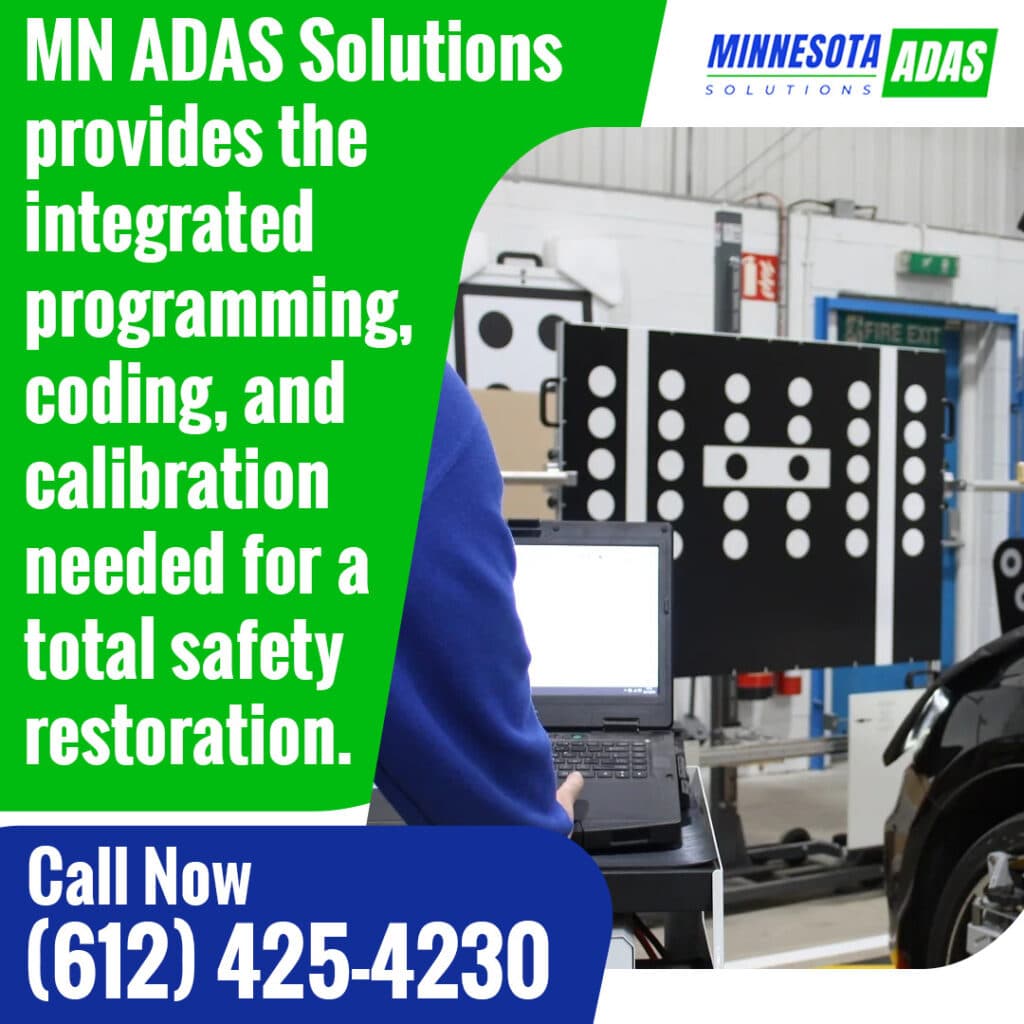
ADAS calibration is the process of aligning cameras, radar, and sensors to manufacturer-defined positions, while programming configuration software inside vehicle modules. Calibration focuses on physical alignment. Programming focuses on electronic configuration inside control units.
Calibration involves:
- Camera positioning to road reference points
- Radar angle adjustment
- Sensor height alignment
Programming involves:
- Software coding after part replacement
- Communication setup between modules
- System parameter updates
Both processes function at different technical levels within the vehicle system.
Why Both Processes are Required After Repairs
Both processes are required because electronic communication and sensor alignment must work together for ADAS systems to function correctly. If programming is not completed, modules may not recognize installed components. If calibration is incomplete, sensor readings may not match road conditions.
When ADAS Programming and Coding Are Required
Repair work on modern vehicles often changes how electronic systems communicate with each other. You see this clearly after part replacement or collision work, where software alignment does not match the new hardware setup. This section explains the points where programming becomes part of the repair process.
After Sensor and Camera Replacement
ADAS programming and coding are required after sensor or camera replacement because the system must register new hardware components. New parts require software configuration so they can communicate with existing modules.
After Windshield Replacement With ADAS Camera Systems
Programming is required after windshield replacement when a front-facing camera is mounted to the glass. Even minor shifts in placement can affect system input data and require reconfiguration.
After ECU or Module Replacement
Programming is required after ECU replacement because each module must match the vehicle’s communication network. Without coding, module communication errors may occur.
After Collision Repair Work
Post-collision repairs often require both programming and calibration due to electronic and structural impact on ADAS systems. In many cases, post-collision ADAS calibration is performed alongside module programming to restore correct system function.
What Happens When Programming Is Not Performed
Skipping programming after repairs affects how vehicle modules communicate and how ADAS features respond on the road. You deal with a system where hardware changes exist, but software alignment is incomplete, which leads to functional gaps across safety systems.
Communication Failure Between Vehicle Modules
Vehicle modules may fail to exchange correct data when programming is skipped. This affects system coordination between safety features.
Incorrect ADAS Feature Response
ADAS features may respond incorrectly when software settings do not match installed components. This may affect braking assistance, lane tracking, and distance detection.
Warning Lights and System Faults
Warning indicators may remain active when programming is not completed after repairs. Stored fault codes may remain in the system memory.
Reduced Driver Assistance Performance
Driver assistance systems may operate with limited accuracy when module communication is incomplete. This affects timing and response behavior across ADAS functions.
How ADAS Programming and Coding Works in a Professional Facility
ADAS programming and coding follow a structured workflow that links diagnostics, software configuration, and system validation. You rely on this process after repairs that involve sensors, cameras, or electronic control units.
Vehicle System Scanning and Fault Detection
A full system scan identifies communication faults and module replacement requirements. This step creates a baseline for repair planning.
OEM Software Matching and Coding Process
OEM (Original Equipment Manufacturer) software is used to match factory coding for each vehicle system. Each vehicle model requires specific configuration data.
Module Configuration and Updates
Control modules are updated so communication pathways between systems are restored. This step aligns electronic control units across the vehicle network.
Post-programming System Validation
System validation confirms correct communication between all modules after programming. This stage is closely linked to ADAS system verification and documentation used for repair records and insurance reporting.
Minnesota ADAS Solutions performs this workflow in Bloomington, MN, using OEM-based procedures and structured diagnostics before and after programming work.
OEM ADAS Calibration Procedures After Programming
After ADAS programming work, the next step involves calibration methods defined by vehicle manufacturers. These procedures guide how sensors and cameras return to correct positioning. You rely on these steps to bring system accuracy back to the required specifications.
OEM Requirements for Vehicle-specific Systems
OEM ADAS calibration procedures define calibration steps based on vehicle make, model, and system type. Each vehicle uses a different ADAS layout, so calibration steps vary across manufacturers. Service instructions come directly from the vehicle builder and outline exact targets, distances, and alignment references. These instructions guide technicians through system-specific requirements that follow the vehicle design.
Static Calibration Process
Static calibration is performed in a controlled environment using alignment targets and measurement tools. You see this process carried out with the vehicle parked in a fixed position. Targets are placed at precise distances to align cameras and radar sensors. The system reads these references and adjusts internal values based on factory specifications.
Dynamic Calibration Process
Dynamic calibration is performed through controlled driving conditions to validate sensor performance. This method requires driving the vehicle under set conditions so systems can gather real-time road data. Speed, lane markings, and distance readings help the system adjust sensor behavior during movement.
Final Sensor Alignment Checks
Final checks confirm that sensors and cameras match manufacturer alignment specifications. At this stage, you review system outputs through diagnostic tools. Any mismatch between sensor readings and reference values gets corrected before service completion. This step confirms that the vehicle is ready for regular road operation.
ADAS System Verification and Documentation
After programming and calibration work, you move into a stage where system behavior needs to match factory expectations through structured testing. This step connects technical work with real vehicle performance checks. It also links repair actions with documented proof for service records and external requirements.
Final System Testing After Programming and Calibration
System testing confirms ADAS functions operate correctly after service completion. You rely on controlled checks that review how each driver assistance feature responds after programming and calibration work. This includes real-time observation of braking assistance, lane tracking response, and distance monitoring functions.
You check system reactions under different conditions to confirm that module communication and sensor input work together without interruptions. Each function is tested individually, so no area is overlooked during post-service evaluation.
Calibration and Coding Reports
Service reports document programming steps, calibration results, and verification outcomes. You receive structured reports that list every programming change, calibration adjustment, and test result from the service process. These records support traceability across repair stages and provide a clear service history for the vehicle.
The process of ADAS system verification and documentation helps maintain consistency between the technical work performed and the recorded results used by repair facilities and insurers.
Insurance and Repair Documentation Support
Documentation supports insurance claims and repair validation requirements. You use these records to confirm completed work after collision or component replacement. Insurance providers review this documentation to validate that OEM ADAS calibration procedures were followed during service. It also helps align repair records with technical standards required after system programming and calibration work.
ADAS Programming and Coding in Bloomington, MN
Vehicles on local roads in Bloomington rely on driver assistance systems that respond to traffic flow, lane patterns, and weather changes. You work with these systems every day, so you expect them to respond correctly after any repair work. This section explains how local conditions and service facility standards affect system performance after configuration changes.
Local Driving Conditions Affecting ADAS Systems
Bloomington, MN, road conditions include highway traffic, suburban roads, and seasonal weather variation. You deal with frequent lane shifts on highways, stop-and-go movement in busy areas, and reduced visibility during winter months. These factors place constant demand on ADAS features such as lane tracking and forward sensing. After repairs, even small changes in calibration or software settings can affect how these systems interpret road input.
These conditions increase reliance on ADAS systems for daily driving support. You depend on a consistent sensor response during weather changes and traffic congestion. Any mismatch between software settings and sensor positioning can reduce system accuracy during real driving conditions.
Local facilities providing ADAS diagnostics in Bloomington, MN, help identify system issues affected by these driving conditions. You gain clearer insight into sensor errors, module communication faults, and calibration shifts before programming work begins.
Importance of Certified Calibration Facilities
Certified facilities provide controlled environments required for accurate programming and calibration work. You work in environments where lighting, distance targets, and alignment tools follow defined standards. This reduces variation during ADAS programming and coding procedures and supports consistent system behavior after service.
Controlled conditions reduce measurement variation during service procedures. You see more stable calibration results because sensor alignment is checked without outside interference, such as uneven surfaces or inconsistent lighting.
Minnesota ADAS Solutions applies structured diagnostic and calibration methods in Bloomington, MN, using controlled facility conditions to support accurate ADAS programming and coding and reliable system performance after repairs.
Minnesota ADAS Solutions Approach to Programming and Calibration
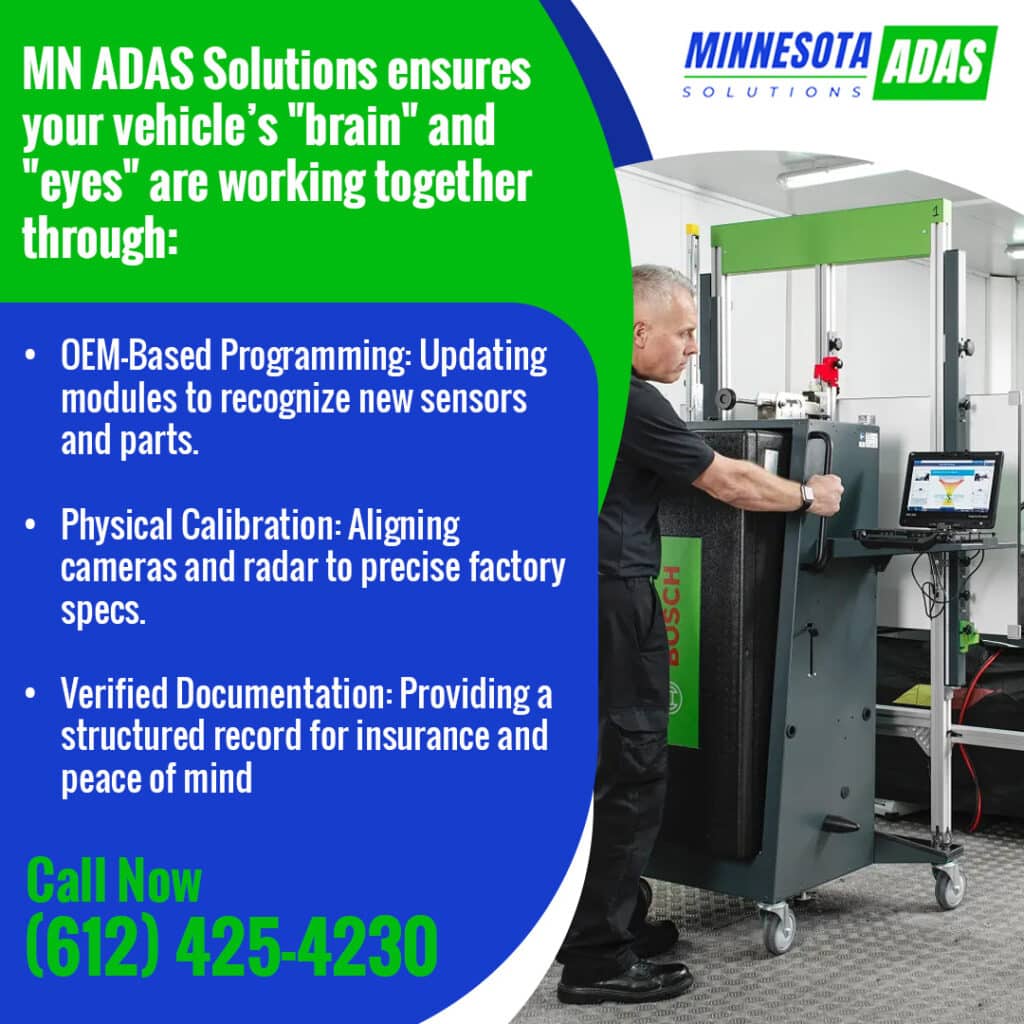
We work at Minnesota ADAS Solutions in Bloomington, MN, and follow structured procedures for vehicle systems that rely on programming and calibration. Our approach keeps each step aligned with manufacturer specifications across different repair scenarios. You see this method applied across programming, calibration, and post-repair system checks.
OE-standard Controlled Environment
All services are performed in a controlled environment aligned with OEM requirements. This supports consistent calibration and programming conditions.
We maintain controlled conditions that reduce variation during calibration and programming tasks, keeping testing parameters stable for each vehicle.
OEM Procedure-based Service Model
All programming and calibration follow OEM instructions for each vehicle system. This approach aligns service results with manufacturer specifications, including OEM ADAS calibration procedures for each vehicle type.
Each vehicle receives service steps based on the manufacturer’s service manuals. We follow documented workflows that match system requirements for programming and calibration across different models.
Fast Turnaround Workflow (90-minute Target)
Most ADAS programming and calibration services are completed within about 90 minutes, depending on system requirements. Service duration varies based on vehicle complexity.
We organize workflow steps to reduce idle time between scanning, programming, and calibration. Time varies depending on system layout and repair scope.
Full Documentation and Transparency
Every service includes documented programming steps, calibration results, and verification records. This documentation supports ADAS system verification and documentation requirements for insurance and repair validation.
We record each stage of service to maintain a traceable repair history. You receive structured reports that outline programming actions and calibration outcomes for each vehicle.
Schedule ADAS Programming and Calibration Support in Bloomington, MN
Reach out to Minnesota ADAS Solutions if your vehicle needs ADAS diagnostics in Bloomington, MN, programming, or calibration after repairs. You can contact us at (612) 425-4230 or email info@mnadas.com for service details or appointment scheduling.
You can bring your vehicle in for ADAS programming and coding after sensor replacement, collision repair, or module updates. Our team follows OEM ADAS calibration procedures and provides ADAS system verification and documentation after each service for clear repair records.