Staff training on OEM ADAS calibration procedures matters because it determines whether safety systems function as designed after a repair. Technicians must follow manufacturer-specific steps for cameras, radar, and sensors, or those systems may not respond correctly in real conditions. Without proper training, a calibration can look complete on paper while the safety feature itself remains unreliable on the road. At MN ADAS Solutions in Bloomington, we train continuously so every calibration meets OEM standards, because we take that responsibility seriously for every driver.
What Does OEM ADAS Calibration Training Cover?
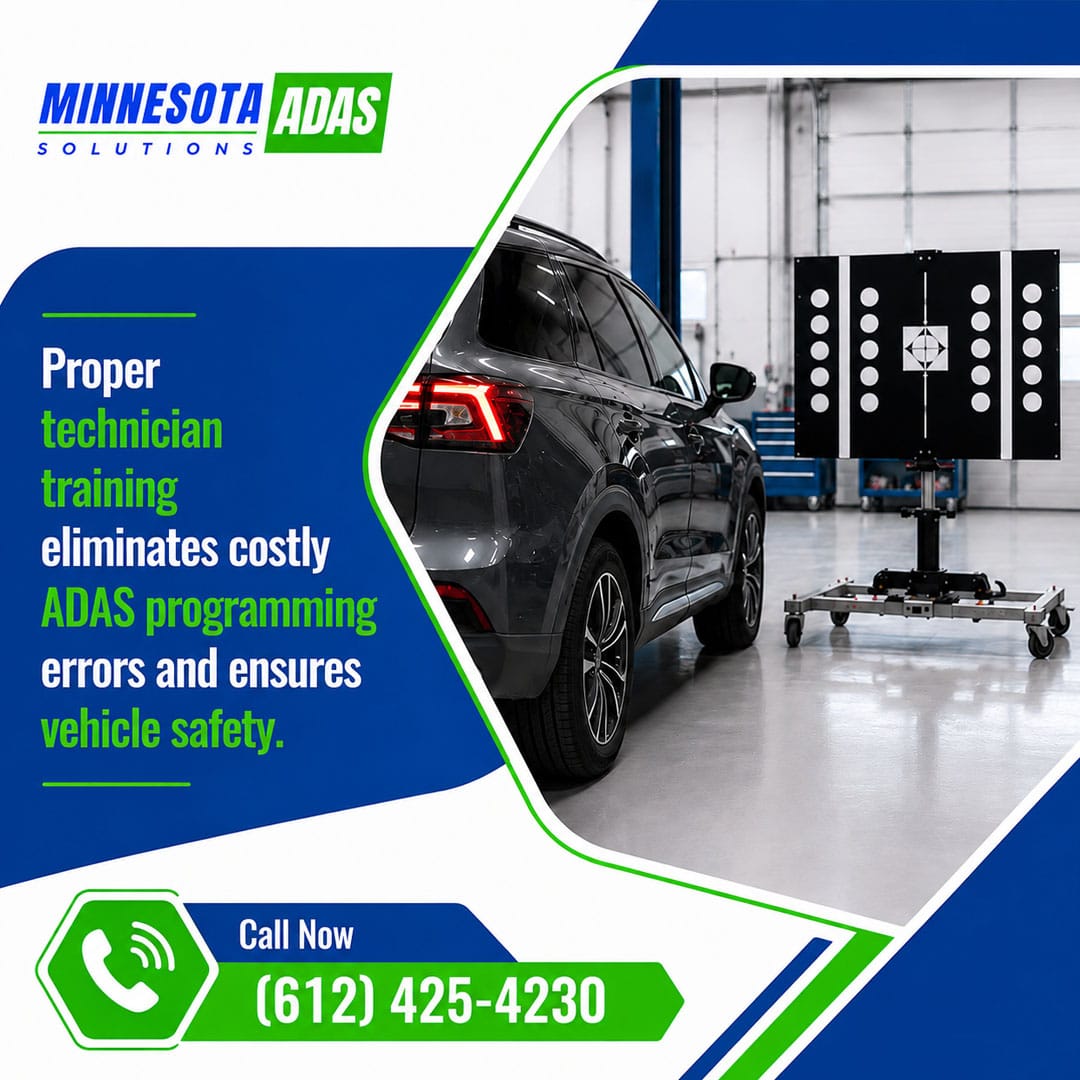
OEM ADAS calibration procedures differ by manufacturer. Training covers target placement, ride height, floor levelness, lighting conditions, and the software sequence each brand requires. A technician trained on one platform cannot assume the same steps apply to another vehicle.
The Inter-Industry Conference on Auto Collision Repair (I-CAR) trains technicians on ADAS operation, damage assessment, and calibration requirements, and identifies OEM procedures as central to a safe repair.
Why Does Trained ADAS System Verification Matter?
ADAS system verification is the final check confirming a calibration succeeded. A trained technician knows how to read a failed verification code and correct it before the vehicle leaves the shop. An untrained technician may miss this step entirely, sending a vehicle out with a feature that appears active but isn’t working correctly.
A 2025 NHTSA-affiliated PARTS study covering 98 million vehicles found automatic emergency braking now reduces rear-end crashes by 52%, up from 46% in earlier model years, as calibration accuracy improved across the industry. That improvement depends on the system being calibrated correctly in the first place.
| Factor | Trained Technician | Untrained Technician |
| Calibration accuracy | Matches OEM specification | Often approximate |
| Verification step | Confirmed and documented | Frequently skipped |
| Comeback risk | Lower | Higher |
How Do ADAS Programming and Coding Errors Happen?
ADAS programming and coding match a new or replaced module to the vehicle’s existing electronics. Without training, a technician can miscode a module, which may disable a safety feature or conflict with other sensors.
A survey reported through Autobody News, based on Insurance Institute for Highway Safety (IIHS) research, found that a majority of vehicle owners experienced continuing ADAS issues after a repair, particularly following windshield replacement or crash repairs. Consistent training on programming and coding steps helps prevent this outcome.
What Happens When Shops Skip Proper Training?
Skipping training creates risk beyond one repair:
- Sensors calibrated to the wrong reference point
- Software updates applied out of sequence
- Documentation missing when insurers or customers request it
- Repeat visits to fix a calibration that failed the first time
We see this when reviewing vehicles referred for ADAS diagnostics in Richfield, MN, after a prior attempt left a system only partially functional. Some of these vehicles reach us through a collision repair ADAS sublet arrangement, where a body shop relies on a dedicated facility instead of training in-house staff.
Frequently Asked Questions
- How often should ADAS technicians retrain?
Manufacturers update calibration requirements regularly, so technicians should retrain whenever a new procedure or vehicle platform is released.
- Is ADAS training the same as general repair training?
No. ADAS training focuses specifically on sensor, camera, and radar calibration, separate from general mechanical or body work.
- Does training reduce long-term repair costs?
Yes. Trained technicians create fewer comebacks, which lowers labor and parts costs tied to redoing a calibration.
Work With Trained ADAS Calibration Technicians
Proper training is the foundation of a safe, accurate calibration. Minnesota ADAS Solutions keeps technicians current on OEM procedures, including at our Bloomington facility, so every vehicle leaves calibrated to manufacturer standards.
Call us at (612) 425-4230 or email info@mnadas.com to schedule a calibration.