
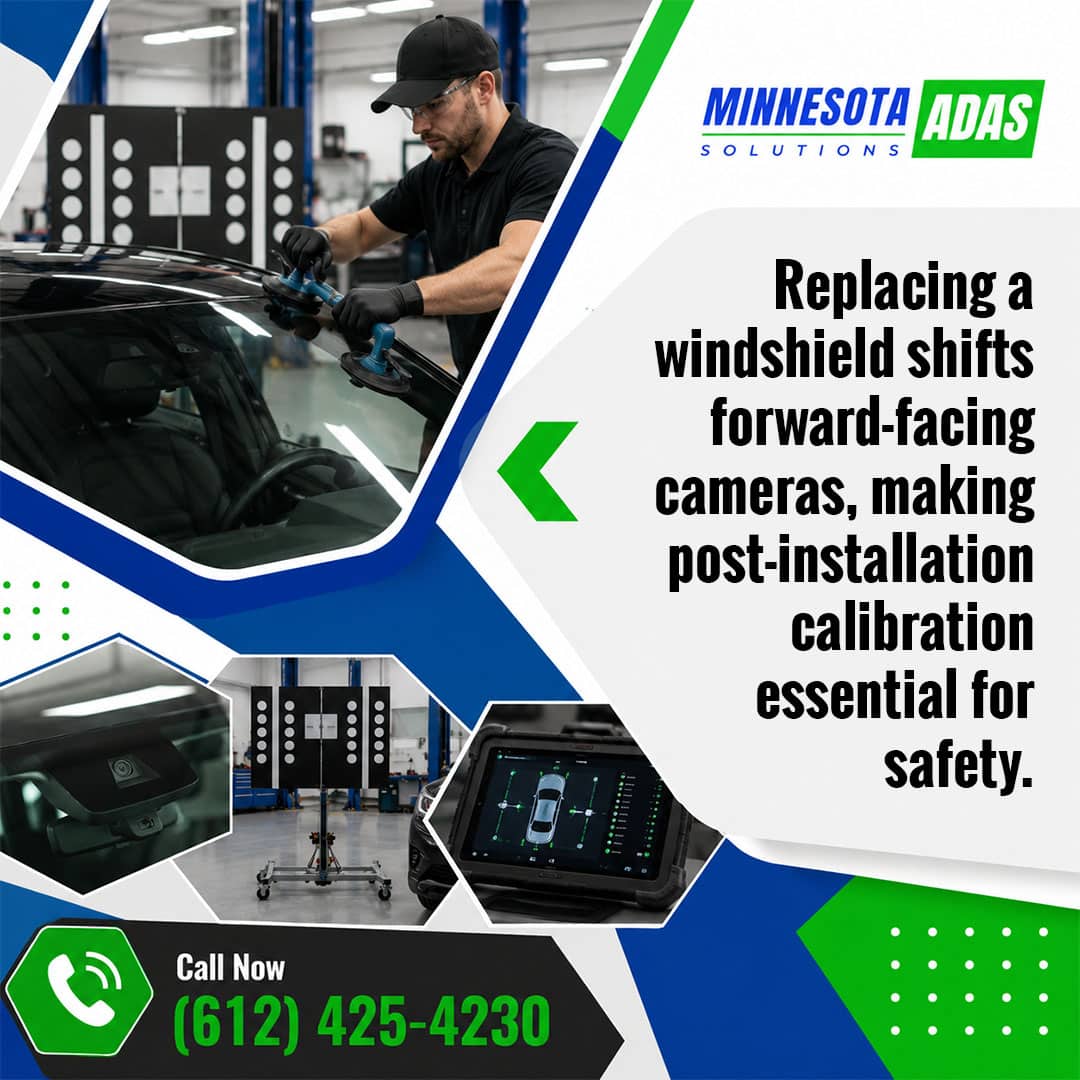
Yes. Most vehicles built after 2018 need lane departure warning and adaptive cruise control calibration after a windshield swap, since the forward-facing camera behind the glass shifts slightly during removal and reinstallation. This step confirms the camera reads lane markings and following distance correctly before the vehicle goes back on the road. We handle windshield calibration in Richfield, MN, and as MN ADAS Solutions, Bloomington, we make sure that safety check happens correctly for your vehicle every time.
Why Does a New Windshield Affect ADAS Cameras?
The camera used for lane keeping and forward collision alerts sits right behind the windshield, usually near the rearview mirror. Removing the old glass takes that camera out too. Reinstalling it doesn’t put it back in the exact same spot; adhesive thickness, glass tolerances, and small bracket differences shift the camera’s view by fractions of a degree. That small shift changes how the camera reads the white lines beside your lane and the gap between your car and the one ahead. Driver assistance systems like these are designed to help prevent the kind of crashes that contributed to 39,254 U.S. traffic deaths in 2024, according to NHTSA, which is why calibration after glass work matters.
What Happens During Lane Departure Warning Calibration?
Lane departure warning calibration resets the camera so it reads lane markings at the correct distance and angle. A technician places calibration targets at manufacturer-set distances, then runs the automaker’s software to confirm the camera’s field of view.
| Sign | Before Calibration | After Calibration |
| Lane departure warning | Alerts too early, too late, or not at all | Triggers at the correct lane position |
| Adaptive cruise control | Following distance feels inconsistent | Maintains a steady following gap |
| Dashboard warnings | May stay on or flicker | Clear, no active fault codes |
What Happens During Adaptive Cruise Control Calibration?
Adaptive cruise control calibration checks that the camera and, on many vehicles, the radar agree on distance and speed. Since the system relies on both readings together, a camera that’s a few degrees off can make it brake later or accelerate less smoothly than designed.
Static vs. Dynamic Calibration
Manufacturers specify one of two calibration methods for each vehicle, and using the wrong one won’t produce a valid result.
- Static: The vehicle stays parked in a controlled bay while target boards are set at exact distances and angles.
- Dynamic: The vehicle is driven at a set speed on the road so the camera confirms its readings in real conditions.
- Combined: Some manufacturers require both a static setup and a road drive before the job is considered complete.
A level floor, correct lighting, and precise target placement all affect the result, which is why a controlled facility matters more than an open parking lot.
Do You Need Camera and Radar Calibration Near Richfield, MN?
If your vehicle has lane-keeping or adaptive cruise and the windshield was replaced, calibration is almost always required. Systems with automatic braking cut rear-end crashes by about 40 percent on average, while forward collision warning alone cuts them by 23 percent, according to IIHS research– benefits that only hold if the sensors stay aligned.
We provide camera and radar calibration near Richfield, MN, with service also available from our Bloomington facility. Minnesota ADAS Solutions documents every calibration with before-and-after reports, useful if your insurer or body shop asks for proof.
Frequently Asked Questions
- Does a windshield repair, not replacement, need calibration too?
Usually no, since the camera stays in place and isn’t removed. The exception is a repair done directly over or near the camera’s mounting area, which some manufacturers recommend checking afterward.
- How long does calibration take?
Most calibrations at our facility finish within 90 minutes, depending on the vehicle and systems checked.
- Will insurance cover it?
Many policies now include calibration as part of a windshield claim. Coverage varies, so confirm with your provider first.
Get Your ADAS Calibrated the Right Way
A new windshield should mean better visibility, not a camera that’s slightly out of alignment. Minnesota ADAS Solutions is ready to get it back in line. Call us at (612) 425-4230 or email info@mnadas.com to schedule your calibration.