
After a repair, vehicle prep and a straight-ahead steering angle sensor check come first. Camera and radar calibration follows, covering adaptive cruise control calibration, lane departure warning calibration, and forward collision warning calibration, with blind spot monitoring calibration typically last. At MN ADAS Solutions, Bloomington, we always confirm this general sequence against OEM service information before we begin.
What Has to Happen Before Calibration Starts?
Before any sensor is calibrated, the vehicle needs to be in a known, consistent state: correct tire pressure, a full fuel tank, ride height within spec, and a completed four-wheel alignment where the manufacturer requires it. The alignment matters because it sets the vehicle’s thrust line, the centerline every camera and radar sensor is calibrated against.
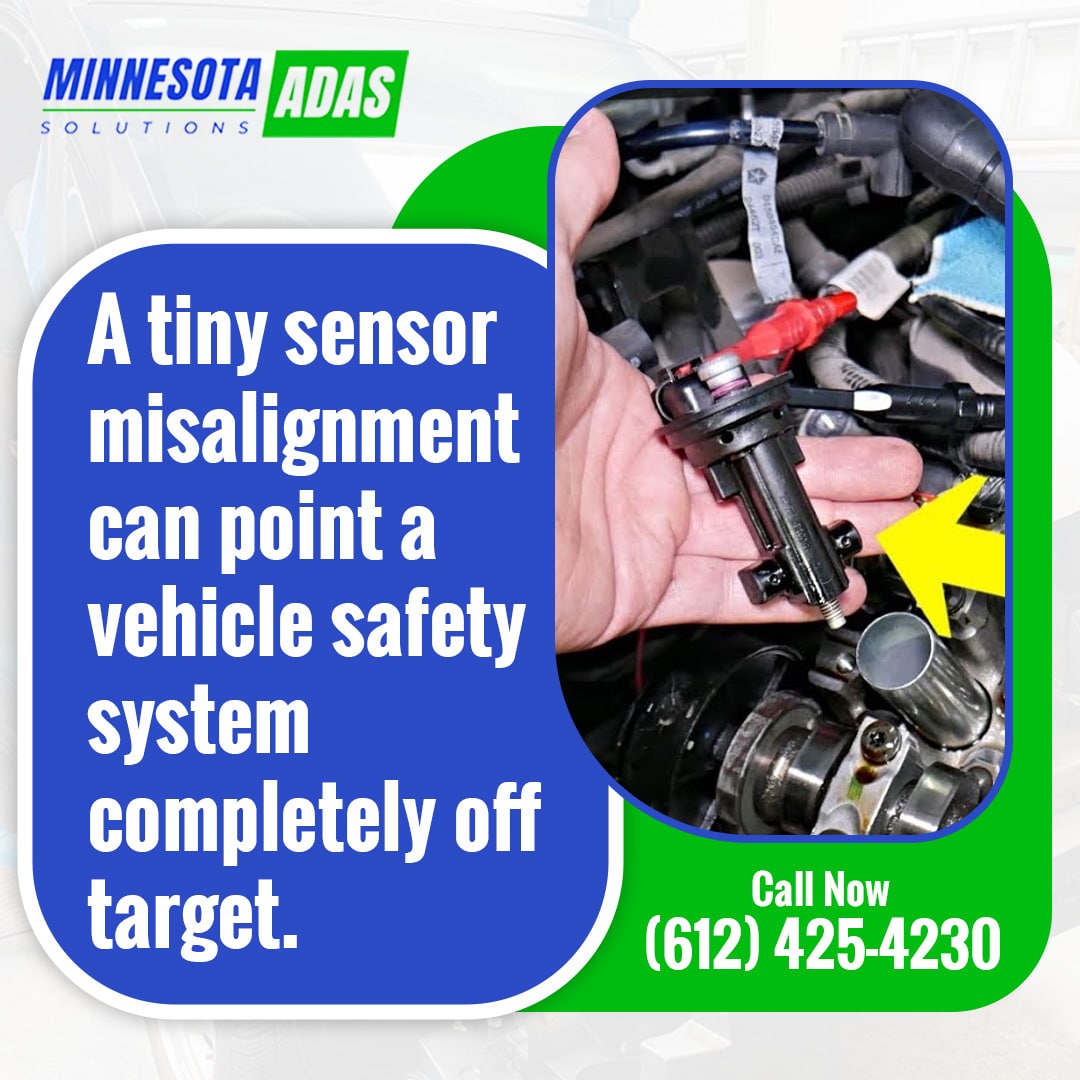
Precision matters here. According to AAA, a sensor that’s out of alignment by just a fraction of an inch, or a single degree, can end up aimed at a spot significantly off target 50 feet or more down the road.
Why Is the Steering Angle Sensor Calibrated First?
The steering angle sensor is calibrated early, and the process is straightforward: the front wheels are set straight ahead, then a scan tool zeroes out the signal. Steering angle data feeds into lane departure warning and related systems, so it needs to be accurate before camera and radar calibration begins. This step is commonly required after airbag deployment, structural repairs, or a wheel alignment.
What’s the Order for Camera and Radar Calibration?
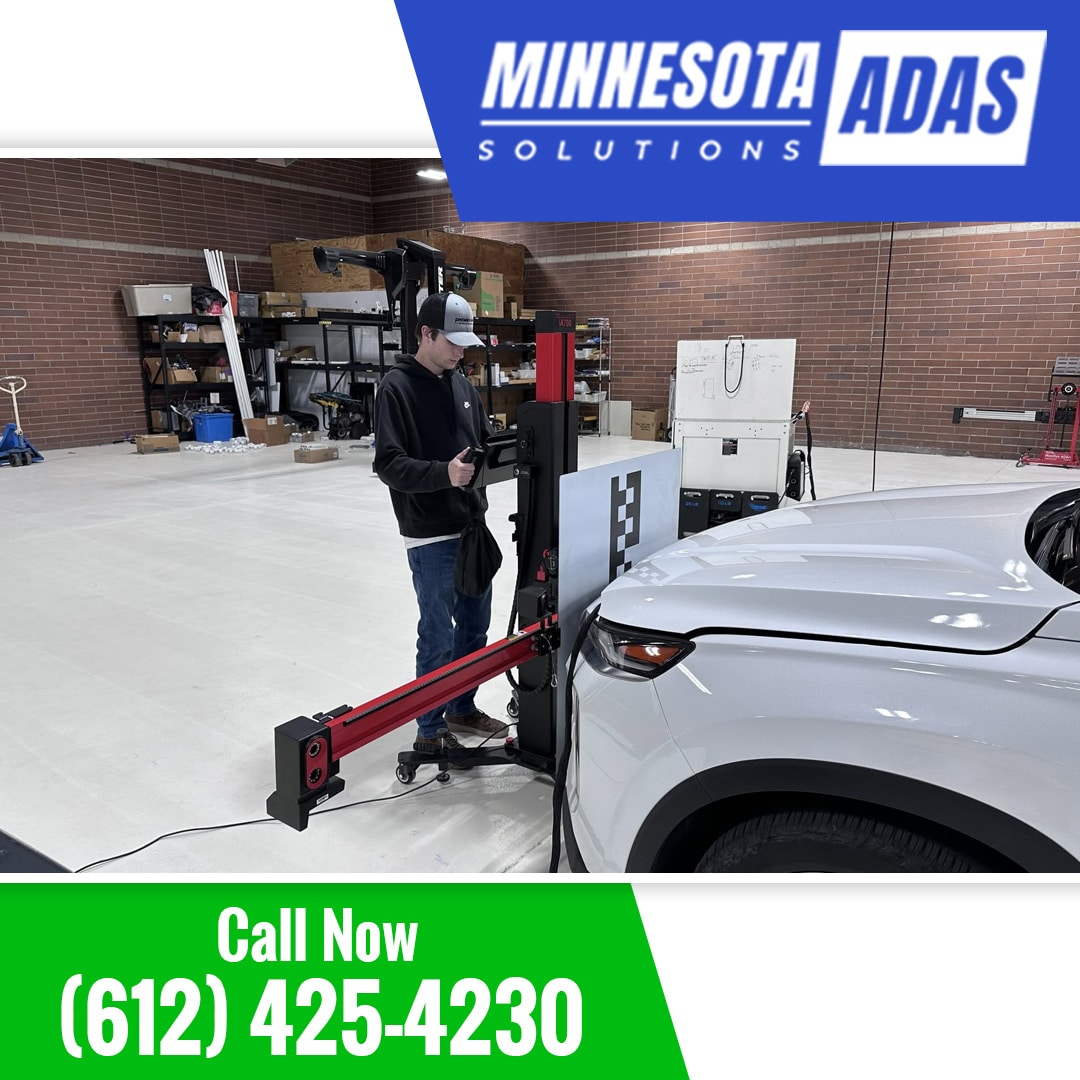
Once prep work and steering angle calibration are done, camera and radar calibration comes next. These sensors often support overlapping features, so manufacturers frequently group them:
- The front camera commonly supports lane departure warning calibration and automatic emergency braking.
- The front radar commonly supports adaptive cruise control calibration and forward collision warning calibration.
Both can be calibrated statically with aiming targets, dynamically by driving the vehicle, or through a combination of both. Getting this order right carries real weight: IIHS research found that forward collision warning alone reduced police-reported rear-end crashes by 27 percent, which underscores why these systems need to read accurately from the start.
| System | Sensor Type | Common Calibration Method |
| Front camera | Optical | Static, dynamic, or both |
| Front radar | Millimeter-wave | Static, dynamic, or both |
| Steering angle sensor | Mechanical/electronic | Static (scan tool zeroing) |
| Rear/side radar (blind spot) | Millimeter-wave | Static, dynamic, or both |
Where Does Blind Spot Monitoring Calibration Fit In?
Blind spot monitoring calibration usually comes after the front-facing systems, since it relies on separate radar sensors mounted under the side mirrors, in the rear bumper, or near the taillights. Because these sensors don’t factor into aiming the front camera or radar, they’re generally calibrated as their own step.
Putting the Full Sequence Together
A general order, based on how these systems build on one another:
- Vehicle preparation (tire pressure, fuel level, ride height, alignment)
- Steering angle sensor calibration
- Front camera and radar calibration, covering adaptive cruise control calibration, lane departure warning calibration, and forward collision warning calibration
- Blind spot monitoring calibration
- A follow-up test drive, when the manufacturer specifies a dynamic step
Manufacturers don’t all require the same order, so OEM service information should guide the final sequence for any specific make and model. Facilities like Minnesota ADAS Solutions rely on that OEM documentation to confirm the right sequence for each vehicle that comes through the door.
Frequently Asked Questions
Does a wheel alignment always come before camera and radar calibration?
Many manufacturers require it, since the alignment sets the thrust line sensors are calibrated against. Requirements vary by make and model.
Can camera and radar calibration happen in one session?
Often, yes, when both sensors support related features like forward collision warning calibration and lane departure warning calibration.
Is blind spot monitoring calibration always a separate step?
Usually, since its sensors sit at the rear or sides of the vehicle rather than the front.
Get Your ADAS Calibrated Correctly
Following the correct calibration order helps confirm each safety system is working from accurate data. Minnesota ADAS Solutions performs calibrations in a certified, OE-standard facility according to manufacturer procedures, with full documentation of the process. Call (612) 425-4230 or email info@mnadas.com to schedule your calibration.