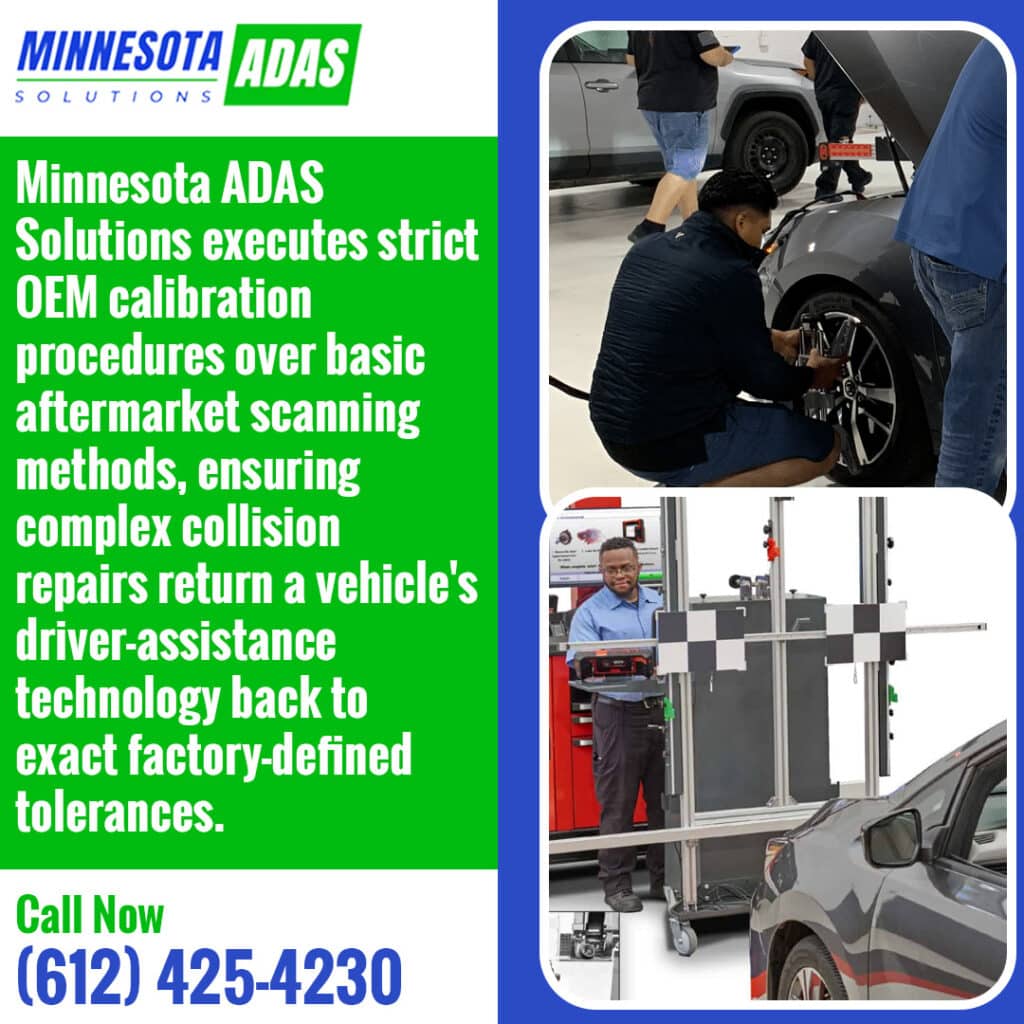
OEM ADAS calibration procedures follow exact manufacturer specifications for every sensor, camera, and radar on a specific vehicle. Generic setups use general aftermarket tools that can complete a calibration cycle without flagging errors, yet still leave safety systems misaligned. For any vehicle that has been in a collision, OEM-based procedures are the only way to confirm safety systems are restored to factory performance. At Minnesota ADAS Solutions, our ADAS diagnostics in Bloomington, MN, ensure every calibration starts with a precise assessment before any work begins.
What Is the Difference Between OEM and Generic ADAS Calibration?
OEM calibration follows the exact procedures published by the vehicle manufacturer. Every step, every target placement, every sensor angle, and every software trigger comes directly from that manufacturer’s service documentation.
Generic calibration uses aftermarket tools and general procedures that apply broadly across multiple makes and models. These tools can complete a calibration cycle without flagging errors, even when the result does not fully match OEM specifications.
Comparison: OEM and Generic Calibration
| Factor | OEM Calibration Procedures | Generic/Aftermarket Setup |
| Procedure source | Manufacturer service documentation | Aftermarket tool database |
| Software verification | OEM factory software triggers and confirms | Aftermarket scan tool only |
| Environmental requirements | Controlled to manufacturer spec | Variable, shop-floor conditions |
| Documentation | Full OEM-traceable record | Basic completion report |
| Model-year accuracy | Updated per manufacturer revisions | May lag behind OEM updates |
| Liability coverage | Aligns with OEM repair standards | May not satisfy insurer requirements |
Why Does Post-Collision ADAS Calibration Require OEM Procedures Specifically?
After a collision, the vehicle’s sensors, cameras, and radar units can shift by amounts invisible to the human eye, yet significant enough to degrade system performance. OEM repair procedures account for:
- Vehicle-specific sensor mounting tolerances
- Model-year-specific calibration triggers that change from one year to the next
- Controlled environment requirements (floor level, lighting, temperature) are unique to each manufacturer
- Software-based verification that confirms the calibration was accepted by the vehicle’s control module
Our team performs post-collision ADAS calibration at MN ADAS Solutions, Bloomington, using OEM-standard procedures in a dedicated, controlled facility. Every vehicle leaves with documented proof that calibration met or exceeded manufacturer requirements.
Three Steps That Make OEM Calibration Work
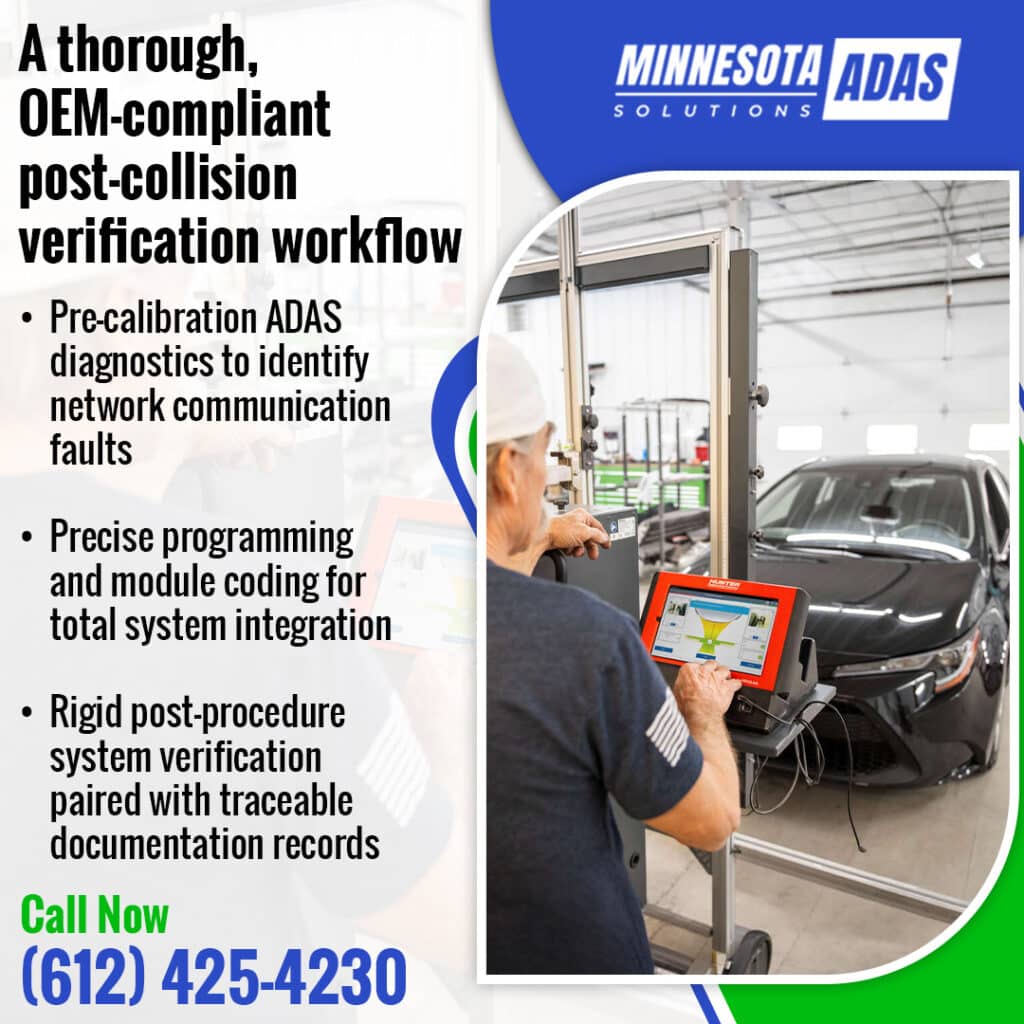
ADAS Diagnostics
Calibration without diagnostics is incomplete. A full diagnostic scan identifies fault codes, confirms which systems were affected, and flags any physical damage to sensors or mounting points before calibration begins. A shifted bracket or damaged sensor will not calibrate correctly, regardless of the tool used.
ADAS Programming and Coding
When a camera, radar unit, or control module is replaced after a collision, ADAS programming and coding tie the new component to the vehicle’s network. Skipping this step means calibration may appear complete while the replacement part is not actually integrated into the safety system.
ADAS System Verification and Documentation
ADAS system verification and documentation serve two purposes. First, they confirm that every system affected by the collision or repair was tested and confirmed operational after calibration. Second, they give body shops, insurers, and vehicle owners a traceable record.
Frequently Asked Questions
- Can a vehicle pass a scan after calibration even if the calibration was done incorrectly?
Yes. A calibration can be completed without triggering error codes even when performed incorrectly. Controlled environments and OEM software verification confirm a correct result; scan completion alone does not.
- Do all collisions require ADAS calibration, or only major ones?
OEM requirements are tied to repair type, not severity. Replacing a windshield, bumper, or mirror on an ADAS-equipped vehicle often triggers a mandatory calibration regardless of impact size.
- How long does an OEM ADAS calibration take?
Most calibrations are completed within 90 minutes. We also offer pick-up and delivery, so you do not have to wait at the facility.
Schedule Your OEM ADAS Calibration in Bloomington, MN
If your vehicle has been through a collision repair or had sensors, cameras, or a windshield replaced, OEM ADAS calibration procedures are the only way to confirm your safety systems are working exactly as designed.
Minnesota ADAS Solutions serves vehicle owners and collision shops across the Bloomington area from our certified facility at 9555 James Ave S, Bloomington, MN 55431. Call us at (612) 425-4230 or email info@mnadas.com to book your appointment.