
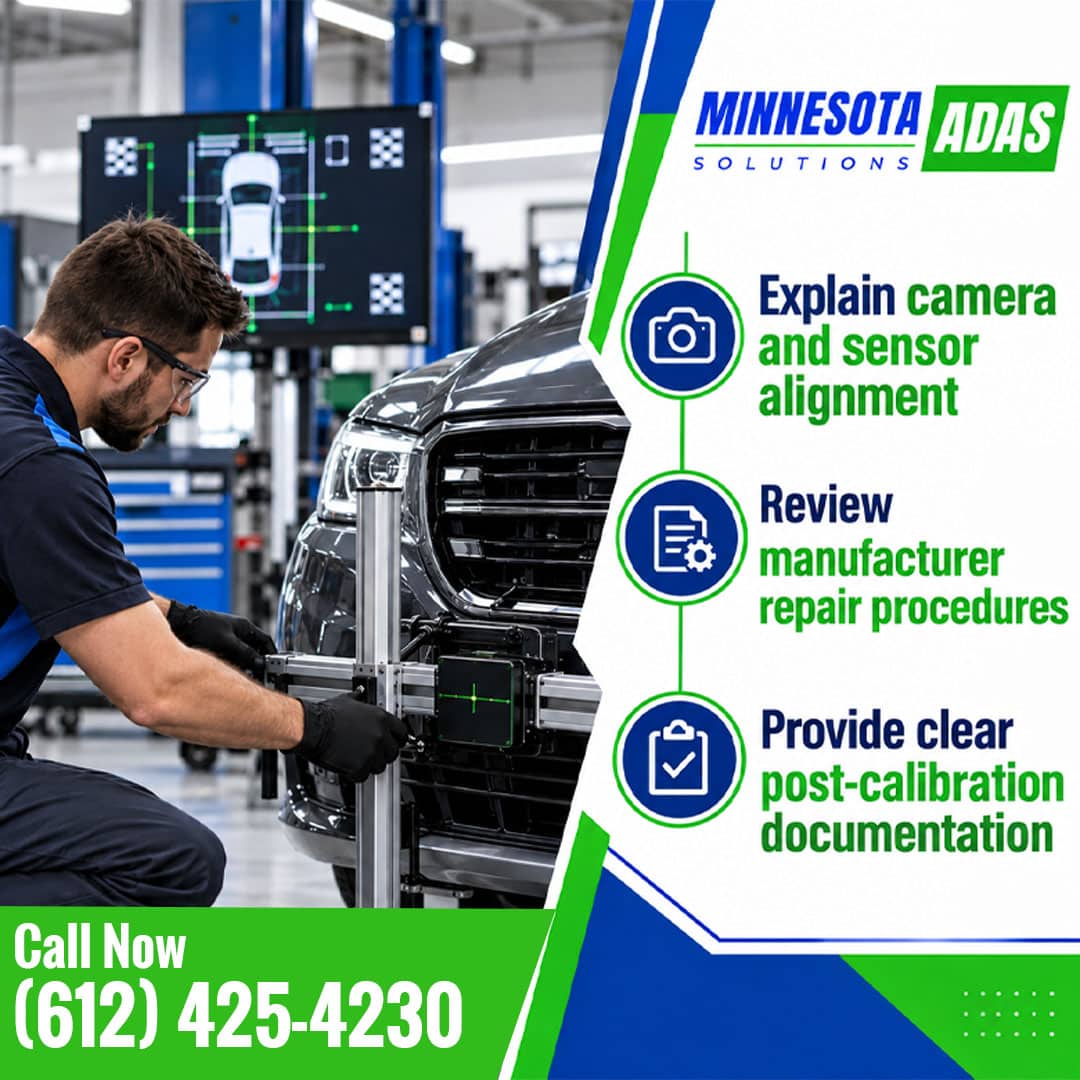
Body shops can explain post-collision ADAS calibration by showing how a collision or repair may affect cameras, radar, and other driver-assistance components. Calibration follows vehicle-specific manufacturer procedures to restore required sensor alignment. Clear explanations help owners understand why this work may be necessary, even when visible damage appears minor. At Minnesota ADAS Solutions, we help collision repair professionals explain calibration requirements and the role of accurate vehicle safety system calibration.
Why Is Post-Collision ADAS Calibration Necessary?
Post-collision ADAS calibration checks and adjusts applicable Advanced Driver Assistance Systems (ADAS) according to manufacturer specifications. A collision or repair can affect sensor alignment, camera positioning, or mounting components. These systems support features such as lane departure warnings, automatic emergency braking, adaptive cruise control, and blind spot monitoring.
The Insurance Institute for Highway Safety (IIHS) reported that pedestrian-detecting automatic emergency braking was associated with a 25% to 27% reduction in pedestrian crash risk. This finding illustrates the value of driver-assistance technologies, but it does not measure the effect of calibration itself.
Calibration requirements depend on the vehicle, damage, and repairs performed.
How Can Body Shops Explain the Calibration Process?
Body shops can describe vehicle safety system calibration as a procedure that checks and adjusts specific safety systems after applicable repairs.
A simple explanation for owners is: “Your vehicle uses cameras and sensors to support certain safety features. The collision or repair may have affected their alignment. Calibration checks and adjusts the applicable systems according to the manufacturer’s instructions.”
The process may include:
- Reviewing requirements: Identify procedures specified by the manufacturer.
- Inspecting components: Check relevant sensors, mounting points, and diagnostic information.
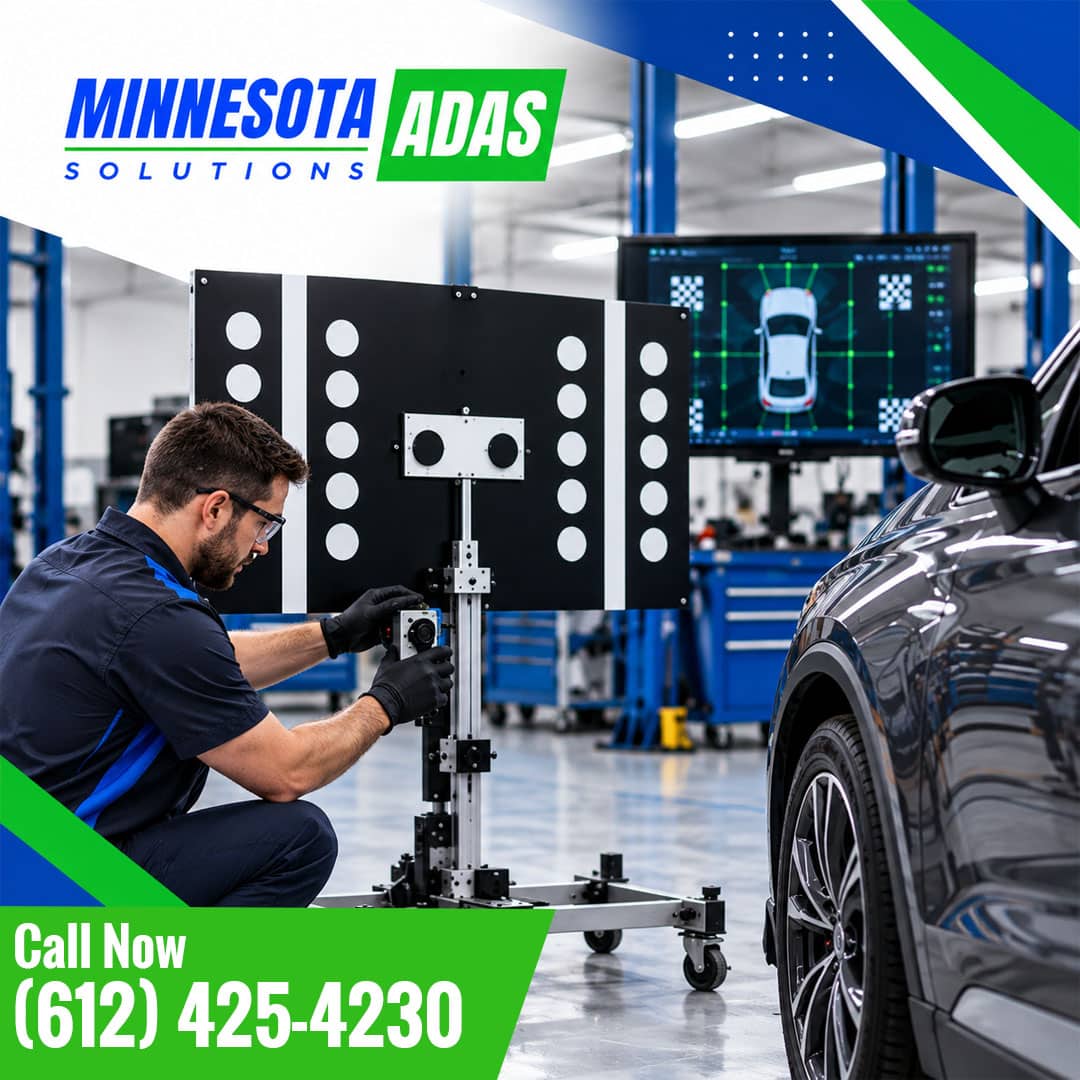
- Performing calibration: Use the required equipment and procedure in a suitable environment.
- Verifying results: Complete required checks and document the work.
The I-CAR OEM Calibration Requirements Search helps repair professionals identify potential calibration requirements. Procedures vary by vehicle.
Does Every Collision Require ADAS Calibration?
No. Calibration requirements depend on manufacturer instructions, the damage, and the repairs performed. A shop should not assume every collision requires calibration or that calibration is unnecessary because no warning light appears.
| Repair or condition | What the shop should check |
| Windshield replacement | Whether the forward-facing camera requires calibration |
| Bumper replacement | Whether affected radar or parking sensors require calibration |
| Suspension or wheel alignment work | Whether manufacturer procedures specify calibration |
| Structural repairs | Whether sensor locations or mounting points were affected |
| No dashboard warning | Whether the repair still triggers a calibration requirement |
These examples are not automatic rules for every vehicle. Shops should consult current manufacturer service information.
How Can Body Shops Explain ADAS Calibration Cost?
ADAS calibration cost varies by vehicle, affected systems, required procedures, and additional diagnostic work. Some vehicles need one procedure, while others may require multiple calibrations.
A clear repair estimate should identify:
- Required calibration procedures.
- Additional diagnostics or component repairs.
- Expected service charges.
- Whether the insurer has approved the work.
Insurance coverage depends on the policy and claim circumstances. Owners should confirm coverage with their insurer.
What Should Owners Know After Calibration?
Owners should receive documentation of the work performed and an explanation of any remaining issues. Calibration records support repair documentation but do not replace other required repairs or inspections.
Frequently Asked Questions
Can calibration repair a physically damaged sensor?
No. Calibration adjusts a functioning system according to specified procedures. A damaged sensor, faulty wiring, or defective mounting component may require repair or replacement first.
Does successful calibration mean every safety feature works correctly?
Not necessarily. Results apply to the systems and procedures evaluated. Any unresolved diagnostic faults or required checks must be addressed separately.
Where can collision shops find calibration support near Edina?
Shops seeking ADAS calibration services in Edina, MN, can contact Minnesota ADAS Solutions. We perform specialized calibration in a controlled facility designed around original equipment standards.
Discuss Post-Collision ADAS Calibration With Our Team
MN ADAS Solutions in Bloomington supports collision repair professionals with accurate calibration and clear documentation. Collision shops seeking an ADAS calibration center near Edina, MN, can contact our team to discuss vehicle-specific requirements. We provide specialized calibration at our Bloomington, MN, facility, with pickup and delivery options for added convenience. Call (612) 425-4230 or email info@mnadas.com to discuss your calibration needs and scheduling.