
Adaptive Cruise Control (ACC) is one of the most advanced safety features in modern vehicles, helping drivers maintain safe distances and respond to traffic conditions automatically. When your shop performs adaptive cruise control calibration in Bloomington, MN, it is important to record every detail of the process. Proper documentation shows exactly what adjustments were made, which sensors were tested, and how the system was verified. This level of detail supports repair accountability and provides clear records for vehicle owners, insurers, and service providers.
At Minnesota ADAS Solutions, we handle all aspects of ACC calibration with certified tools and trained technicians, offering reliable adaptive cruise control repair near you. By keeping thorough records, your shop demonstrates professional standards and attention to safety. This article guides you through what information to document every time your team calibrates an ACC system, helping you maintain high-quality service for every vehicle that comes through your doors.
What is Adaptive Cruise Control (ACC)?
Adaptive cruise control is an advanced driver-assistance system that helps maintain a driver’s selected speed and a safe following distance from vehicles ahead. Depending on vehicle make/model, ACC uses radar sensors, cameras, or a combination of both to monitor traffic and adjust throttle/braking accordingly. ACC smooths acceleration and deceleration relative to surrounding traffic, but does not replace driver attention or control; drivers must remain alert and ready to intervene. This technology is particularly useful on highways and busy city streets, where frequent braking and acceleration can increase driver fatigue and the chance of human error.
Components of an Adaptive Cruise Control System
ACC systems rely on three main components:
- Radar sensors: These detect the speed and distance of vehicles ahead, providing data for safe speed adjustments.
- Cameras: Positioned around the vehicle, cameras track lane markings, road signs, and obstacles that may affect your driving path.
- Vehicle control module: This central processor interprets sensor and camera data to manage braking, throttle, and acceleration accurately.
How ACC Enhances Driving Safety
ACC enhances driving safety by automating speed and distance control. Key adaptive cruise control benefits include:
- Maintaining a safe following distance: Keeping a consistent gap between vehicles can reduce rear-end collisions in highway conditions.
- Reducing driver fatigue during long trips: Long drives can strain attention and reaction time. ACC handles repetitive speed adjustments, letting you focus on the road.
- Supporting consistent speed control on highways: By regulating acceleration and braking, ACC helps smooth traffic flow and can reduce stop-and-go congestion, improving overall highway safety.
Minnesota ADAS Solutions works with technicians trained to calibrate and maintain these systems accurately, helping drivers benefit from every function of an adaptive cruise control system while keeping vehicles in proper working condition.
Why ACC Calibration is Necessary
ACC calibration confirms that sensors and systems operate accurately after repair or replacement. After repairs, a windshield replacement, or sensor adjustment, the system needs precise recalibration so your vehicle can respond correctly to surrounding traffic. Without proper calibration, radar and camera sensors may misread distances, and the vehicle may not maintain safe following distances at highway speeds.
Common Scenarios Requiring Calibration
Calibration is needed in these situations:
- After windshield replacement: Modern windshields can affect camera alignment. Misalignment can reduce the accuracy of lane departure warnings and adaptive cruise control.
- Following front-end collision repairs: Repairs to the bumper, hood, or sensor mounts can alter the position of radar and cameras, impacting ACC response.
- When sensors or cameras are replaced or adjusted: Any adjustment to radar, lidar, or camera units requires recalibration to restore correct detection ranges.
Consequences of Improper Calibration
Incorrect calibration can compromise vehicle safety and system performance. If ACC sensors are off by even a few degrees, the system can respond too early or too late, which increases the likelihood of accidents. Other outcomes include:
- Reduced system accuracy: Distance monitoring and braking may not react properly.
- Increased risk of collisions: Misaligned sensors may fail to detect slower-moving vehicles or sudden stops.
- Dashboard warning lights indicating errors: Miscalibration triggers alerts that can confuse the driver or mask other issues.
By working with Minnesota ADAS Solutions, your shop can rely on certified procedures and controlled calibration environments. This approach restores ACC performance fully, reduces repeat repairs, and provides complete documentation for every vehicle serviced.
Documentation Requirements for ACC Calibration
Proper documentation records the work performed and verifies system functionality. Every adjustment made to cameras, radar sensors, and the vehicle control module should be logged. This record demonstrates that your team followed manufacturer procedures and completed the required steps in a controlled environment. Shops that keep detailed logs reduce repeated troubleshooting and prevent disputes with insurance or regulatory bodies. Documentation provides evidence that any potential issues were addressed during the calibration process.
Key Information Shops Should Record
Shops should document the following for each ACC calibration:
- Vehicle make, model, and year, to track system specifications for different manufacturers.
- Date and type of calibration performed, including whether it was post-repair, sensor replacement, or routine adjustment.
- Technician’s name and certification, confirming that trained personnel completed the work.
- Tools and procedures used, including scanner models, calibration targets, and alignment settings.
- Results of post-calibration testing, such as distance accuracy, warning response, and error-free system operation.
Why Detailed Records Matter
Detailed documentation helps demonstrate that calibration was performed according to manufacturer recommendations and can assist shops in diagnosing future issues, communicating with insurers, and clarifying repair histories. Keeping thorough logs allows your shop to demonstrate compliance with manufacturer guidelines and state regulations. These records also serve as a reference if the vehicle returns for follow-up service, reducing time spent diagnosing recurring alerts.
For insurance claims, documented calibration can clarify liability in collisions where ADAS performance is a factor. Clear documentation benefits your team by showing that every step of the calibration process was completed methodically, supporting credibility and professionalism in every job.
At Minnesota ADAS Solutions, we follow strict documentation protocols for every vehicle we service. Our technicians record all calibration details in a structured format, giving shops and vehicle owners confidence that the ACC system is operating accurately and reliably.
Minnesota ADAS Solutions ACC Calibration Services
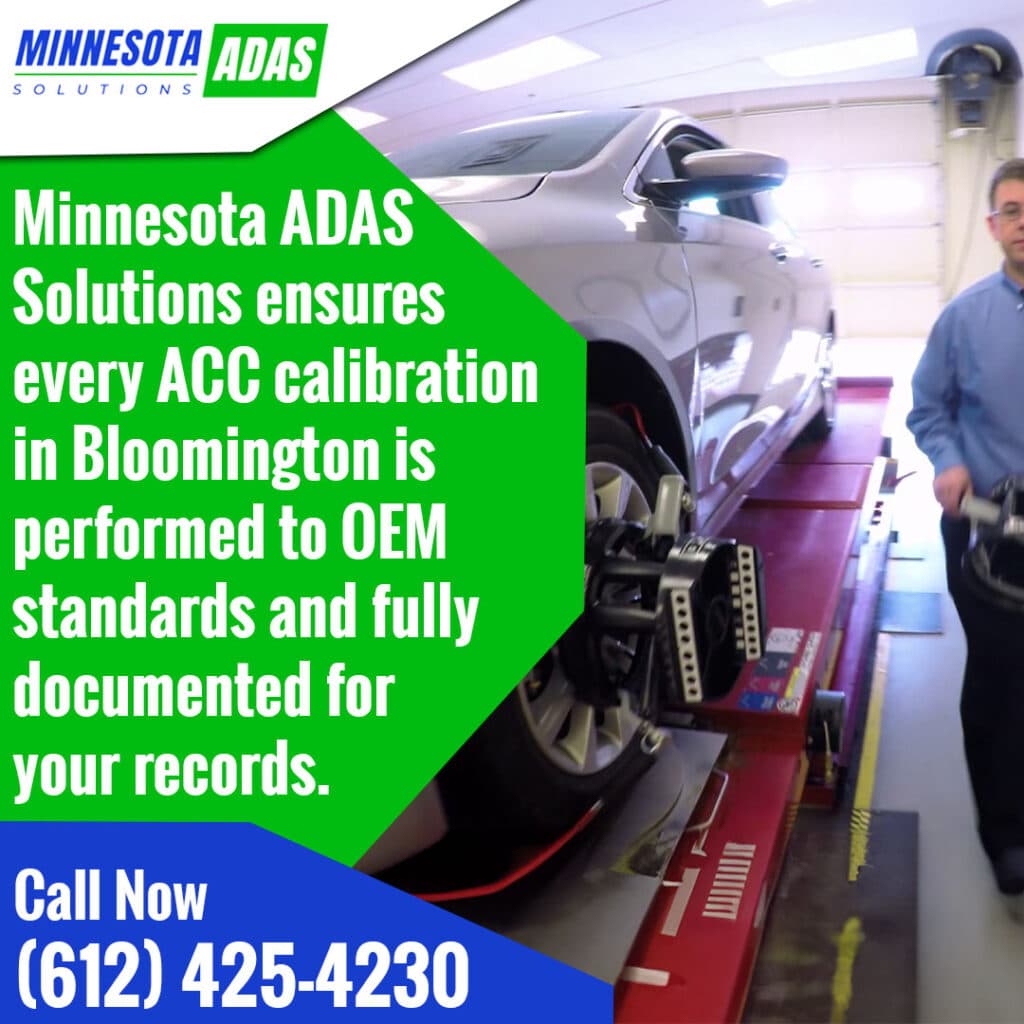
Minnesota ADAS Solutions offers expert adaptive cruise control calibration in Bloomington, MN, using certified procedures and a controlled facility. Our team handles vehicles of all makes and models and keeps thorough records for every calibration we perform.
Our Process
Our ACC calibration process includes:
- Diagnostics to identify sensor or system issues: We start by checking the radar, cameras, and the control module to spot any misalignment, malfunction, or software errors. This gives a clear picture of what repairs or adjustments are required.
- Repair or replacement of damaged cameras and radar sensors: If a sensor or camera is not working correctly, we replace or adjust it so the system can detect traffic and obstacles accurately.
- Calibration to original equipment manufacturer (OEM) standards: Each adjustment is made to match manufacturer specifications. This restores the system’s ability to respond to traffic conditions reliably.
- Verification of system performance after calibration: We test the ACC system under controlled conditions to confirm that speed, braking, and distance control are working properly.
Why Choose Us
We provide ACC services with precision and accountability. By working with our team, you benefit from:
- Certified technicians trained in ADAS systems: Each technician follows manufacturer procedures and uses certified tools.
- Controlled calibration environment meeting OEM requirements: Our facility is designed to reduce errors and provide a stable setup for sensor alignment.
- Fast and accurate service to minimize vehicle downtime: Most calibrations are completed within a short timeframe, so your vehicle can return to service quickly.
- Detailed documentation for every calibration performed: Every step of the process is recorded, giving you a clear record of adjustments, repairs, and testing results.
Adaptive Cruise Control Benefits for Vehicle Owners
ACC improves vehicle safety, convenience, and driving consistency. Properly calibrated adaptive cruise control systems manage the space between your vehicle and others automatically. This reduces the chance of sudden braking and keeps traffic flow smoother. You can feel less tension in stop-and-go traffic because the system adapts to changes in road conditions without constant intervention from you. It also helps maintain a steady pace on highways, reducing the number of unnecessary speed adjustments.
Key Advantages
Vehicle owners experience several adaptive cruise control benefits:
- Enhanced safety: The system monitors vehicles ahead and adjusts your speed to maintain a safe following distance. This support can reduce collisions caused by sudden stops or distracted driving.
- Reduced driver stress: You can rely on ACC to respond to traffic changes, letting you focus on the road rather than constantly adjusting the throttle and brakes.
- Consistent speed management: The system keeps your vehicle at a steady speed, improving fuel efficiency and making longer trips less tiring.
- Supports additional driver-assistance functions: ACC works alongside lane-keeping assist and collision warning systems, providing an integrated safety experience that helps you respond to road hazards more effectively.
Schedule Your Adaptive Cruise Control Service Today
If you are looking for reliable adaptive cruise control repair near you, Minnesota ADAS Solutions is ready to assist. Our Bloomington, MN, facility provides precise ACC calibration, repairs, and documentation for all vehicle makes and models. Contact our certified technicians today to schedule a service and keep your vehicle’s safety systems performing accurately. Call us at (612) 425-4230 or email info@mnadas.com to book your appointment and experience expert care.