
Adaptive cruise control (ACC) adjusts your vehicle’s speed and maintains safe distances from other vehicles, reducing some aspects of driving workload during long highway drives and in stop-and-go traffic. However, driver behavior, like setting higher speeds, can affect its overall benefits. At Minnesota ADAS Solutions, we specialize in adaptive cruise control calibration in Bloomington, MN, making sure your system responds accurately to changing traffic conditions.
While many drivers appreciate how ACC maintains speed automatically, the full adaptive cruise control benefits go beyond convenience. It can help lower the risk of rear-end collisions, support faster reactions in traffic, and even contribute to smoother fuel usage. Whether you recently had a repair, replaced your windshield, or are experiencing unusual warnings, proper calibration keeps your ACC system performing reliably. By working with our trained technicians, you get the support needed to keep your vehicle’s safety system functioning correctly and reliably on every drive.
What is Adaptive Cruise Control?
Adaptive cruise control is a driver-assistance system that automatically adjusts your vehicle’s speed to maintain a safe following distance. The ACC system enhances safety on highways and reduces driver workload.
How the Adaptive Cruise Control System Works
Radar Sensors and Cameras
Radar sensors and cameras detect surrounding vehicles and obstacles. These components are constantly scanning the road. Radar measures the distance and speed of vehicles in front of you, while cameras read lane markings and identify objects. Together, they provide the information your car needs to slow down, speed up, or stay in its lane without you having to intervene constantly.
Vehicle Speed Control and Braking
The system automatically adjusts speed and applies braking when necessary. It communicates with your car’s engine and braking system to react to changing traffic conditions. For example, if traffic slows suddenly, your vehicle can reduce speed smoothly, and it can accelerate back to your set speed once the road clears, making highway driving less tiring and safer.
Differences from Standard Cruise Control
ACC adapts to traffic conditions, unlike standard cruise control, which maintains a fixed speed. Standard cruise control requires you to manually slow down or speed up when the car in front changes speed. ACC removes that task, letting you maintain a steady pace without constantly adjusting your pedals, which is especially helpful in heavy traffic or on long drives.
Life-Saving Benefits of Adaptive Cruise Control
Adaptive cruise control is more than a convenience feature for your vehicle. It actively supports your driving, helping you react to traffic conditions and maintain safer driving habits on highways and city roads.
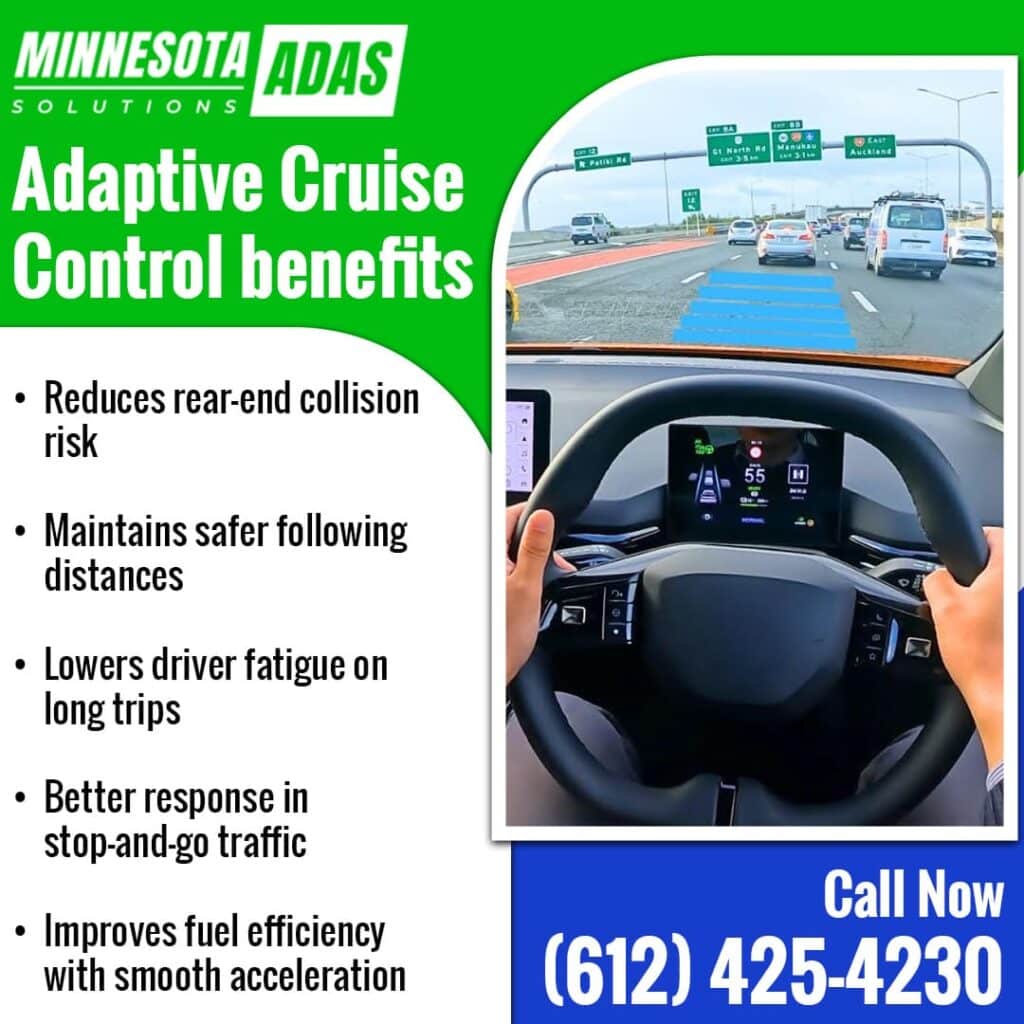
Reduced Risk of Rear-End Collisions
Studies show ACC can promote safer following distances and reduced harsh braking, which, in controlled scenarios, is associated with lower potential for rear-end collisions, though real-world results depend on usage and driver behavior. By automatically adjusting your speed based on the distance to the vehicle ahead, the system reduces the chances of sudden braking or rear-end crashes.
Maintaining Safe Following Distances Automatically
The system continuously monitors the distance from vehicles ahead. You don’t have to constantly judge gaps between cars, which can be difficult in congested conditions or during fatigue. ACC adjusts your vehicle’s speed to maintain a steady, safe distance, reducing the risk of close calls and sudden braking.
Reducing Driver Fatigue on Long Drives
ACC decreases driver workload on highways. Instead of manually modulating speed and keeping track of traffic ahead for extended periods, you can focus more on the road and surroundings. Automatic speed adjustments and braking reduce mental strain, helping you stay alert over long drives and minimizing stress.
Supporting Reaction in Stop-and-Go Traffic
ACC reacts faster than human drivers in stop-and-go conditions. In traffic jams, the system slows or stops your vehicle automatically, then resumes movement as the traffic clears. This responsiveness helps prevent sudden collisions caused by delayed human reactions, keeping you and surrounding vehicles safer.
Indirect Benefits for Fuel Efficiency
Smooth acceleration and braking can improve fuel economy. By reducing sudden stops and starts, ACC allows the engine to operate more efficiently. Studies indicate an improvement in fuel consumption during highway driving, making trips less stressful on both your wallet and the environment.
Minnesota ADAS Solutions focuses on helping drivers experience all these benefits safely. Through proper diagnostics, repair, and adaptive cruise control calibration in Bloomington, MN, the system performs reliably so that you can rely on it during daily commutes or long highway drives.
Why Calibration is Necessary for Safety
Adaptive cruise control systems depend on precise sensor and camera alignment to work correctly. Without proper adjustment, the system cannot accurately detect vehicles or obstacles around you.
What Happens When Sensors are Misaligned
Misaligned sensors can cause incorrect speed or distance measurements. If your radar or camera is slightly off, the system might maintain a following distance that is too close or react too late in traffic. You may notice sudden braking, delayed acceleration, or warning lights on your dashboard. These errors increase the chances of collisions and can make driving more stressful, especially in heavy traffic or highway conditions.
Adaptive Cruise Control Calibration in Bloomington, MN
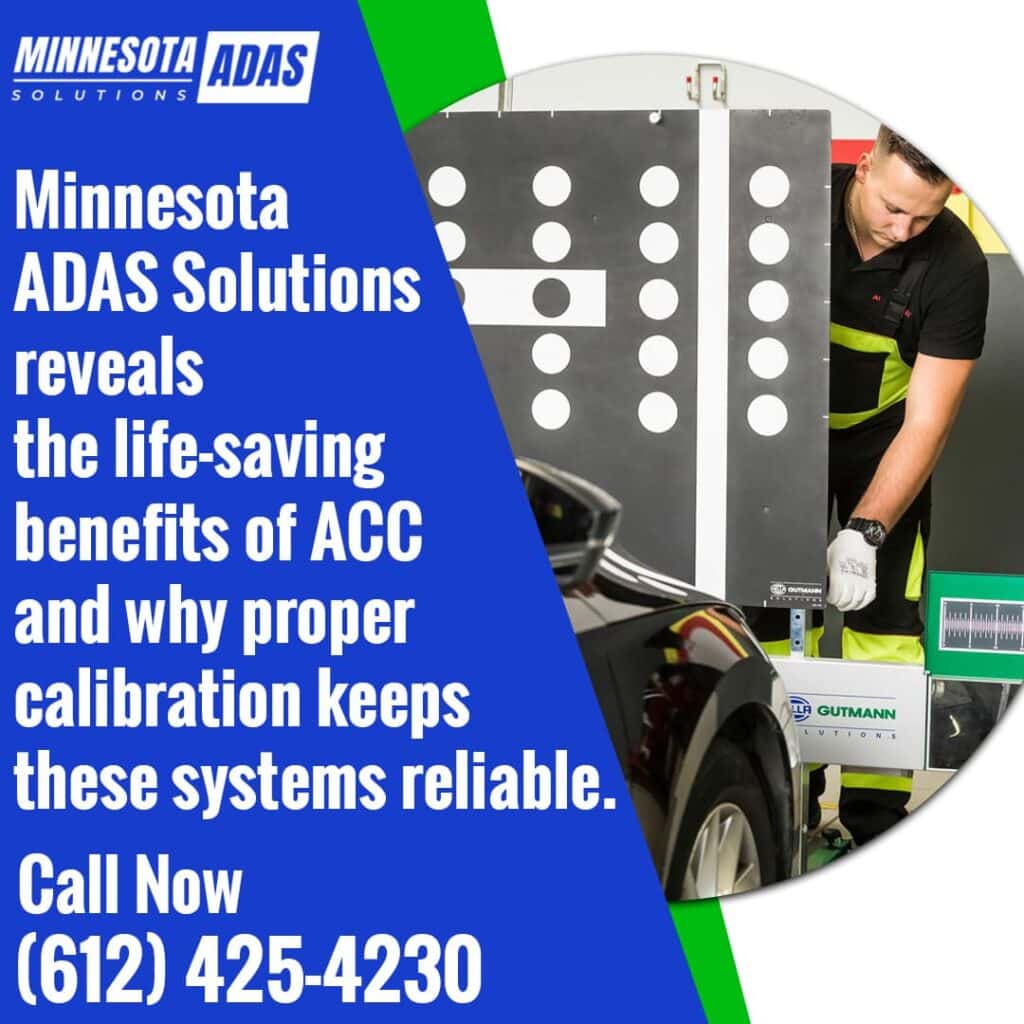
Calibration aligns sensors and cameras to manufacturer specifications after repairs or replacements that impact their position or function, such as windshield or bumper work. It’s not required after unrelated maintenance like an oil change. By realigning the components and testing their responsiveness, the system returns to reliable operation. Minnesota ADAS Solutions provides professional adaptive cruise control calibration in Bloomington, MN, helping drivers correct sensor alignment and camera accuracy to maintain proper system function.
How Proper Calibration Supports System Reliability
Correct calibration guarantees the system reacts as designed. When sensors are adjusted precisely, your vehicle keeps a safe distance from other cars and responds appropriately to sudden stops or changes in traffic flow. Reliable calibration prevents false alerts, reduces unexpected braking, and maintains the smooth operation of your ACC system.
Common Issues and Repairs
Adaptive cruise control systems improve driving safety, but they rely on precise sensor and software performance. Over time or after repairs, issues can develop that affect how your vehicle responds on the road.
Signs Your ACC System Needs Attention
Warning lights, inconsistent speed adjustments, or false alerts indicate a problem. You might notice the following signs that your ACC system needs service:
- Sudden braking or acceleration without reason
- Difficulty maintaining a consistent distance from vehicles ahead
- Alerts that appear even when the road is clear
- Inconsistent or delayed responses in stop-and-go traffic
These issues often occur because of misaligned sensors, blocked cameras, or outdated software. Detecting problems early helps you avoid situations where the system could respond unpredictably.
Adaptive Cruise Control Repair Near You
Professional repair restores system performance. If your ACC is showing errors or behaving irregularly, trained technicians can restore the system to proper working condition. Services may include:
- Sensor or radar replacement
- Camera alignment adjustments
- Software updates
- Full system recalibration
Minnesota ADAS Solutions provides adaptive cruise control repair near you, delivering accurate repairs in a controlled facility without mobile services.
Diagnostics, Sensor Repair, and Software Updates
Thorough diagnostics identify malfunctioning components. Technicians examine each sensor, camera, and radar unit to find the source of the issue. After diagnosis, they:
- Repair or replace damaged sensors and cameras
- Update software to correct system errors
- Verify system performance after repair
By addressing both hardware and software components, the system regains reliable function, helping your vehicle respond appropriately in traffic situations. Minnesota ADAS Solutions combines detailed diagnostics with expert service to restore your ACC system fully.
How Minnesota ADAS Solutions Helps Drivers
ACC is a complex system that relies on sensors, cameras, and precise calibration. Working with trained experts can make the process smoother and keep your vehicle functioning reliably.
Certified Facility for Adaptive Cruise Control Calibration
Our Bloomington facility meets OE standards. You can bring your vehicle to a controlled environment where every calibration is done with care. The facility is set up to prevent outside factors from affecting sensors, giving your adaptive cruise control system the best conditions for accurate adjustments.
90-minute Turnaround and OE Standard Calibration
Many ADAS calibrations can be completed in about 90 minutes in a controlled environment, but complex systems or dynamic calibration requirements may take longer. You don’t have to wait for hours or schedule multiple visits. Quick service allows you to get back on the road while keeping your ACC system ready for daily driving and highway conditions.
Documentation for Vehicle Owners and Insurers
Every calibration comes with detailed records. These documents serve as proof that your vehicle was serviced correctly. They can be used for insurance claims, repair shop verification, or simply for your own reference to track the service history.
Expert Technicians Specializing in ADAS Systems
Certified technicians handle all types of ADAS systems. Their training and hands-on experience allow them to adjust adaptive cruise control, lane-keeping, and emergency braking systems accurately. You can rely on their skill to maintain the performance of your vehicle’s advanced safety systems.
Tips for Maintaining Your Adaptive Cruise Control System
Keeping your ACC system functioning properly requires attention to a few simple practices. Small actions can have a big impact on how your vehicle responds on the road.
Avoiding Collisions and Damage to Sensors
Prevent physical damage to cameras and radar sensors. You should be careful when driving through tight spaces, parking near obstacles, or handling objects around the front and rear of your vehicle. Avoid physical impacts or debris buildup near sensor areas. While normal car washes usually pose no issue, high-pressure jets aimed directly at sensor openings could potentially cause damage or misalignment in rare situations.
Debris, such as stones or branches, can scratch or misalign sensors, which could affect how the system reads other vehicles and lane markings. By taking precautions and being mindful of sensor locations, you protect both the technology and your safety on the road.
Scheduling Timely Calibration after Repairs or Windshield Replacement
Always recalibrate after repairs. If your vehicle has been involved in a collision, had any bodywork, or the windshield was replaced, the ACC system might not work properly without recalibration. Sensors can shift slightly during repairs, and even small changes can affect how your vehicle monitors distance and speed. Booking a calibration appointment shortly after any repair ensures your system is ready for everyday driving conditions.
Keeping Sensors Clean and Unobstructed
Regularly clean sensors and cameras. Dirt, mud, snow, or ice can cover sensors and cameras, preventing the system from detecting other vehicles, lane markings, or obstacles accurately. A soft cloth or mild cleaning solution works best to remove buildup without scratching surfaces. Check sensors often, especially during winter or after driving on dusty roads, to maintain reliable performance and consistent responses from the system.
Schedule Your ACC Calibration Today
Get your adaptive cruise control system checked and calibrated today. You can book a service online or call our team directly. Our live scheduling makes it simple to reserve a convenient time for adaptive cruise control repair near you.
Reach out to Minnesota ADAS Solutions now. Call us at (612) 425-4230 or email info@mnadas.com to set up your appointment. Your vehicle’s safety systems deserve expert care, and our team is ready to help.