Calibrating ADAS systems out of sequence can produce a calibration that appears successful but isn’t accurate, since later steps are measured against a reference point that was never correctly set. This can affect adaptive cruise control calibration, lane departure warning calibration, forward collision warning calibration, and blind spot monitoring calibration in different ways. At Minnesota ADAS Solutions, we’ve seen firsthand why getting this order right, the first time, matters so much.
Can a Calibration “Pass” Even When It’s Out of Order?
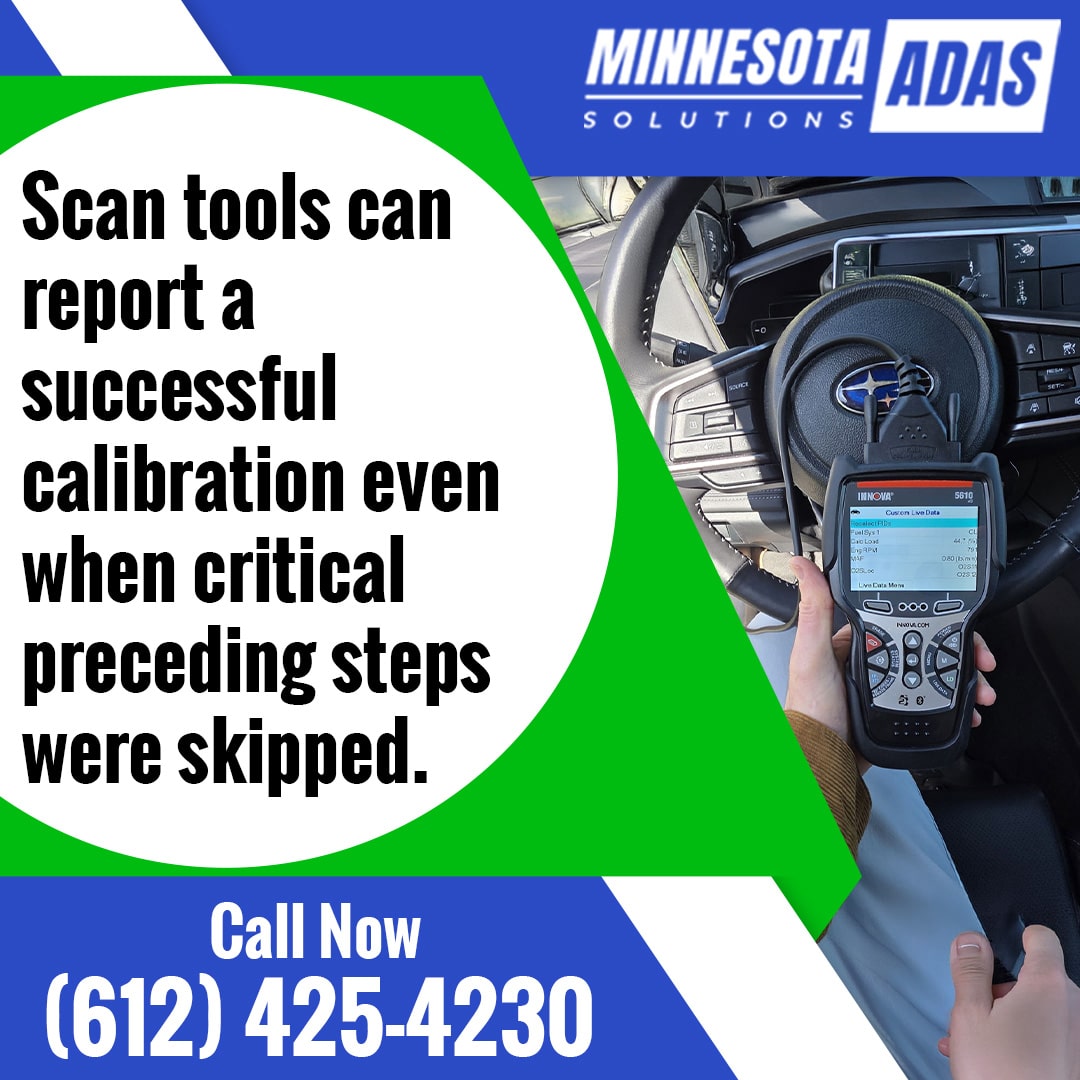
Yes, and that’s the biggest risk. A scan tool can report a successful calibration even when an earlier step, like the steering angle sensor or wheel alignment, was skipped or done incorrectly. The camera and radar calibration technically completes, but it’s measuring against a shifted reference point.
A survey conducted directly by the Insurance Institute for Highway Safety found that nearly three-quarters of owners whose ADAS repairs were needed because of crash damage, and about two-thirds of those whose repairs involved a windshield replacement, reported issues with their systems afterward. Nothing about a technically “passed” calibration guarantees that kind of real-world performance.
What Happens Downstream When an Early Step Is Skipped?
Front camera and radar calibration depend on the steering angle sensor being zeroed first. Skip that step, and the systems that rely on the camera and radar inherit the error:
| System Affected | What Can Go Wrong |
| Adaptive cruise control | Following distance is misjudged, causing the car to brake too late or too early |
| Lane departure warning | Warnings trigger in the wrong spot, or don’t trigger at all |
| Forward collision warning | Alerts fire late, or not before impact |
| Blind spot monitoring | A vehicle in the next lane may go undetected |
None of these failures requires the whole system to go offline. A car with a passed calibration can still drive off the lot with a camera or radar reading the road slightly wrong.
What Are the Financial and Liability Risks?
Beyond safety, an out-of-sequence calibration creates real financial exposure. A Highway Loss Data Institute study found that properly functioning automatic emergency braking cuts property damage liability claims by 14.4 percent and bodily injury claims by 23.6 percent. A miscalibrated vehicle doesn’t get that protection, even if its paperwork says the calibration was completed.
If a vehicle is later involved in a crash and an improper calibration comes to light, liability can extend to the shop that performed the work, not just the vehicle owner. It’s part of why MN ADAS Solutions, Bloomington documents every step of a calibration, so there’s a clear record if a question about sequencing ever comes up. Redoing a failed or incorrect calibration also means paying for the diagnostic scan, the labor, and the shop time twice.
How Can a Vehicle Owner Tell Something Was Missed?
There isn’t always a warning light. A few signs worth checking for:
- No documentation showing which systems were calibrated and in what order
- ADAS features that behave inconsistently, like lane departure warning calibration that triggers on a straight road
- A calibration report that lists a “pass” without noting the pre-calibration steps performed
Frequently Asked Questions
Can a car pass inspection with an incorrectly sequenced calibration?
Often, yes. Standard inspections don’t typically test ADAS accuracy under real conditions, so an inaccurate calibration can go unnoticed until the system is actually needed.
Does insurance cover redoing a calibration that was done incorrectly?
This depends on the policy and who performed the original work. Documentation showing what was and wasn’t done is often central to that determination.
Is a vehicle unsafe to drive after an out-of-sequence calibration?
It can be, since the affected systems may not respond the way a driver expects in an emergency. When in doubt, having the calibration checked against OEM sequencing is the safer route.
Get It Calibrated in the Right Order the First Time
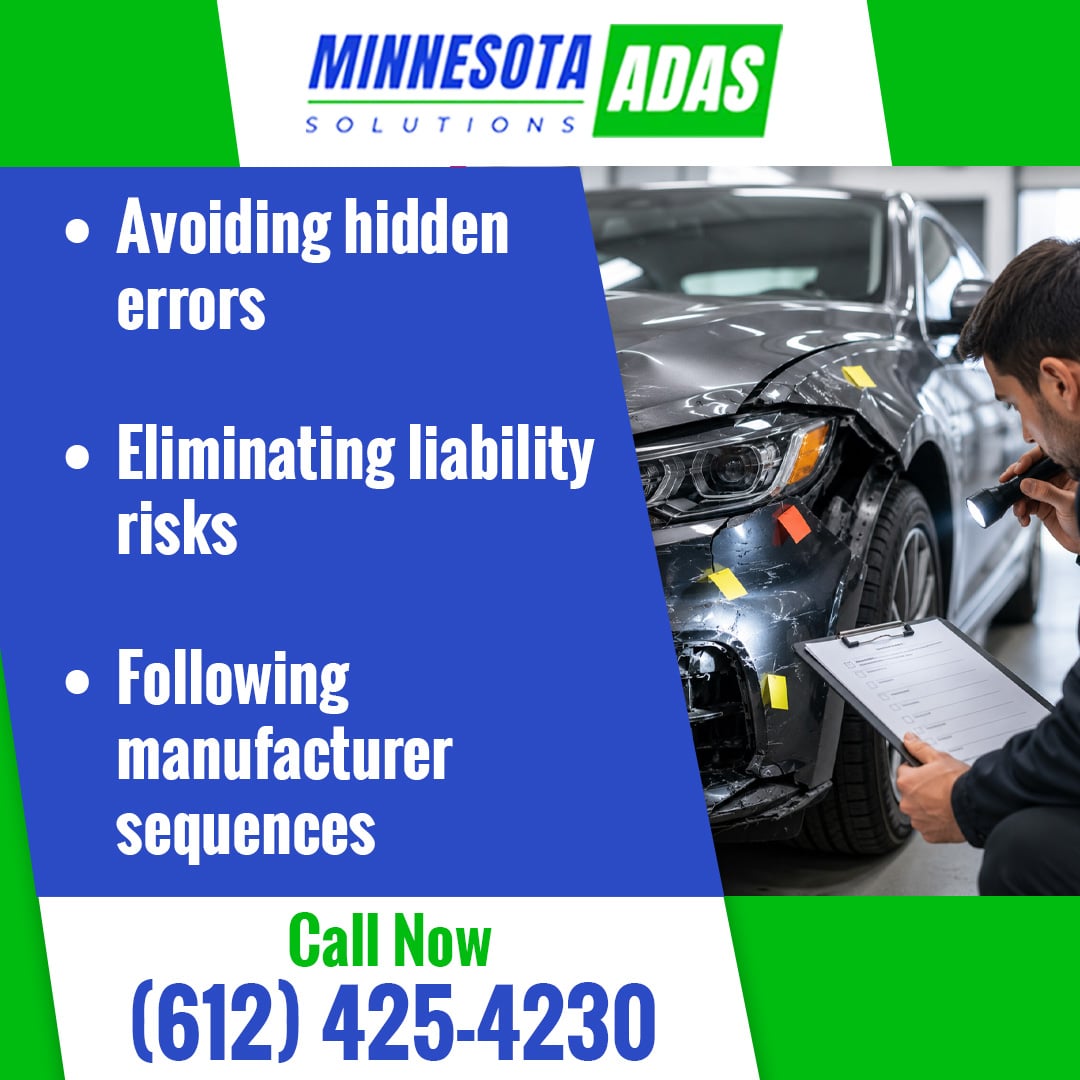
An out-of-sequence calibration can look complete without actually being accurate. Minnesota ADAS Solutions, based in Bloomington, MN, performs every calibration in a certified, OE-standard facility, following manufacturer sequencing and documenting each step. Call (612) 425-4230 or email info@mnadas.com to schedule a calibration, or visit our ADAS calibration services page to learn more.