
Neglecting lane keep assist calibration after a collision can create serious safety risks for you and other drivers. At Minnesota ADAS Solutions, we provide expert lane departure calibration service in Bloomington, MN, helping you restore the accuracy of your vehicle’s advanced safety systems. Lane keep assist systems rely on carefully aligned sensors and cameras. Even minor damage or repairs can shift these components, causing false alerts, delayed steering assistance, or missed warnings.
As a trusted lane departure repair shop, we focus on diagnosing misaligned sensors, recalibrating systems, and documenting every step of the process. Skipping required calibration may increase the likelihood of repeat diagnosis or adjustments and could complicate insurance claims in some cases if documentation of proper ADAS service is requested by the provider or repair facility.
By working with our certified technicians, you can maintain reliable lane tracking, avoid unnecessary repair visits, and keep your vehicle’s safety features responsive on the road. Proper calibration keeps your vehicle operating reliably and protects everyone inside and around it.
Why Lane Keep Assist Calibration Matters After a Collision
Proper calibration helps ensure that ADAS sensors and cameras operate within manufacturer-specified tolerances after impacts or repairs. When components are misaligned, performance degradation, such as reduced lane detection accuracy, may occur.
Insurance Institute for Highway Safety (IIHS) research indicates that vehicles equipped with lane departure warning technology are associated with about an 11% reduction in single-vehicle, sideswipe, and head-on crashes in police-reported crash data compared to similar vehicles without the feature. This reflects the safety benefits of lane departure warning systems, which rely on accurate camera alignment.
Even small misalignments can cause false alerts or missed interventions, reducing your control and confidence while driving. Performing proper lane keep assist calibration after repairs addresses these problems and helps restore reliable system performance.
How Lane Keep Assist Works
Lane keep assist uses cameras and sensors to detect lane markings and assist steering. The system continuously monitors your vehicle’s position within a lane and applies corrective steering if you begin to drift. In addition, the system triggers visual and audible alerts to warn you when lane departure is imminent.
These features are designed to support safe driving, especially during long trips or in traffic. If the sensors are misaligned, the system may activate incorrectly or fail to respond, increasing your risk of lane-departure incidents.
Common Components Affected During Collision Repairs
Front-end repairs often disturb key lane keep assist components. Collisions, even minor ones, can shift or damage critical parts that affect system performance. Commonly affected components include:
- Forward-facing cameras mounted near the windshield
- Radar and lidar sensors integrated into bumpers or grilles
- Windshield-mounted sensor assemblies
- Bumper and grille components that house sensing devices
- Suspension and alignment elements that alter sensor angles
Even slight movement of these components can impact detection accuracy. That is why performing lane departure system calibration in a certified facility is necessary to restore the system to its proper function.
Why Calibration Is Required Even After Minor Vehicle Damage
Small sensor shifts can cause system errors. A camera angled slightly off its original position can generate false warnings or fail to detect lane markings during critical moments. Radar misalignment can lead to delayed or inaccurate steering corrections.
Performing lane departure sensor alignment makes sure that your system reacts correctly, offering the intended guidance and alerts. Over time, uncalibrated sensors can contribute to repeated alerts, driver confusion, and additional repair costs. Minnesota ADAS Solutions in Bloomington addresses these challenges by accurately diagnosing, adjusting, and documenting sensor alignment, helping your vehicle regain reliable lane-keeping performance.
Risks of Skipping Lane Departure and Lane Keep Assist Calibration
Skipping calibration can lead to incorrect alerts, delayed steering assistance, and potential liability. Lane tracking and warning systems may not respond properly, creating safety hazards and adding pressure to repair shops or insurers.
Incorrect Lane Tracking
Vehicles may misread lane markings. If sensors or cameras are even slightly off, your car could drift out of its lane or give false signals. This is particularly dangerous on curves, narrow roads, or during heavy traffic. Accurate lane departure system calibration restores proper lane detection and reduces the risk of unexpected lane departures.
Delayed Steering Correction
Lane keep assists may respond too late. When the system’s sensors are misaligned, the corrective steering feature may not activate quickly enough. This delay can make you or other drivers vulnerable to lane departure incidents.
Unreliable Warning Alerts
False or missing alerts may confuse drivers. Alerts that activate unnecessarily or fail to trigger in critical moments can lead to hesitation, sudden maneuvers, or overreliance on a malfunctioning system. Consistent calibration keeps these warnings reliable.
Increased Liability for Repair Shops and Insurers
If ADAS calibration is omitted when required by manufacturer protocols or repair standards, it may raise questions about compliance with industry practices and could be considered in liability assessments in some jurisdictions. Documentation of calibration can help demonstrate that recognized procedures were followed.
Without proper documentation, insurers may dispute coverage, and repair shops could be held accountable if a system fails after service. Partnering with a certified lane departure repair shop prevents these complications by providing accurate calibration and records.
Compromised Driver Safety
Drivers and passengers face a higher risk without accurate calibration. Misaligned sensors or cameras may not trigger the lane departure warnings or steering corrections at the right time, leaving you vulnerable to accidents that could have been avoided.
Financial Impact of Ignoring Calibration
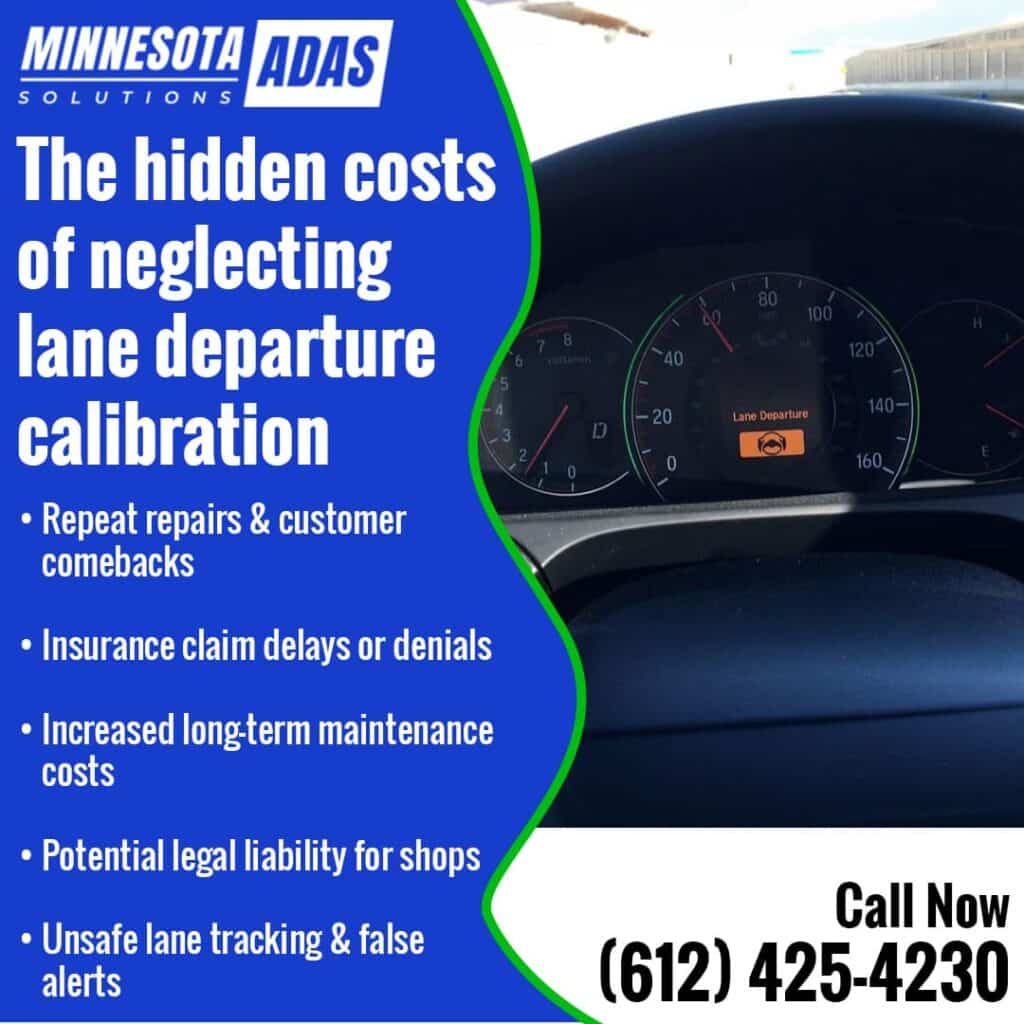
Failing to address lane departure system calibration after a collision can create unexpected expenses for both drivers and repair shops. Overlooking this step may seem minor, but the costs can add up quickly through repeat work, insurance complications, and liability concerns.
Repeat Repairs and Customer Comebacks
Uncalibrated vehicles often require additional visits. If the sensors or cameras are not properly aligned, you might notice false alerts or system malfunctions shortly after a repair. This forces you to return to the shop, which adds labor charges, parts costs, and extra diagnostic time that could have been avoided with proper calibration.
Insurance Disputes and Claim Denials
Claims may be denied without documented calibration. Insurance providers can question whether safety systems were functioning correctly during an accident. Repair shops and drivers may face delays while submitting additional proof or paying out-of-pocket expenses that could have been prevented.
Higher Long-Term Costs for Drivers
Drivers may pay more over time. Even minor misalignments can lead to repeated failures in lane departure systems. These failures can result in more frequent repairs or sensor replacements, increasing overall maintenance expenses.
Potential Legal Exposure for Repair Facilities
Repair facilities may face liability claims. If an accident occurs and the vehicle’s safety systems were not calibrated, repair shops could be held responsible for damages or injuries. Accurate documentation and proper calibration reduce the risk of legal complications and additional costs.
Why Lane Departure Calibration Must Be Performed in a Controlled Facility
Calibration accuracy depends on controlled conditions. Mobile or unregulated setups cannot reliably achieve OE-level precision. Proper lane departure calibration service restores sensor alignment and system performance to manufacturer standards.
Limitations of Mobile Calibration
Mobile calibration introduces environmental variability. Performing calibration outside a certified facility can cause several problems, including:
- Uneven garage or driveway surfaces affecting sensor angles
- Poor or inconsistent lighting is interfering with camera calibration
- Misaligned targets due to a lack of factory-standard positioning
- Difficulty controlling temperature or reflective surfaces that impact sensor readings
These factors can lead to inaccurate lane departure sensor alignment, triggering false alerts or missed lane detections.
Why OE-Level Conditions Matter
Original Equipment (OE) procedures require strict environmental conditions. Every sensor and camera must be positioned and measured exactly as the manufacturer specifies.
Key OE-level requirements include:
| Requirement | Purpose |
| Level floor | Prevents sensor tilt or angle errors |
| Proper lighting | Helps cameras and sensors detect lane markings accurately |
| Correct target placement | Aligns sensors for reliable lane detection |
| Controlled surroundings | Reduces interference from reflections, shadows, or vibrations |
Following OE procedures guarantees that your vehicle’s lane keep assist functions respond correctly on the road.
How Controlled Environments Protect Accuracy
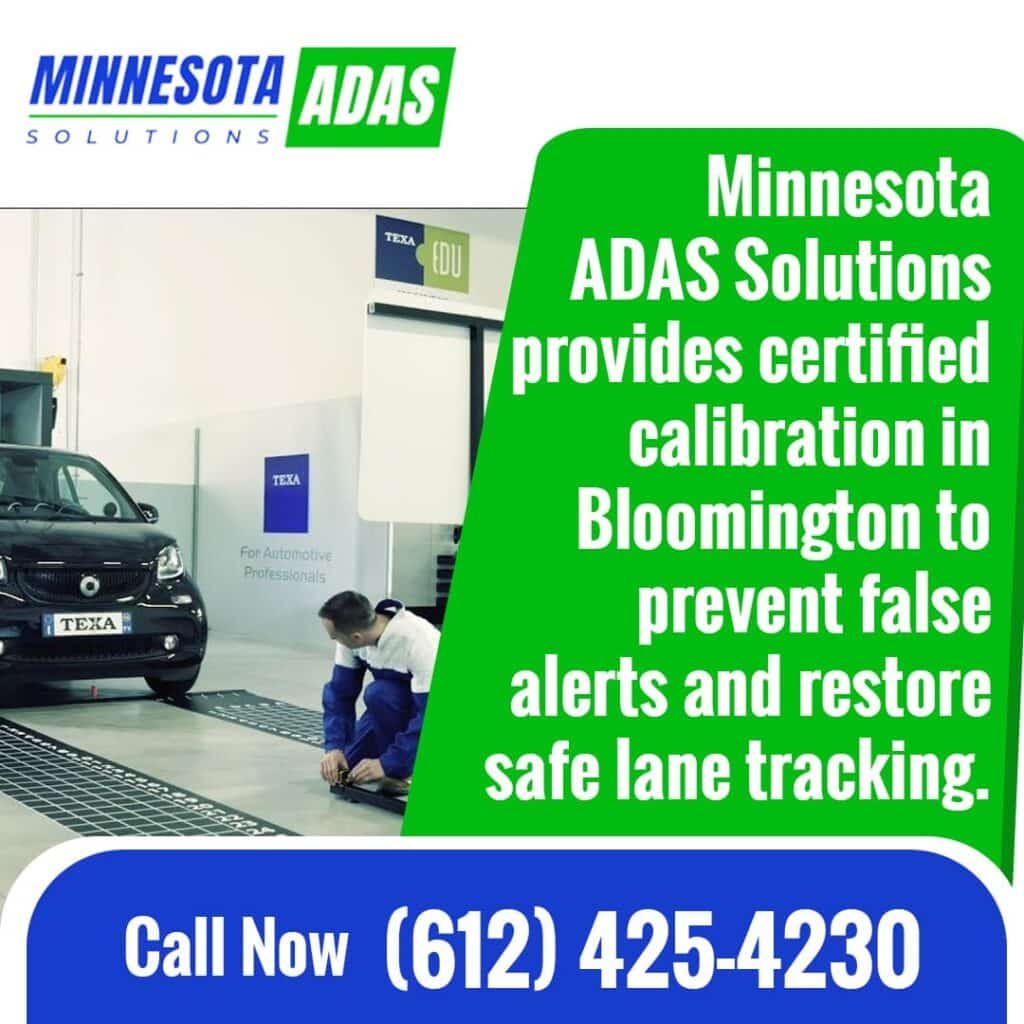
Certified facilities maintain OE standards. In a controlled indoor environment, technicians can measure, adjust, and verify sensor alignment with precision.
At Minnesota ADAS Solutions, we provide:
- Indoor calibration bays designed for accurate measurements
- Factory-approved targets for sensor alignment
- Consistent lighting and controlled surroundings
- Verification of lane departure sensor alignment after adjustments
This structured setup minimizes the risk of errors and restores the reliability of lane departure and lane keep assist systems, giving you confidence in your vehicle’s performance.
Benefits of Professional Lane Departure Calibration in Bloomington, MN
Choosing a certified service allows you to address any misalignment caused by collisions or repairs, giving your vehicle’s lane departure and lane keep assist systems consistent performance and dependability. Minnesota ADAS Solutions completes this work with precision and accountability.
Restoring Camera and Sensor Accuracy
Cameras and sensors are returned to factory positions. Even slight misalignment can alter how your vehicle reads lane markings. By recalibrating the cameras and radar systems, you will notice that lane detection responds correctly, steering adjustments happen promptly, and alerts trigger only when necessary. This process reduces errors that could affect driving on highways or tight city streets.
Proper Lane Departure Sensor Alignment
Sensor angle, height, and distance are verified. Each component is checked to confirm it aligns with the manufacturer’s standards. This alignment allows your lane departure system to consistently monitor your vehicle’s position and respond accurately to drifting or lane changes. Misaligned sensors can create false alerts or fail to activate at critical moments.
Reliable Lane Keep Assist Performance
Drivers receive consistent alerts and steering support. Calibrated systems provide smooth, predictable corrections when your vehicle begins to drift. This reliability prevents distractions from false warnings and helps you focus on the road rather than second-guessing whether your safety features are functioning correctly.
Documentation for Body Shops and Insurers
Calibration reports confirm accuracy and OE compliance. Every step of the process is recorded, giving repair shops and insurance providers proof that your vehicle has been properly serviced. Detailed documentation helps with claims, avoids repeat visits, and shows that the vehicle’s safety systems were fully restored.
Why Bloomington Collision Repair Shops Partner with Minnesota ADAS Solutions
Shops choose Minnesota ADAS Solutions for speed, accuracy, and verified documentation. Controlled facility calibration protects vehicle safety systems.
90-Minute Turnaround
Most calibrations are completed in under 90 minutes. This allows your customers’ vehicles to return to the road quickly without unnecessary delays. By completing the work efficiently, repair shops can maintain a smooth workflow and reduce customer wait times.
Full Documentation Package
Calibration reports include pre- and post-scan results, environmental data, and detailed procedure records. You can provide insurers with complete documentation for claims, and body shops can keep detailed records of the work performed. This level of transparency supports accountability and reduces disputes.
Controlled ADAS Facility Only (No Mobile Services)
All calibrations occur in our certified indoor facility. Mobile services are not offered because they cannot match the accuracy and consistency of a controlled environment. Performing calibrations in a certified facility guarantees reliable results every time.
Full Reimbursement Guarantee
Repair shops and insurers avoid short-pays. With thorough documentation and verified procedures, every service is covered, preventing financial discrepancies and building trust between the repair shop, insurers, and vehicle owners.
When Calibration Is Required
Lane-keep assist systems may stop working correctly after certain repairs or replacements. Knowing when your vehicle needs calibration can prevent unexpected system errors and maintain reliable lane tracking.
Post-Collision Repairs
Even minor front-end damage can shift cameras or sensors. If your vehicle has been in a collision, the impact may move or loosen lane keep assist components. You might notice inconsistent alerts or delayed steering corrections. Scheduling calibration after any collision repair keeps the system responsive and accurate.
Windshield Replacement
Forward-facing camera recalibration is needed when the windshield is removed. Many lane departure systems rely on sensors mounted on or near the windshield. Replacing the glass can change sensor angles, so recalibration is necessary to maintain proper system function.
Alignment and Suspension Work
Adjustments to ride height or suspension affect sensor angles. If you have new suspension components, alignment work, or ride height changes, the cameras and radars can tilt or shift. Recalibrating the system restores accurate lane detection and steering support.
Camera or Sensor Replacement
New sensors or cameras always require recalibration. Any replacement part may vary slightly from the original, affecting system performance. Certified lane departure repair shops have the tools and procedures to realign and test these components safely.
By addressing these situations promptly, you reduce the risk of false alerts, delayed responses, or system failures.
Get Professional Lane Departure Calibration Service Today
Restore your vehicle’s lane departure and lane keep assist systems with Minnesota ADAS Solutions. Our certified team delivers accurate and documented service through our lane departure calibration service in Bloomington, MN, helping your vehicle perform reliably on every drive. Call us at (612) 425-4230 or email info@mnadas.com to schedule your appointment.