
Your vehicle’s safety systems rely on precise alignment and calibration to function correctly. At Minnesota ADAS Solutions, we specialize in advanced driver assistance calibration, helping drivers maintain the accuracy of cameras, radar, and sensors after repairs. Modern cars come with complex technologies like lane-keeping assist, adaptive cruise control, and collision warning systems. Certain changes to windshields, body panels, or painted surfaces may alter sensor alignment or signal transmission, which can lead to inaccurate readings or warning messages when OEM calibration tolerances are exceeded.
Through our ADAS diagnostics and calibration process, we check sensor alignment, inspect mounts, and adjust systems to meet manufacturer specifications. Our dedicated facility provides ADAS calibration services in Bloomington, MN, designed to handle each vehicle in a controlled environment with precise equipment. By relying on professional calibration, you protect both the driver and passengers while restoring the full functionality of your vehicle’s safety features after repairs or replacements.
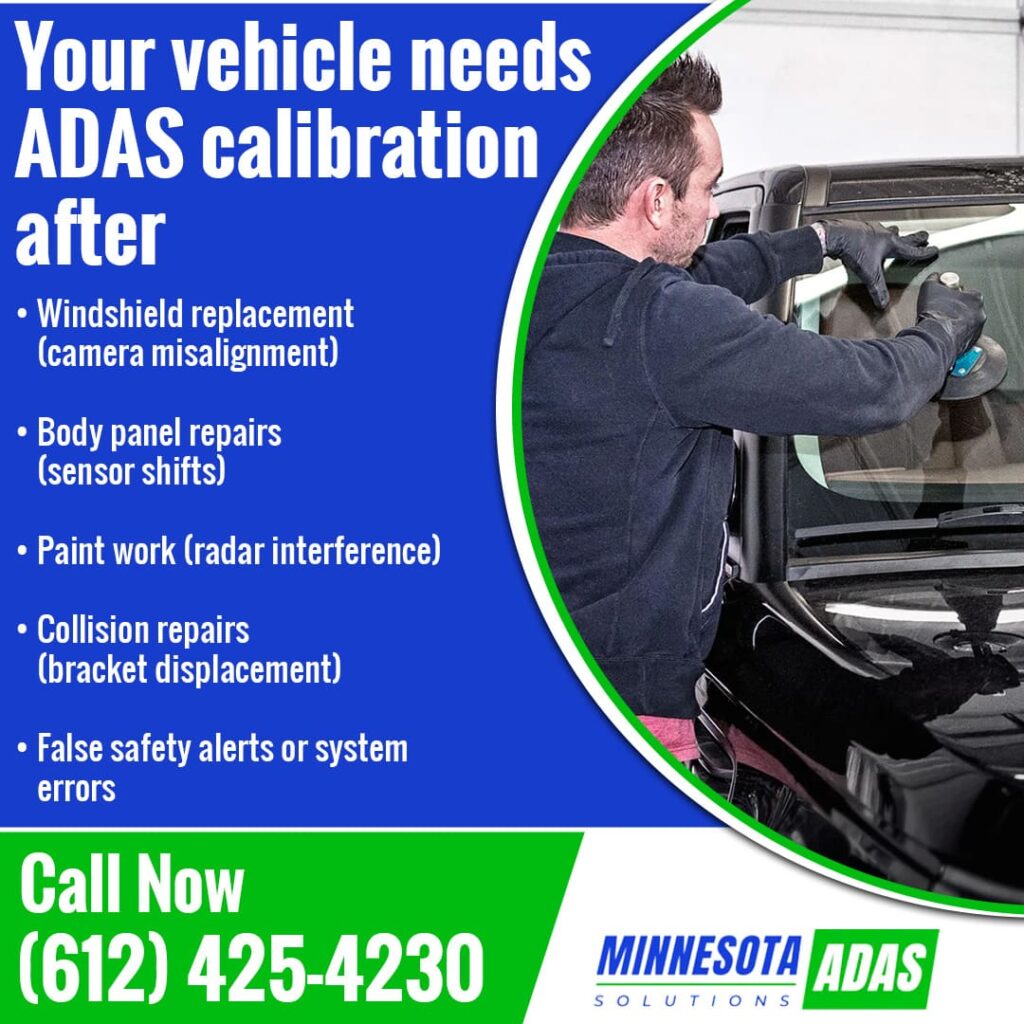
Why Modern Vehicles Depend on Precise ADAS Calibration
Modern vehicles rely on accurate ADAS calibration to maintain correct sensor readings. Cameras, radar, and ultrasonic sensors, and in select vehicle models, lidar, support lane guidance, forward detection, and braking assistance. Misaligned hardware changes reference points, causing incorrect alerts and system performance.
- Cameras monitor lane markings and detect nearby vehicles.
- Radar measures distance, speed, and relative motion of surrounding traffic.
- Lidar calculates depth and distance to objects, adding a layer of precision.
- Ultrasonic sensors assist with parking and low-speed obstacle detection.
Proper ADAS diagnostics and calibration restores alignment to match the original manufacturer specifications.
How ADAS Sensors Interpret the Road
ADAS sensors work together to interpret road conditions, traffic, and obstacles. Cameras identify lanes and vehicles, radar tracks speed and distance, lidar evaluates depth, and ultrasonic sensors detect nearby objects. Correct ADAS sensor alignment is critical for reliable system performance. Misaligned sensors can result in delayed lane departure warnings, erratic adaptive cruise control, or false collision alerts.
Common Components That Require Calibration
Many components rely on precise positioning to operate correctly. After repairs or replacements, these parts may shift slightly, affecting system accuracy. Front cameras, radar modules, blind-spot sensors, and parking sensors often require calibration.
- Front-mounted cameras monitor lane markings and traffic flow.
- Radar modules behind bumpers measure distances and relative speeds.
- Blind-spot sensors track vehicles alongside your car.
- Parking sensors help detect low-speed obstacles during maneuvers.
Even minor deviations in bracket angles or mounting surfaces can cause inaccurate readings. This makes advanced driver assistance calibration necessary after windshield replacements, body repairs, or panel adjustments.
At Minnesota ADAS Solutions, we provide ADAS diagnostics and calibration using a controlled facility and precise equipment. Our team checks sensor alignment, inspects mounts, and performs full calibration to restore all systems to proper functionality. By addressing these adjustments, your vehicle operates safely and responds predictably on the road.
How Glass Work Affects ADAS Calibration
On many vehicles, windshield replacement affects ADAS calibration because forward-facing cameras are mounted directly to the glass or depend on its precise positioning. Even minor shifts in glass placement change the camera’s field of view, causing misreadings and false alerts.
Why Windshield Replacement Shifts ADAS Cameras
Camera brackets attach to the windshield, not the vehicle frame. Variations in adhesive thickness or glass position can shift camera angles. ADAS calibration after windshield replacement corrects these misalignments to maintain system accuracy.
When the glass moves even slightly during replacement, the camera’s orientation changes. That small shift may alter how the system reads lane markings or calculates distance to other vehicles. Without adjustment, features like adaptive cruise control or lane-keeping assist may react too early, too late, or unpredictably.
Problems That Occur When Glass Shops Skip Calibration
Skipped calibration can cause inaccurate lane detection, false collision warnings, and unsafe following distance readings. Even if the windshield looks aligned, sensors may no longer match factory specifications.
Many drivers do not notice the subtle errors immediately. Lane departure warnings might activate unexpectedly, or braking support may trigger without a real hazard. Skipping calibration can leave the system unreliable, even if the glass appears perfectly positioned.
Symptoms Drivers May Notice
| Symptom | Potential Cause |
| Lane departure warnings activate early or late | Camera misalignment |
| Adaptive cruise control brakes earlier/later than expected | Radar angle shifted |
| Collision warnings without nearby hazards | Sensor misread due to glass position |
| Lane-keeping assistance drifts | Misaligned camera or sensor |
If you notice any of these behaviors, it is a clear sign that your vehicle requires ADAS calibration after windshield replacement to adjust the camera and sensors properly.
How Body Panels Influence ADAS Sensor Accuracy
Body panels play a larger role in your vehicle’s safety systems than most drivers realize. Sensors that detect lane markings, obstacles, and surrounding vehicles are installed behind bumpers, fenders, and grilles. Any movement in these panels, even slight, can change how the sensors read the environment.
Front and Rear Bumper Repairs
Bumper repairs can interfere with radar and ultrasonic signals. Heat from sanding or refinishing, filler used to smooth damaged areas, and slight warping of plastic can shift sensor angles. These changes may cause alerts to activate too early, brake timing to vary, or parking assistance to misread objects.
Structural Panel Replacement After a Collision
When collision repairs involve welded or bonded structural panels, even small adjustments in the metal framework can misalign ADAS modules. Sensors rely on fixed mounting points, so altered panel geometry can prevent cameras and radar from pointing in the correct direction.
Hidden Issues Body Shops May Miss
- Bent radar tabs from minor impacts
- Excess filler blocking radar waves
- Misaligned camera brackets
- Blind-spot sensors shifted during quarter-panel repairs
Even minor oversights can affect system performance and trigger inconsistent warnings. Minnesota ADAS Solutions addresses these issues with precise inspections and calibration to restore the proper function of all sensors.
The Impact of Automotive Paint on ADAS Function
Vehicle paint does more than protect your car or give it a polished look. It interacts with the sensors that support safety systems, affecting how cameras, radar, and other modules detect the environment. Changes in paint thickness or composition can alter the way these sensors read objects and road features.
Radar Interference Caused by Wrong Paint Thickness
Paint layers that exceed manufacturer thickness specifications can attenuate or distort radar signals, potentially affecting detection accuracy or response timing. Radar sensors rely on precise wave reflections to measure distance and movement. When bumpers or panels are repainted with layers exceeding manufacturer specifications, the radar waves scatter or lose strength.
How Metallic Paint Affects Sensor Targeting
Metallic paint finishes, when applied outside OEM material or thickness specifications, can alter radar signal reflection characteristics, which may require post-refinish calibration. Vehicles with metallic finishes may experience altered radar reflections. This interference can cause delayed or inaccurate object recognition, especially for front radar units or sensors near cross-traffic areas. Metallic paint does not damage the system, but it changes how sensors perceive their surroundings.
Paint Work That Requires Post-Repair Calibration
Certain types of paint repairs often require sensor recalibration to restore system performance. These include:
- Refinished bumpers
- Repainted grilles housing the front radar
- Repainted quarter panels near blind-spot sensors
- Refinished rear areas containing cross-traffic sensors
At Minnesota ADAS Solutions, our technicians check sensor alignment and perform ADAS calibration after these paint repairs, restoring the system’s ability to detect hazards and maintain proper functionality on the road.
Why Calibration Problems Happen More Often Today
Modern vehicles are packed with advanced safety systems, and each sensor plays a specific role in monitoring your surroundings. With so many sensors fitted into tight spaces, even small adjustments during repairs or replacements can affect how your vehicle reads the road.
Vehicle Designs With Tight Sensor Placement
Sensors are often mounted close to panel edges, seams, or behind bumpers. Car manufacturers design vehicles this way to allow slimmer body panels and sleeker styling. While these placements work well from the factory, they leave very little room for error after repairs. A small misalignment during bodywork or panel replacement can change the angle of a sensor enough to alter its readings.
Small Deviations That Lead to Big Safety Issues
Even small positional deviations—sometimes measured in millimeters, can meaningfully alter sensor detection angles, depending on the system design and mounting location. You may notice changes in lane tracking, delayed braking response, or false hazard alerts. These small deviations may not be visible, but they can affect your confidence while driving.
Software Sensitivity and Relearn Requirements
Modern ADAS software monitors sensor positions continuously. After repairs or replacements, the system may detect a mismatch and trigger a recalibration request. ADAS diagnostics and calibration performed in certified facilities reset the system’s reference values, restoring proper operation. This process helps the vehicle regain its ability to interpret road conditions accurately.
Warning Signs Your Vehicle Needs Calibration
Calibration is required when alerts misfire, steering support changes, or sensor behavior is inconsistent. These problems often appear after windshield replacements, body panel repairs, or paint work.
System Alerts and Dashboard Warnings
Some of the most obvious signs appear on your dashboard:
- “Safety system unavailable” messages
- Lane-keeping or forward collision warnings
- Adaptive cruise control disabled
These alerts indicate that your sensors are not reading the environment correctly. Ignoring them can result in improper system responses in traffic situations.
Changes in Steering Support or Braking Response
If you notice heavier steering, weaker lane guidance, or delayed braking, the sensors may be misaligned. These changes can affect how the vehicle reacts in normal driving or emergency maneuvers.
Inconsistent Lane Detection or False Warnings
Cameras or radar that have shifted may generate false lane markings or random hazard alerts. These inconsistencies often appear after repairs to the windshield, bumpers, or surrounding panels.
How a Controlled Calibration Facility Fixes These Issues
Controlled facilities provide stable lighting, level floors, and OE-specific targets, enabling accurate sensor calibration. This is vital for effective ADAS calibration services in Bloomington, MN. By working inside a controlled environment, you remove variables that could interfere with sensor measurements. You get reliable adjustments for cameras, radar, and other modules without worrying about shadows, uneven surfaces, or other external factors altering results.
Why Outdoor or Mobile Calibration Fails
Outdoor calibration cannot guarantee fixed lighting, level surfaces, or stable reference points. Even minor changes in sunlight, wind, or ground slope can skew sensor readings. Mobile setups lack the consistency of a certified facility, making calibration results less predictable. Performing adjustments outdoors may leave lane detection, collision warnings, or adaptive cruise control misaligned.
Benefits of OE-Standard Targets and Level Floors
| Calibration Benefit | Outcome |
| Accurate camera aiming | Correct lane detection |
| Proper radar alignment | Reliable collision warnings |
| Static and dynamic calibration | Sensor readings match factory specifications |
Using OE-standard targets and level floors allows you to trust that cameras and radar are positioned precisely. Both static checks and dynamic calibration tests confirm that sensors communicate correctly with the vehicle’s control systems.
The Value of Full Documentation for Shops and Drivers
Documentation confirms calibration met OE standards. This record helps body shops, insurers, and drivers track repairs and verify that systems have been properly adjusted. If questions arise after service, the documentation serves as proof of accuracy and protects against potential disputes.
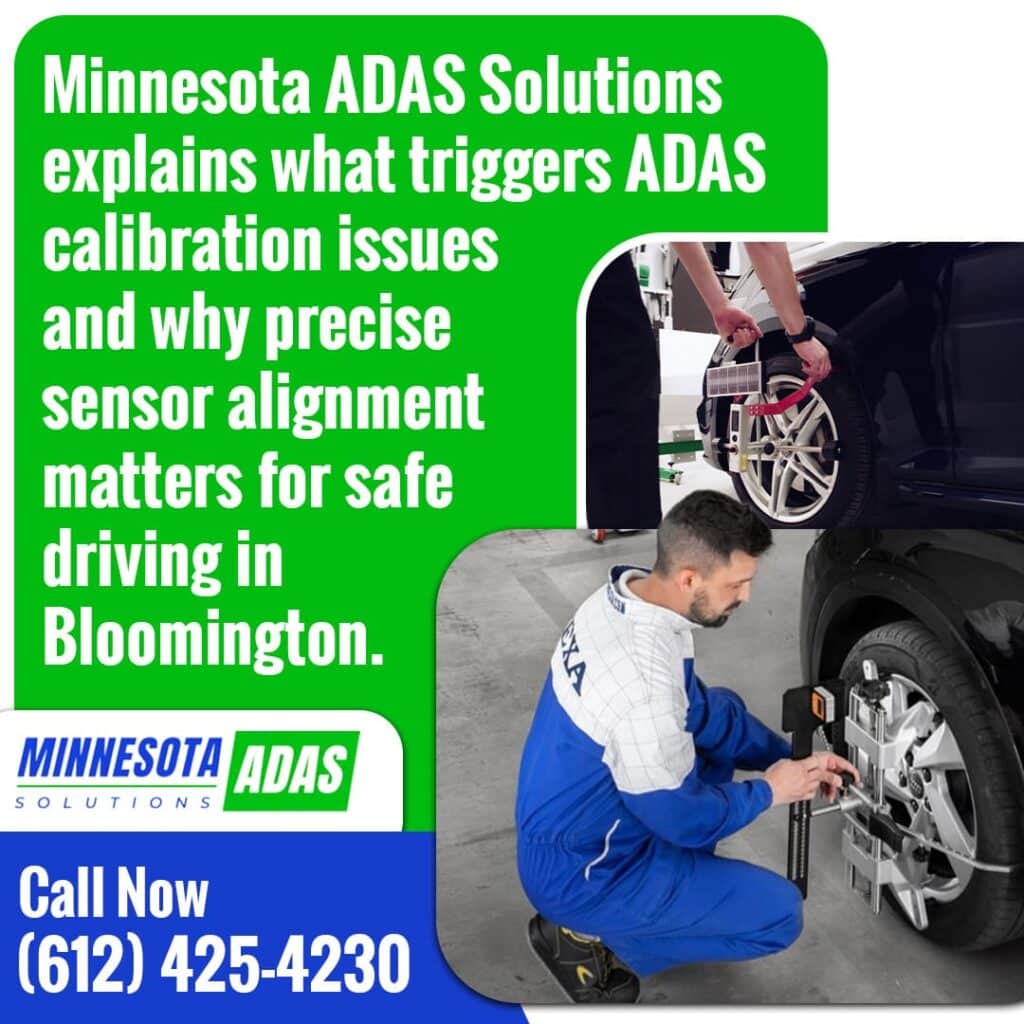
What Minnesota ADAS Solutions Offers
Your vehicle’s safety systems rely on precise sensor placement and accurate calibration. At Minnesota ADAS Solutions, we provide the services needed to restore and maintain advanced driver assistance systems after repairs or replacements.
Diagnostics, Sensor Alignment, and Full Calibration
Technicians inspect mounts, read diagnostic codes, and perform static or dynamic calibration. Each vehicle follows specific manufacturer guidelines for calibration, so sensors, cameras, and radar modules operate correctly. You receive consistent results in ADAS sensor alignment and calibration, giving you confidence that your safety features work reliably after windshield replacement, body repairs, or paint work.
Dedicated ADAS Facility in Bloomington, MN
The facility has level floors, controlled lighting, and OE-certified tools to handle every calibration step precisely. We provide professional ADAS calibration services in Bloomington, MN, allowing repairs to be completed in an environment designed to limit errors and maintain system accuracy.
90-Minute Turnaround and Live Scheduling
Most calibration appointments are completed in about 90 minutes. You can schedule your service online or by phone, making advanced driver assistance calibration accessible and convenient.
Pick-Up and Delivery Options
Local pick-up and delivery support repair centers, glass shops, and collision facilities. This service keeps your workflow moving smoothly while your vehicle receives proper ADAS diagnostics and calibration.
Schedule Your ADAS Calibration Today
Protect your vehicle and maintain the full functionality of its advanced driver assistance systems by contacting Minnesota ADAS Solutions. Our team provides precise ADAS diagnostics and calibration. Call us now at (612) 425-4230 or email info@mnadas.com to schedule your appointment. Our dedicated facility in Bloomington, MN, offers professional ADAS calibration services in a controlled environment, giving you reliable results and clear documentation for every vehicle we service.