
Modern vehicles rely on Advanced Driver Assistance Systems (ADAS) to support braking, lane detection, collision alerts, and driver awareness during daily travel. After windshield replacement, collision repair, suspension work, or wheel alignment services, these systems may require recalibration to restore accurate sensor communication and roadway detection.
At MN ADAS Solutions in Bloomington, drivers receive professional vehicle safety system calibration in a certified ADAS calibration center designed for precise measurements and OE-standard procedures. Drivers searching for ADAS calibration services in Bloomington, MN, often need accurate calibration after repairs affecting cameras, radar sensors, or vehicle alignment. You depend on these systems during highway driving, traffic congestion, and changing road conditions. Proper calibration helps restore factory-level system accuracy after modern vehicle repairs.
Why ADAS Calibration Matters After Vehicle Repairs
ADAS calibration restores the accuracy of vehicle safety systems after repairs or component movement. Modern ADAS systems rely on exact sensor alignment. Even small changes in positioning can affect system performance.
How ADAS Systems Support Driver Safety
ADAS systems monitor vehicle surroundings and assist drivers during road travel. ADAS stands for Advanced Driver Assistance Systems. These systems collect roadway information using:
- Cameras
- Radar sensors
- Ultrasonic sensors
- Electronic control modules
These technologies support:
- Adaptive cruise control
- Automatic emergency braking
- Lane departure warning
- Blind spot monitoring
- Lane-keeping assist
Your vehicle processes roadway information continuously while you drive. Cameras track lane markings. Radar sensors measure the following distances and vehicle movement. Blind spot systems monitor nearby traffic during lane changes.
The Insurance Institute for Highway Safety (IIHS) reported that vehicles equipped with forward collision warning and automatic emergency braking experienced lower front-to-rear crash rates compared to vehicles without these systems.
Common Repairs That Affect ADAS Performance
Several repair procedures can change sensor positioning and require recalibration afterward. Modern vehicles contain tightly aligned electronic safety systems. Repairs affecting body structure, wheel alignment, or mounted sensors may require ADAS calibration.
Windshield Replacement
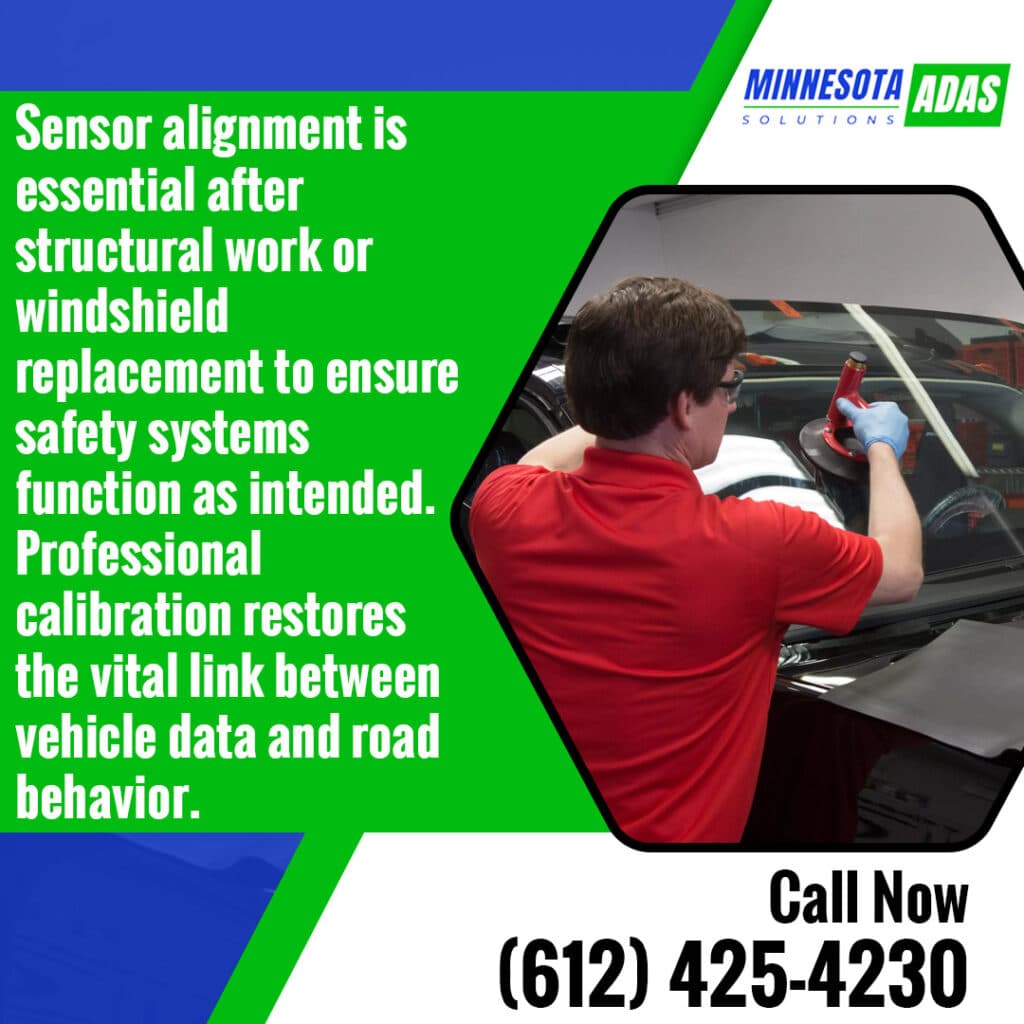
Windshield replacement can affect forward-facing camera alignment. Many vehicle manufacturers mount ADAS cameras directly to the windshield. Replacing the glass may slightly alter the camera angle and affect roadway detection accuracy. Manufacturers commonly require calibration after windshield replacement procedures.
Collision Repair
Collision repair can shift cameras, radar sensors, and mounting brackets. Even low-speed impacts may affect:
- Sensor alignment
- Radar positioning
- Camera viewing angles
- Vehicle geometry
These changes may affect braking response and lane monitoring functions.
Suspension and Wheel Alignment Work
Suspension and alignment repairs can affect ADAS measurements and sensor calculations. ADAS systems rely on vehicle height and wheel positioning data to calculate:
- Lane placement
- Following distance
- Steering adjustments
- Object detection
Changes in alignment or ride height may affect these calculations.
Types of ADAS Calibration Services
Vehicle manufacturers use different calibration procedures depending on vehicle design and sensor configuration. Some vehicles require static calibration. Others require dynamic calibration or a combination of both.
Static ADAS Calibration
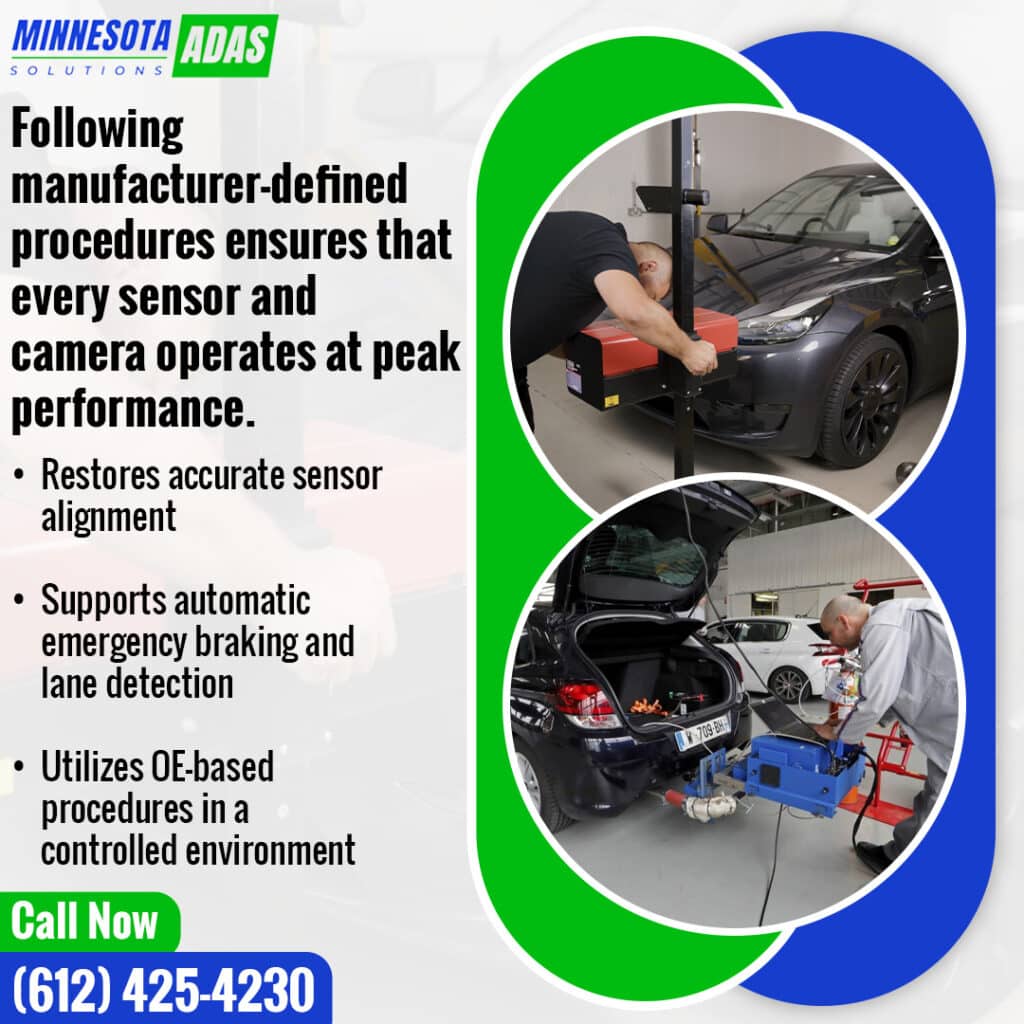
Static calibration uses fixed targets and precision measurement equipment inside a controlled facility. The vehicle remains stationary during this process. Technicians position calibration targets at manufacturer-specified distances and angles. Laser measurement systems, radar reflectors, and alignment equipment help verify sensor positioning during calibration.
Static calibration commonly applies to forward-facing cameras, radar systems, and parking assistance sensors. Many manufacturers require this procedure after windshield replacement because cameras mounted to the windshield can shift during installation. Even a small positioning change may affect lane recognition and object detection accuracy.
Dynamic ADAS Calibration
Dynamic calibration requires driving the vehicle under manufacturer-specified conditions. During this process, the system collects roadway information while monitoring lane markings, traffic flow, vehicle speed, and surrounding conditions. The vehicle recalibrates while driving at specific speeds and under manufacturer-defined conditions.
Dynamic calibration often follows sensor replacement, steering repairs, or module programming. Some manufacturers require both static and dynamic calibration procedures before the vehicle returns to the road. This process allows multiple systems to communicate correctly after repairs.
Calibration for Cameras, Radar, and Sensors
Different ADAS components require separate calibration procedures. Modern vehicles may contain several sensors operating together through shared vehicle data. Forward-facing camera calibration restores lane recognition and traffic sign monitoring accuracy after windshield replacement or repairs.
Radar sensor calibration restores distance measurement and object detection accuracy for adaptive cruise control and automatic emergency braking systems. Blind spot monitoring calibration restores side sensor tracking accuracy for nearby vehicle detection.
Risks of Skipping Vehicle Safety System Calibration
Skipping ADAS calibration may reduce safety system accuracy after repairs. Vehicle safety systems rely on communication between cameras, radar sensors, control modules, and onboard software. After collision repair, windshield replacement, wheel alignment, or suspension work, these components may shift slightly from factory positioning. Even small changes may affect how your vehicle reacts to traffic movement, nearby obstacles, and lane markings.
Incorrect Emergency Braking Response
Improper radar calibration may affect emergency braking timing. Automatic emergency braking systems calculate vehicle distance, closing speed, and obstacle positioning within fractions of a second. If radar measurements become inaccurate, the system may respond too late or react at the wrong moment.
During heavy traffic or sudden stops, delayed braking response may increase collision risk. You rely on these systems during highway driving, city traffic, and changing roadway conditions where quick response times matter.
Lane Departure Warning Errors
Improper camera calibration may affect lane recognition accuracy. Lane departure warning systems continuously monitor lane markings through forward-facing cameras mounted near the windshield. Incorrect camera positioning may create false alerts or missed lane departure warnings.
In some vehicles, steering correction systems may also react improperly if the camera angle changes after repairs. These errors may become more noticeable during nighttime driving, in rain, or with faded lane markings.
Reduced Accuracy in Adaptive Cruise Control
Adaptive cruise control depends on accurate radar measurements. This system adjusts vehicle speed based on surrounding traffic and following distance calculations.
Incorrect calibration may affect speed adjustments, vehicle tracking, and distance monitoring. Drivers may notice inconsistent braking or delayed acceleration during traffic flow changes.
Safety Risks Caused by Sensor Misalignment
Small sensor alignment issues may affect several ADAS functions simultaneously. Misalignment may change:
- Camera viewing angles
- Radar positioning
- Sensor communication
- Object detection accuracy
Proper calibration restores manufacturer-intended system operation.
Why Controlled ADAS Calibration Centers Matter
Controlled calibration environments support accurate measurements and calibration consistency. ADAS calibration depends on floor levelness, lighting conditions, exact measurements, and target positioning. Environmental inconsistencies may affect calibration results.
OE Standard Calibration Procedures
Vehicle manufacturers provide exact calibration procedures for each vehicle model. OE stands for Original Equipment.
Manufacturers specify:
- Measurement distances
- Vehicle positioning
- Environmental conditions
- Calibration sequences
You cannot apply the same calibration process to every vehicle. Each manufacturer develops specific procedures based on sensor placement, vehicle dimensions, and safety system design. Some vehicles require different target distances. Others require exact lighting levels or specific calibration sequences before the system accepts adjustments. Certified ADAS calibration centers follow these procedures during service.
Controlled Indoor Calibration Conditions
Indoor calibration facilities reduce environmental interference during calibration procedures. Outdoor calibration areas may introduce variables that affect measurement accuracy. Uneven flooring, sunlight glare, weather conditions, and nearby reflective surfaces may interfere with sensor readings.
Controlled facilities help reduce:
- Lighting inconsistencies
- Surface measurement errors
- Sensor interference
Indoor calibration facilities provide stable working conditions for radar systems, cameras, and alignment equipment. This allows technicians to complete measurements with greater consistency throughout the calibration process. Minnesota ADAS Solutions performs calibrations inside dedicated facilities designed specifically for vehicle safety system calibration.
Calibration Documentation and Verification
Calibration documentation confirms the service was completed according to manufacturer procedures.
Documentation commonly includes:
- Calibration measurements
- Vehicle information
- Sensor verification
- Service confirmation
This documentation supports:
- Vehicle owners
- Collision repair facilities
- Insurance providers
Calibration records provide written verification that the vehicle completed the required procedures after repairs or component replacement.
Benefits of Professionally Trained ADAS Technicians
Certified technicians follow manufacturer calibration procedures and vehicle-specific requirements. ADAS systems require specialized training because manufacturers use different:
- Sensor configurations
- Calibration methods
- Software systems
- Measurement procedures
Technicians work with:
- Radar calibration equipment
- Camera alignment systems
- Diagnostic software
- Vehicle-specific calibration tools
Minnesota ADAS Solutions provides dedicated ADAS calibration services using certified technicians, controlled calibration facilities, and manufacturer-based calibration procedures for vehicles in Bloomington, MN.
Why Drivers Choose Minnesota ADAS Solutions
Minnesota ADAS Solutions focuses exclusively on ADAS calibration and vehicle safety system calibration. We work directly with vehicles that require recalibration after windshield replacement, collision repair, or suspension adjustments.
Our team handles each case with a structured process that keeps sensor alignment, camera positioning, and radar function aligned with manufacturer requirements. Since we dedicate our work solely to ADAS systems, we see each calibration through a specialized lens rather than treating it as a general repair task.
Drivers across Bloomington rely on us because we operate inside a controlled ADAS calibration center designed for precision work. We do not provide mobile calibration services. Every vehicle is brought into our facility so we can control lighting conditions, measurement consistency, and equipment setup without outside interference.
Dedicated ADAS Calibration Services in Bloomington, MN
Minnesota ADAS Solutions provides specialized ADAS calibration services in Bloomington, MN, inside controlled OE-standard facilities. Our service approach includes ADAS diagnostics, camera calibration, radar calibration, sensor programming, and alignment verification. Each service is performed with manufacturer specifications in mind, using tools designed for modern vehicle safety systems. We treat every step as part of a single calibration process, not separate repairs.
90-Minute Turnaround Times
Most calibration procedures are completed within approximately 90 minutes. We structure our workflow to keep downtime low for vehicle owners, collision repair shops, and insurance partners. You can bring a vehicle in, have calibration completed, and return to normal use within a short window without losing accuracy in the process.
Certified Calibration Facilities
Controlled calibration facilities support accurate measurements and calibration consistency. Every calibration takes place indoors under OE-standard procedures. We use controlled lighting, precision measurement systems, and vehicle-specific calibration targets. This controlled setup helps us maintain consistent results across different vehicle makes and models.
Scheduling and Customer Support
Live scheduling and detailed documentation support a streamlined customer experience. We provide structured appointment scheduling, service updates, and calibration documentation for every job. You also receive coordination support for pick-up and delivery options, so the process stays organized from start to finish.
Schedule ADAS Calibration With Minnesota ADAS Solutions Today
Your vehicle safety systems rely on accurate calibration after repairs that affect sensors, cameras, or alignment settings. At Minnesota ADAS Solutions, we provide ADAS calibration services in Bloomington, MN, inside a controlled ADAS calibration center built for precise vehicle safety system calibration. You receive structured service backed by OE-based procedures and detailed calibration records for every job completed.
Reach out to us to book your appointment or request service details. We support vehicle owners, collision repair shops, and insurance partners with ADAS diagnostics, radar calibration, camera calibration, and sensor programming. Contact us today at (952) 209-4022 or email info@mnadas.com to schedule your service and get your vehicle back to calibrated standards after repairs.