You generally cannot choose to calibrate only one ADAS feature if the vehicle manufacturer requires additional systems to be checked after repairs. The required work depends on the repair, affected components, diagnostic findings, and manufacturer instructions. At MN ADAS Solutions in Bloomington, we identify the calibration procedures required for your vehicle rather than selecting systems based only on preference.
Can You Choose Which ADAS Feature Gets Calibrated After Repairs?
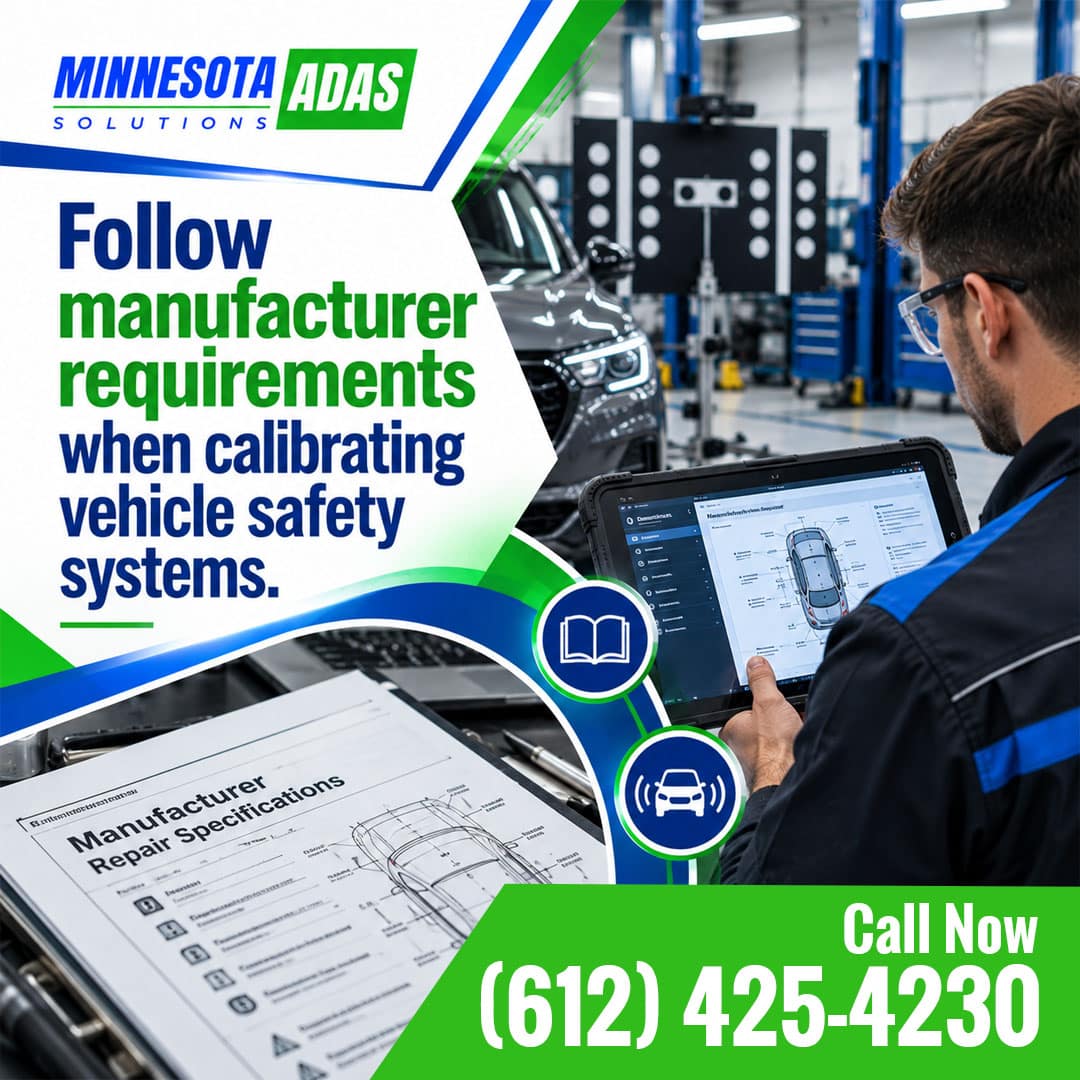
You can discuss the requested work with your repair facility, but manufacturer procedures determine which calibrations are required. Advanced Driver Assistance Systems (ADAS) often share cameras, radar sensors, and electronic control systems.
For example, a windshield-mounted camera may support lane monitoring and forward collision warning. If a repair affects that camera, the manufacturer may require calibration for the associated systems.
Calibrating one feature does not automatically satisfy every related requirement.
How Do Different Repairs Affect Calibration Requirements?
The repair location and affected components determine which ADAS systems may require calibration or verification.
| Repair performed | Systems that may require attention |
| Windshield replacement | Forward-facing camera and related driver-assistance features |
| Front bumper or grille repair | Front radar and collision warning systems |
| Rear bumper repair | Blind spot monitoring and rear cross-traffic alert |
| Wheel alignment or suspension work | Systems specified in the vehicle’s service procedures |
| Camera or sensor replacement | Replaced components and related systems identified by the manufacturer |
These are examples, not universal requirements. The vehicle manufacturer’s procedures and diagnostic findings determine which services are necessary.
For instance, windshield calibration in Richfield, MN, may be required after windshield replacement when the applicable procedure calls for it. Repairs involving front radar may require separate checks.
Why Should You Avoid Skipping Required Calibration?
Skipping a required calibration can affect whether a driver-assistance system operates according to its specified settings. A dashboard warning can indicate a problem, but the absence of a warning does not prove that every affected system has been calibrated correctly.
The National Highway Traffic Safety Administration’s Partnership for Analytics Research in Traffic Safety reported a 49% reduction in front-to-rear crashes associated with automatic emergency braking in its analysis of model years 2015 to 2023.
A separate peer-reviewed study indexed by PubMed associated lane departure warning with an 11% reduction in crashes of all severities after accounting for driver demographics.
These findings describe safety-system performance, not the effect of calibration alone. They support following the vehicle manufacturer’s repair and calibration requirements.
How Can You Confirm Which Features Need Calibration?
Ask your repair facility to identify the affected components and the manufacturer procedures that apply.
Before authorizing work:
- Ask which cameras, radar units, or sensors the repair affected.
- Request confirmation of the applicable manufacturer requirements.
- Check whether diagnostic scans and post-repair verification are needed.
- Request documentation of the completed procedures.
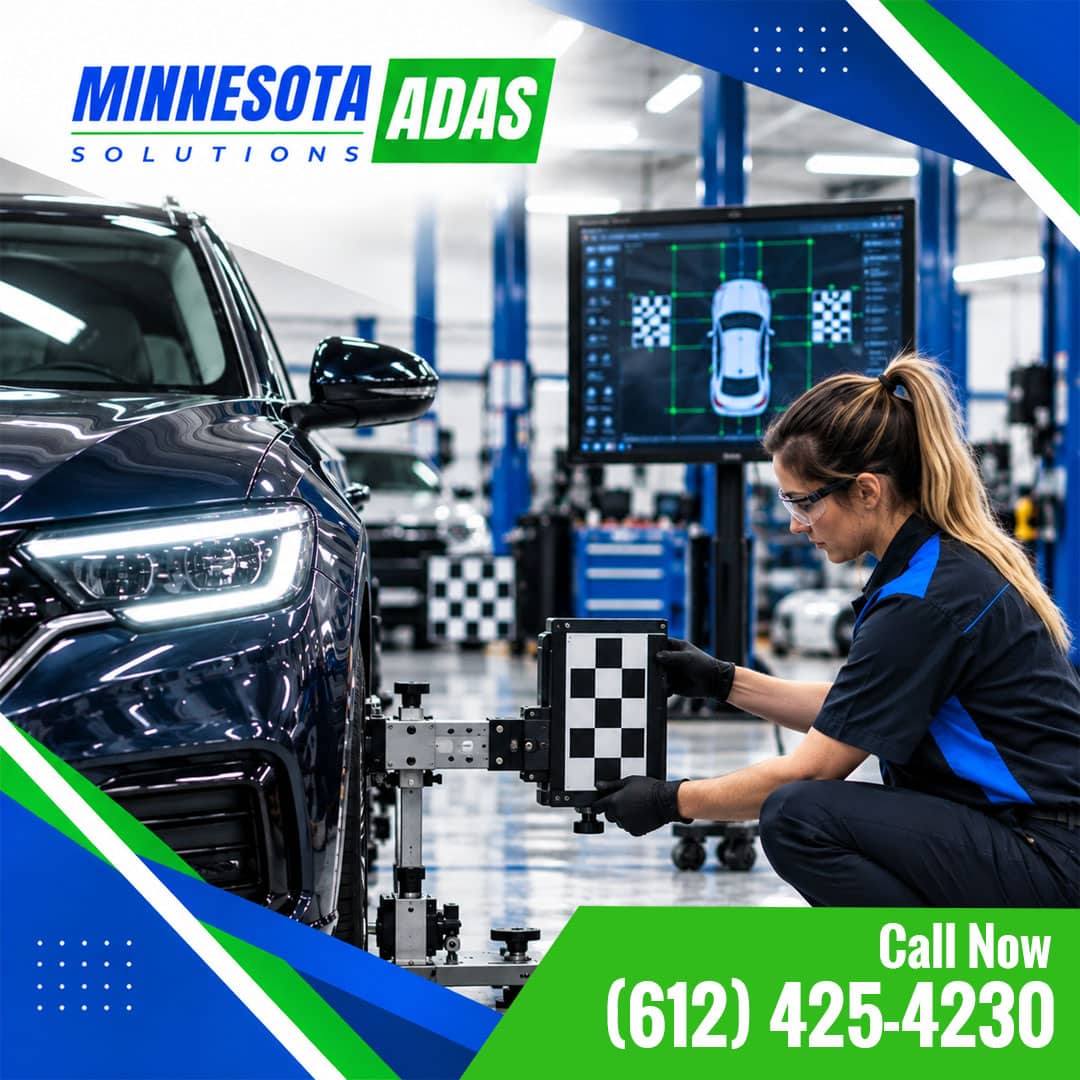
For example, adaptive cruise control calibration may be necessary after work involving a front radar sensor. Similarly, lane departure warning calibration may be required when a windshield-mounted camera is disturbed. A separate assessment can establish whether blind spot monitoring calibration is required after rear bumper work.
Vehicle owners seeking camera and radar calibration near Richfield, MN, can ask our team about the procedures applicable to their vehicle. At Minnesota ADAS Solutions, we provide ADAS calibration services at controlled facilities, including our Bloomington location. We do not offer mobile calibration because the work requires an appropriate calibration environment.
Frequently Asked Questions
Can a mechanic identify which systems need calibration?
Yes. A technician can review the repair details, diagnostic findings, and manufacturer service information to identify required procedures.
Should I request calibration if no warning light appears?
Ask the repair facility to check the manufacturer’s requirements. Some repairs may require calibration even when no dashboard warning appears.
Does calibrating one feature calibrate every related system?
No. Each required procedure must be completed according to the manufacturer’s instructions. One completed calibration does not establish that every related system has been checked.
Get Guidance on ADAS Calibration in Minnesota ADAS Solutions
Minnesota ADAS Solutions can help you determine which calibration procedures may be required after vehicle repairs. Call (612) 425-4230 or email info@mnadas.com to discuss your vehicle.