
Advanced Driver Assistance Systems (ADAS) rely on cameras, radar sensors, and vehicle software to support braking, lane tracking, and driver awareness features. After collision repairs, windshield replacement, or suspension work, your vehicle may require adaptive cruise control calibration, lane departure warning calibration, forward collision warning calibration, blind spot monitoring calibration, and camera and radar calibration. These systems depend on accurate sensor positioning and manufacturer-specific measurements.
At MN ADAS Solutions, Bloomington, calibration services are performed inside a controlled facility designed to support manufacturer-guided ADAS calibration procedures for modern multi-sensor vehicles. Our team works with vehicle owners, body shops, and insurance partners throughout Minnesota to restore ADAS system accuracy after repairs and component replacement.
How Multi-Sensor ADAS Systems Support Vehicle Safety
Multi-sensor ADAS systems combine cameras, radar sensors, and vehicle software to monitor traffic conditions and support driver awareness. Your vehicle collects information through several connected components. Front cameras monitor lane markings and traffic movement. Radar sensors track vehicle distance, speed, and surrounding traffic patterns. Control modules process this information to support braking alerts, lane warnings, and speed adjustments.
What Is Adaptive Cruise Control Calibration?
Adaptive cruise control calibration restores radar alignment used to monitor following distance and vehicle speed. Adaptive cruise control systems use front radar sensors mounted behind the grille or bumper area. These sensors calculate traffic speed and following distance while your vehicle moves through traffic conditions.
Radar Sensor Alignment and Distance Measurement
Radar alignment affects:
- Following distance calculations
- Traffic speed detection
- Braking response timing
- Vehicle spacing measurements
A small radar shift may affect distance calculations and traffic monitoring. Calibration restores radar positioning according to the manufacturer’s repair procedures and specified alignment tolerances.
What Is Lane Departure Warning Calibration?
Lane departure warning calibration adjusts forward-facing cameras used to detect lane markings and vehicle position. Many vehicles place ADAS cameras near the windshield. These cameras track lane markings and roadway position during vehicle operation.
Camera Positioning and Lane Detection Accuracy
Camera alignment affects:
- Lane tracking accuracy
- Driver warning timing
- Steering assistance systems
- Road edge recognition
Windshield replacement, suspension repairs, or collision damage may alter the camera position. Calibration restores proper camera alignment and aiming after repairs.
Why Multi-Sensor Vehicles Require Precise Calibration
Multi-sensor vehicles require precise calibration because several safety systems share camera and radar data simultaneously. One sensor problem may affect multiple vehicle systems during highway driving or stop-and-go traffic conditions.
How Cameras, Radar, and Sensors Work Together
Connected ADAS systems exchange information between:
- Front radar sensors
- Windshield cameras
- Side radar modules
- Vehicle control units
Adaptive cruise control and forward collision warning calibration often depend on shared radar information. Lane departure warning calibration depends heavily on camera positioning and measurement accuracy.
Common Reasons ADAS Calibration Is Required
ADAS calibration is commonly required after repairs that affect camera position, radar alignment, or vehicle ride height. Even small measurement changes can affect how your vehicle detects nearby traffic, lane markings, and roadway conditions.
Collision Repairs and Sensor Misalignment
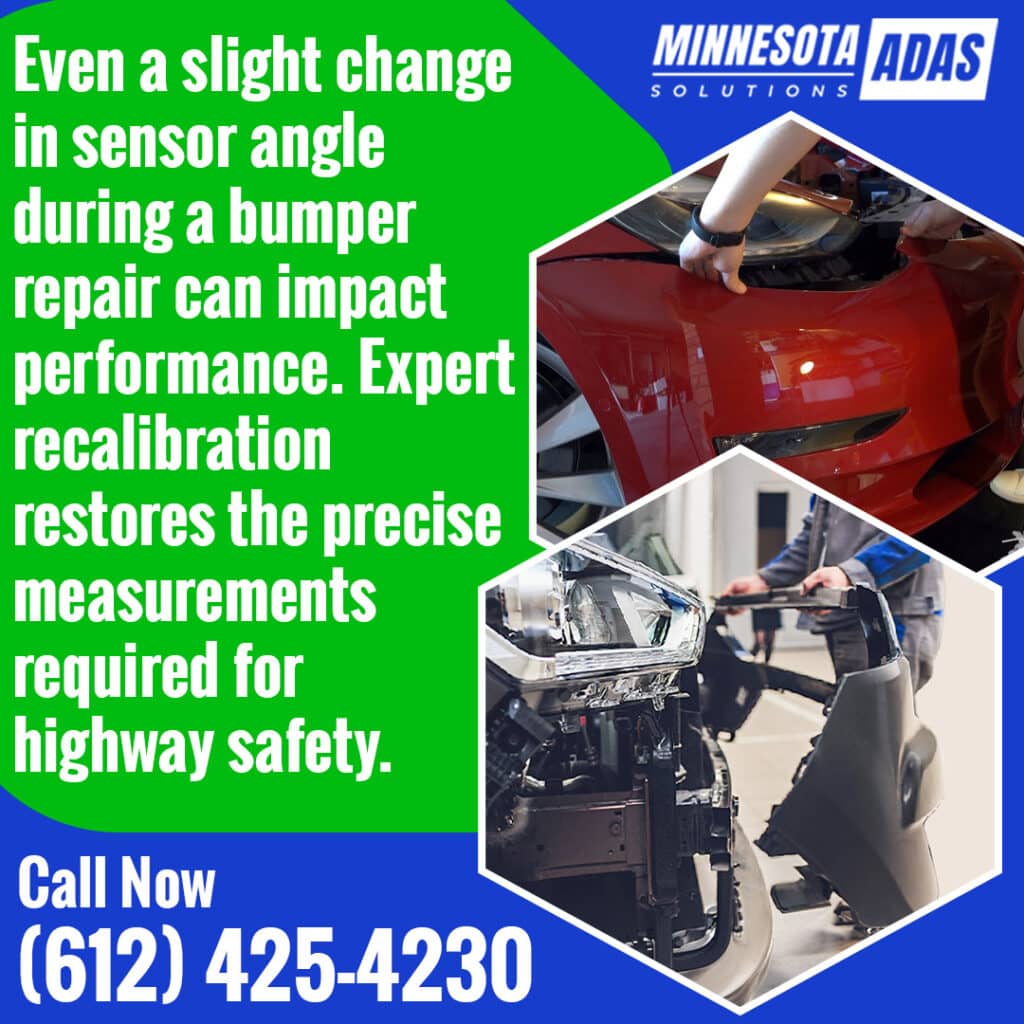
Collision repairs may shift radar sensors, mounting brackets, or camera positions. Many drivers assume calibration is only necessary after major accidents. In reality, even low-speed impacts may alter the radar bracket or sensor positioning by small amounts that can affect calibration accuracy. Those small shifts may affect how your vehicle calculates distance and detects surrounding traffic.
Front-facing radar systems often sit behind the bumper or grille area. Repairs involving these components may change sensor positioning during installation.
Front-End Damage and Radar Position Changes
Front-end repairs often involve:
- Bumper replacement
- Grille repairs
- Structural adjustments
- Headlight replacement
Many radar sensors are mounted behind front bumpers. Calibration restores radar measurements after repairs.
Windshield Replacement and Camera Recalibration
Windshield replacement may change the viewing angle of forward-facing ADAS cameras. Many lane departure warning systems use cameras mounted directly to the windshield. Removing and reinstalling the glass may slightly alter camera positioning.
Effects of Camera Angle Changes on ADAS Performance
Camera angle changes may affect:
- Lane detection accuracy
- Traffic sign recognition
- Driver warning timing
- Steering correction systems
Calibration restores camera alignment after windshield installation.
Suspension, Wheel, and Alignment Repairs
Suspension and wheel alignment repairs may affect sensor positioning and ride height measurements. Vehicle height influences the angle of cameras and radar sensors. Suspension work may change how these systems measure road conditions.
Vehicle Height Changes and Sensor Accuracy
Calibration may be required after:
- Suspension replacement
- Tire replacement
- Steering repairs
- Wheel alignment adjustments
These repairs may alter sensor reference points used by ADAS systems.
Risks Linked to Incorrect Camera and Radar Calibration
Incorrect camera and radar calibration may reduce the accuracy of vehicle safety systems and warning functions. ADAS systems process vehicle speed, lane markings, object distance, and traffic movement in real time. If calibration measurements fall outside manufacturer specifications, warning systems may react too early, too late, or fail to detect surrounding hazards properly.
Forward Collision Warning Calibration Issues
Forward collision warning calibration supports accurate hazard detection and emergency braking timing. Front-facing radar sensors continuously track nearby vehicles and changing traffic conditions. During highway driving, the system measures closing distance and vehicle speed to support collision alerts and automatic braking response.
Incorrect calibration may contribute to delayed collision warnings, false braking events, reduced object detection accuracy, or inconsistent braking response. If the radar sensor points slightly outside its specified angle, your vehicle may misread traffic conditions ahead. This can affect driver reaction time during sudden braking situations.
Blind Spot Monitoring Calibration Problems
Blind spot monitoring calibration restores the side radar accuracy used during lane changes. Side radar sensors monitor areas outside your direct field of vision. These sensors track nearby vehicles traveling beside or behind your vehicle during lane changes and merging situations.
Improper calibration may cause missed vehicle detection, delayed alerts, or false blind spot warnings. Radar positioning directly affects how the system identifies surrounding traffic movement.
Lane Departure Warning System Errors
Lane departure warning calibration supports accurate lane tracking and roadway monitoring. Forward-facing cameras monitor lane markings during vehicle operation. The system compares vehicle position with roadway lines and activates alerts if the vehicle drifts outside the lane.
Poor camera alignment may trigger false lane departure warnings or fail to detect lane movement correctly. Steering support features may also respond inconsistently during highway travel.
Adaptive Cruise Control Performance Problems
Adaptive cruise control calibration affects speed adjustments and following distance response. Front radar sensors measure vehicle spacing and traffic speed continuously while adaptive cruise control remains active.
Incorrect calibration may affect the following distance calculations, traffic flow response, stop-and-go braking timing, and speed adjustment accuracy. Proper calibration restores manufacturer-defined radar measurements.
The ADAS Calibration Process for Multi-Sensor Vehicles
ADAS calibration follows manufacturer repair procedures and controlled measurement standards. Every calibration procedure begins with vehicle preparation and system analysis. Multi-sensor vehicles use connected safety systems that depend on exact measurements during calibration.
Calibration accuracy depends on proper setup conditions and diagnostic verification. Technicians review vehicle data, sensor communication, and calibration status before adjustments begin. This process helps identify faults that may affect radar readings, camera positioning, or system communication.
Diagnostic Inspection Before Calibration
Diagnostic inspections identify sensor faults, communication issues, and calibration trouble codes before adjustments begin. Your vehicle’s ADAS network contains several connected modules. Technicians inspect each system before starting calibration procedures.
Identifying Sensor and Camera Faults
Diagnostic procedures may identify radar communication faults, camera positioning errors, sensor interruptions, and system calibration status codes. These inspections help technicians locate sensor-related issues before alignment procedures begin. Diagnostic scans may reveal communication interruptions between radar sensors, cameras, and control modules.
Common inspection findings include:
- Radar communication faults
- Camera positioning errors
- Sensor interruptions
- System calibration status codes
These inspections confirm the condition of connected safety systems.
Static Calibration in a Controlled Environment
Static calibration uses manufacturer targets and measurement procedures to restore camera and radar alignment. Calibration equipment must remain level and properly positioned during the process. Small setup variations may affect sensor measurements. Controlled calibration environments reduce variables that may affect sensor measurements.
OE Standards for Camera and Radar Calibration
Calibration facilities monitor vehicle positioning, floor level conditions, lighting consistency, and target placement measurements. These measurements support accurate camera and radar alignment during calibration procedures. Minnesota ADAS Solutions performs calibration procedures according to the manufacturer’s repair procedures within a dedicated ADAS calibration facility.
Calibration documentation records completed procedures, measurements, and system verification results. Repair records provide documented proof that calibration procedures were completed following manufacturer specifications.
Why Calibration Records Matter for Vehicle Owners and Repair Shops
Documentation may include pre-scan reports, post-scan reports, calibration measurements, and system verification records. These records support repair documentation for vehicle owners, repair facilities, and insurance providers. These records confirm calibration procedures were completed according to manufacturer specifications.
Why Drivers Choose Minnesota ADAS Solutions for Camera and Radar Calibration
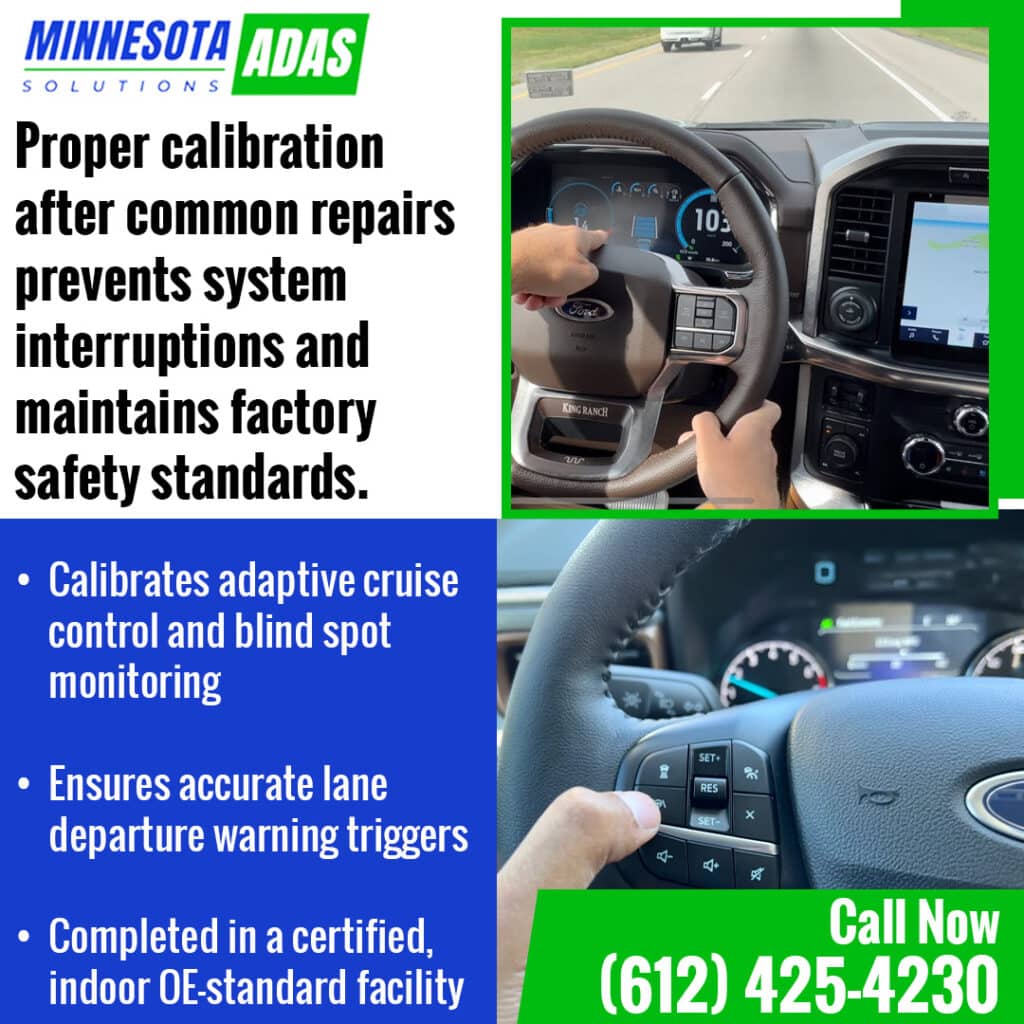
Minnesota ADAS Solutions provides dedicated ADAS calibration services within a controlled OE-standard facility in Bloomington, MN. We focus exclusively on ADAS diagnostics, calibration, and vehicle safety system verification. Our facility is built specifically for modern vehicles equipped with cameras, radar sensors, and advanced driver assistance technologies. By focusing exclusively on ADAS services, we perform calibration procedures based on manufacturer repair procedures and vehicle-specific specifications.
Dedicated ADAS Calibration Services in Bloomington, MN
Minnesota ADAS Solutions performs calibration services for vehicles equipped with modern camera and radar systems. We work with vehicle owners, collision repair facilities, and insurance partners throughout Bloomington and nearby communities. Our team performs adaptive cruise control calibration, lane departure warning calibration, forward collision warning calibration, blind spot monitoring calibration, and camera and radar calibration for many vehicle makes and models.
Many modern safety systems share data between front cameras, radar modules, and onboard control systems. A small alignment issue may affect warning timing, braking response, or lane tracking performance. Our calibration procedures follow manufacturer specifications designed for each vehicle platform.
All calibration work takes place inside our dedicated ADAS calibration facility, designed for controlled calibration conditions. We do not provide mobile calibration services because camera and radar calibration require controlled environmental conditions, accurate measurements, stable lighting, and verified target positioning.
Fast Turnaround and Detailed Documentation
Most calibration services are completed within approximately 90 minutes. We know that repair schedules and vehicle downtime affect both drivers and repair facilities. Our scheduling process helps reduce delays while maintaining accurate calibration procedures. We also provide detailed calibration documentation that records completed procedures, measurements, and verification results.
Our team also offers live scheduling, pick-up and delivery assistance, and support with qualifying reimbursement-related documentation. Every vehicle receives documented calibration records completed within our dedicated ADAS calibration environment.
Schedule Your ADAS Calibration Service Today
Your vehicle’s cameras and radar sensors depend on accurate calibration after collision repairs, windshield replacement, suspension work, and alignment changes. At Minnesota ADAS Solutions, we perform calibration inside our certified OE-standard facility in Bloomington.
Contact us today to schedule your ADAS calibration service. Call us at (952) 209-4022 or email info@mnadas.com to speak with our team about diagnostics, calibration documentation, scheduling availability, and vehicle pick-up and delivery assistance for qualifying services.