
Vehicle safety systems rely on precise sensor alignment to measure distance, detect objects, and track lane position. You depend on features like adaptive cruise control, lane alerts, and collision warnings during daily driving. These systems only perform correctly after proper camera and radar calibration. Changes in ride height, added load, or adjustments to suspension can shift sensor angles and affect readings.
At MN ADAS Solutions, Bloomington and Woodbury, we work with vehicles that require accurate adaptive cruise control calibration, lane departure warning calibration, forward collision warning calibration, and blind spot monitoring calibration. You may not notice small alignment changes, but your vehicle’s sensors do. Even minor variations influence how systems detect lanes, vehicles, and obstacles. This article explains how vehicle conditions affect calibration accuracy and why proper alignment plays a direct role in system performance.
Why Calibration Accuracy Depends on Vehicle Conditions
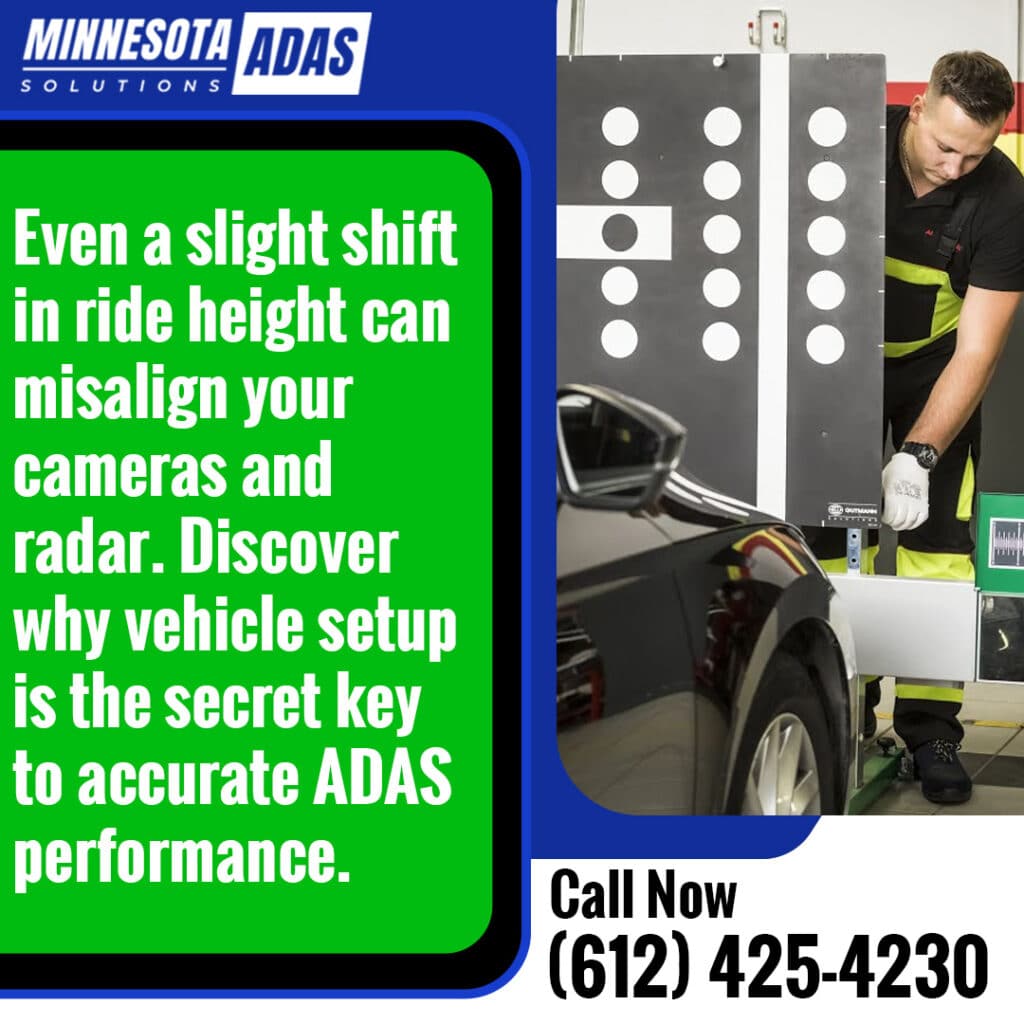
Calibration accuracy depends on matching sensor alignment to the vehicle’s actual height and weight distribution. ADAS (Advanced Driver Assistance Systems) operate using fixed geometric targets set during calibration. You are working with systems that calculate distance, speed, and object position based on these predefined points. When ride height changes or load shifts, those reference points move. Sensors no longer read from the same angles or positions.
Research from the Insurance Institute for Highway Safety shows that properly calibrated forward collision warning systems reduce rear-end crashes by up to 27%. That reduction depends on accurate sensor positioning, which is tied directly to vehicle condition.
Key Variables That Affect Calibration
Ride height, vehicle load, suspension condition, and tire specifications directly influence how sensors align with the road surface.
- Ride height changes the vertical position of cameras and radar. Even small height differences shift detection angles.
- Vehicle load affects weight distribution. Added weight changes how the vehicle sits and tilts the sensor direction.
- Suspension condition controls stability and height consistency. Worn components lead to uneven positioning.
- Tire size and pressure alter ground clearance and vehicle balance. Variations change calibration reference points.
Each of these variables affects how your vehicle maintains its geometry. You rely on consistent alignment for accurate sensor readings. If one factor changes, the entire calibration baseline shifts.
At the section level, this is where precision matters most. You are not adjusting a single sensor. You are working with a system that depends on exact positioning across multiple components.
How Ride Height Affects Camera and Radar Calibration
Ride height directly influences how your vehicle’s sensors view the road. Even small changes can shift how cameras and radar interpret their surroundings.
What is Ride Height?
Ride height is the vertical distance between the vehicle chassis and the ground. Manufacturers define this measurement during calibration procedures. You can think of it as the baseline that determines how sensors are positioned relative to the road. If this baseline changes, sensor alignment changes with it.
Impact on Sensor Alignment
Ride height changes camera angles and radar projection paths. As ride height increases or decreases, you alter how sensors are aimed. Cameras rely on a fixed angle to read lane markings and objects. Radar depends on a consistent projection path to measure distance and speed.
- Cameras adjust viewing angle based on height
- Radar beams shift with vehicle elevation
- Detection zones move higher or lower
You may not see these changes, but your vehicle’s systems respond to them immediately. A slight lift or drop can shift detection zones enough to affect how objects and lanes are recognized.
Example
A raised suspension increases camera height and changes lane detection angles. When you raise the suspension, the camera sits higher than its calibrated position. Lane markings appear lower in the camera view. This change can lead to incorrect lane tracking and inaccurate drift detection.
How Vehicle Load Influences Calibration Accuracy
Vehicle load changes how your vehicle sits and how its safety systems read the road. You may not notice the shift, but your sensors adjust with every added passenger or cargo weight.
What is Vehicle Load?
Vehicle load includes passengers, cargo, and weight distribution across the vehicle. When you add weight to your vehicle, the suspension compresses based on where that weight sits. This changes the vehicle’s height and angle relative to the road surface. Even normal daily use, like carrying tools or luggage, affects how the vehicle is positioned.
Effects on ADAS Systems
Vehicle load shifts the vehicle angle and changes sensor direction.
- Rear load lowers the back of the vehicle
- Front angle tilts upward
- Sensor alignment shifts from baseline
As the rear lowers, the front lifts slightly. This tilts forward-facing cameras and radar upward. Sensors that were aligned during calibration now point at a different angle. This affects how your system reads lane markings, vehicles, and distance.
These changes influence both forward and side detection systems. You may experience delayed alerts or incorrect distance readings during driving.
Example
Heavy cargo in the rear raises the front angle and alters camera direction. Forward-facing cameras point higher than their calibrated position. This shifts how the system detects objects ahead. Distance measurements and object placement become less precise.
How Vehicle Setup Impacts Calibration
Vehicle setup shapes how your vehicle sits on the road and how sensors are positioned. You need stable geometry for accurate camera and radar readings.
What is Vehicle Setup?
Vehicle setup includes suspension components, wheel alignment, and tire specifications. You are working with a system where every physical component affects sensor positioning. Suspension controls height and balance. Alignment controls direction. Tires influence ride height and contact with the road. Each of these elements forms the baseline used during calibration.
Key Setup Factors
Vehicle setup determines how sensors align with the road and the surrounding environment.
- Wheel alignment
- Suspension modifications
- Tire size differences
You change any of these factors, and the vehicle’s geometry shifts. Sensors depend on fixed reference points. When those points move, calibration accuracy drops.
Wheel alignment affects how the vehicle tracks in a straight line. Suspension changes alter height and angle. Tire size differences raise or lower the vehicle, which changes camera and radar positioning.
Example
Incorrect wheel alignment changes the vehicle direction and sensor orientation. You may notice the vehicle pulling to one side. At the same time, sensors no longer point in the correct direction. This affects how your system tracks lanes and detects nearby vehicles.
Camera and Radar Calibration and System Performance
You rely on multiple safety systems working together while you drive. Each system depends on accurate sensor alignment to read the road and surrounding vehicles correctly. Camera and radar calibration directly affects how safety systems respond during driving.
| System | Calibration Impact |
| Adaptive Cruise Control | Incorrect following distance |
| Lane Departure Warning | Missed or false alerts |
| Forward Collision Warning | Delayed warnings |
| Blind Spot Monitoring | Missed vehicle detection |
If calibration shifts, your vehicle may react late or provide incorrect alerts.
Adaptive Cruise Control Calibration and Vehicle Setup
Adaptive cruise control calibration depends on accurate radar alignment and vehicle angle. Changes in ride height or load affect:
- Distance measurement
- Speed adjustment timing
Radar sensors must remain parallel to the road surface. If the vehicle tilts or height changes, the system may calculate distance incorrectly and adjust speed at the wrong time.
Lane Departure Warning Calibration and Camera Position
Lane departure warning calibration depends on the correct camera height and angle. Incorrect setup leads to:
- Poor lane detection
- False drift alerts
Camera alignment controls how lane markings appear in the system. If the angle shifts, the system may misread road lines or fail to detect them.
Forward Collision Warning Calibration and Load Distribution
Forward collision warning calibration depends on accurate forward sensor positioning. Load imbalance affects:
- Detection timing
- Warning accuracy
If the weight shifts the vehicle angle, sensors may point higher or lower than required. This changes how quickly the system identifies a potential collision.
Blind Spot Monitoring Calibration and Rear Alignment
Blind spot monitoring calibration depends on proper rear sensor alignment and vehicle level. Changes in setup affect:
- Side detection zones
- Vehicle tracking accuracy
Rear radar alignment determines how these zones are positioned. If alignment changes, the system may miss vehicles or detect objects outside the intended area.
Accurate calibration keeps each safety system aligned with real-world driving conditions. Minnesota ADAS Solutions performs calibration using controlled processes that maintain correct sensor positioning across all systems.
When to Recalibrate After Vehicle Changes
Recalibration is required after any change that alters vehicle height, load, or alignment. Your vehicle’s cameras and radar are calibrated based on fixed reference points. These reference points depend on ride height, suspension position, and weight distribution. Once any of these factors change, sensor alignment no longer matches the original calibration settings.
Even small adjustments can shift how your vehicle interprets distance, lane position, and surrounding traffic. This affects how safety systems respond during real driving conditions.
Common Triggers
- Suspension modifications: You change the height and angle of the vehicle. This alters the camera position and radar direction.
- Frequent heavy loads: You add weight that shifts the vehicle’s balance. The front or rear angle changes, which affect forward and rear sensor alignment.
- Wheel alignment changes: You adjust the direction of the wheels. Sensors rely on straight-line reference, and misalignment affects tracking accuracy.
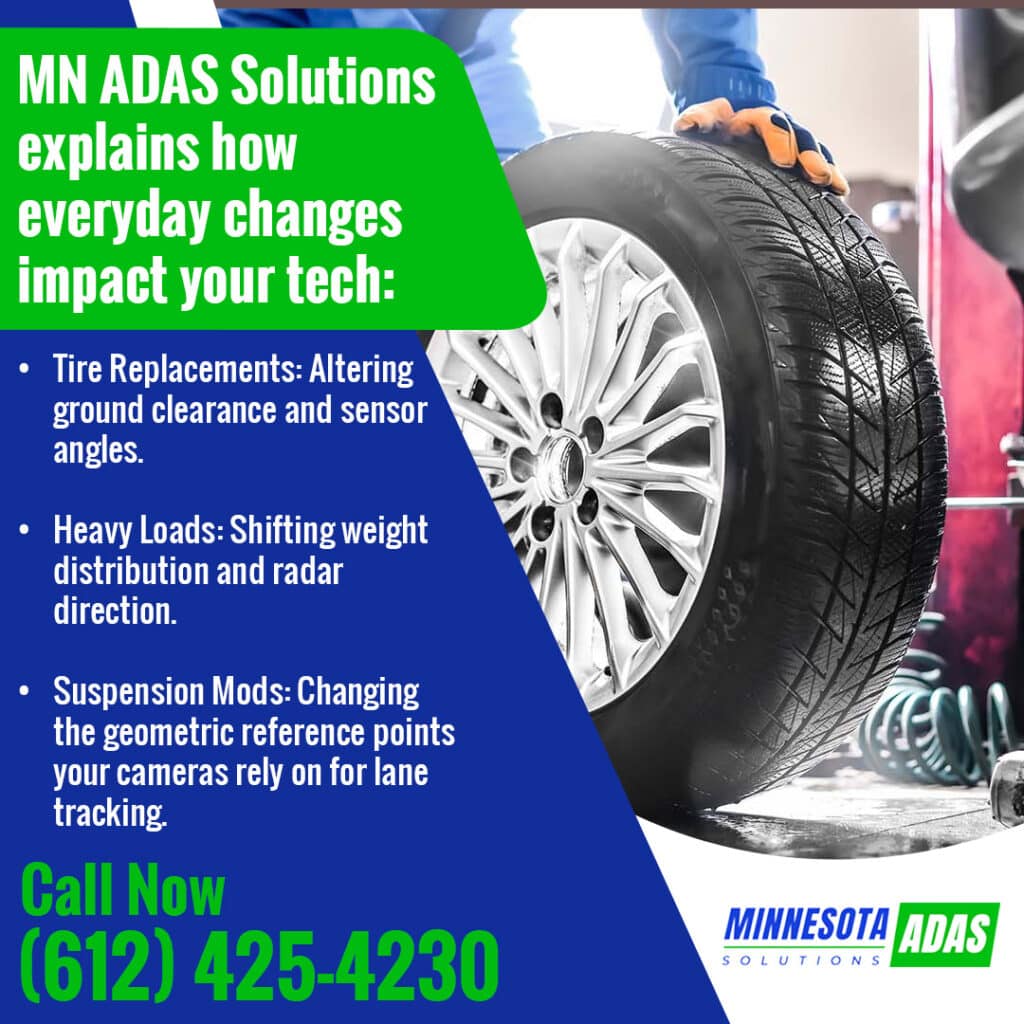
- Tire replacements: You install tires with different sizes or wear levels. This changes ride height and ground clearance.
These changes shift calibration reference points and affect sensor accuracy. You rely on these systems to detect vehicles, maintain spacing, and track lanes. If calibration does not match the vehicle’s current condition, the system’s interpretation of the road changes.
At Minnesota ADAS Solutions, we perform recalibration based on current vehicle conditions, restoring proper sensor alignment after any of these changes.
Professional Calibration by Minnesota ADAS Solutions
Minnesota ADAS Solutions, based in Bloomington, MN, and our Woodbury location, performs camera and radar calibration using OE-defined procedures in a controlled environment. We focus on accurate sensor positioning based on manufacturer data. You receive calibration that matches the vehicle’s design and setup. Our facility is built to control variables such as lighting, surface level, and spacing, which directly affect calibration results.
Service Capabilities
ADAS Diagnostics
We identify faults in cameras, radar, and related systems. You get a clear view of what affects performance before calibration begins.
Sensor and Radar Repair
We restore damaged or misaligned components. You avoid inaccurate readings caused by faulty hardware.
Camera and Radar Calibration
We adjust sensor angles and positions using OE procedures. You get alignment that matches factory specifications.
Alignment Verification
We confirm that sensors track correctly after calibration. You receive validation that systems respond based on correct positioning.
Detailed Documentation
We provide records of every calibration step. You have documented proof for insurers, repair facilities, and future reference.
At Minnesota ADAS Solutions, each calibration follows manufacturer requirements for accuracy and consistency.
Schedule Your ADAS Calibration Service Today
Restore your vehicle’s safety system accuracy with expert camera and radar calibration from Minnesota ADAS Solutions. If you’ve experienced changes in ride height, load, or suspension, your sensors may no longer read correctly. We perform adaptive cruise control calibration, lane departure warning calibration, forward collision warning calibration, and blind spot monitoring calibration based on current vehicle conditions.
Contact us today to restore accurate system performance and maintain proper sensor alignment. Call us at (612) 425-4230 or email info@mnadas.com to schedule your service.