
At MN ADAS Solutions, Bloomington, we work daily with vehicles that depend on advanced driver assistance technology to stay accurate on the road. Our facility in Bloomington focuses on precise calibration work for modern safety systems that rely on cameras, radar, and sensors. In this article, we walk you through what happens inside a dedicated ADAS calibration center and what drivers can expect from professional service.
We provide ADAS calibration services in Bloomington, MN, for vehicles that need corrections after collision repair, windshield replacement, or suspension work. Every step of vehicle safety system calibration is carried out using manufacturer-specific procedures and dedicated equipment to restore proper system alignment. We see many drivers arrive with questions about warning lights or system behavior changes, and we break down what those signals mean during calibration work at our facility. Your vehicle’s systems receive attention guided by manufacturer specifications at our Bloomington center location.
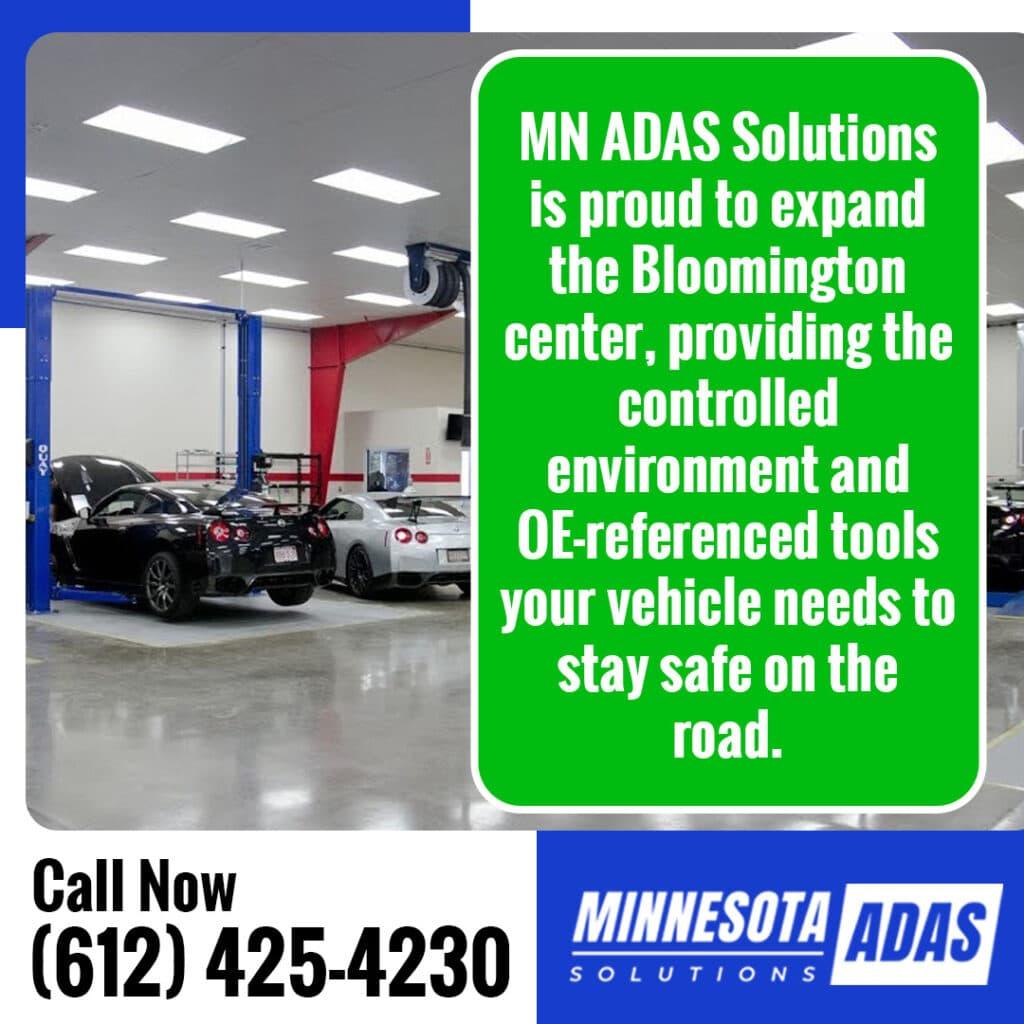
What Happens Inside an ADAS Calibration Center
An ADAS calibration center operates with a clear focus on restoring accuracy in vehicle safety systems after mechanical work or electronic changes. Every vehicle that enters the facility carries systems that depend on precise alignment between sensors, cameras, and radar components.
Purpose of ADAS Calibration Work
The purpose of ADAS calibration is to align vehicle sensors and cameras so safety systems function as designed by the manufacturer.
This supports:
- Lane detection accuracy
- Distance measurement consistency
- Braking system response timing
During service, technicians work with alignment targets and diagnostic tools to bring each system back into correct reference points. Even minor deviations in sensor position can change how the system interprets surroundings. ADAS calibration services bring stability back to system communication after repair work or component replacement.
Systems Commonly Calibrated in Modern Vehicles
Commonly calibrated ADAS systems include cameras, radar units, and driver assistance features used during everyday driving.
Typical systems include:
- Lane departure warning systems
- Adaptive cruise control systems
- Forward collision warning systems
- Blind spot monitoring systems
Each of these systems depends on precise alignment between hardware and software readings. A small shift in camera angle or radar placement can change how the system interprets distance, lane position, or nearby vehicles. Calibration work restores alignment so these systems communicate correctly with the vehicle’s control modules.
Role of Vehicle Safety System Calibration in Repair Workflows
Vehicle safety system calibration is performed after repairs that affect alignment or sensor positioning.
Repair workflows that require calibration include:
- Structural body repairs
- Windshield replacement
- Suspension adjustments
- Sensor replacement work
A windshield replacement, for example, can change the angle of a forward-facing camera mounted behind the glass. Suspension work can also alter ride height, which affects how radar and camera systems view the road.
Each of these changes can alter how ADAS components interpret distance, movement, and lane positioning. Calibration work restores alignment so the vehicle’s systems respond consistently across different driving conditions.
Equipment and Environment Used for ADAS Calibration
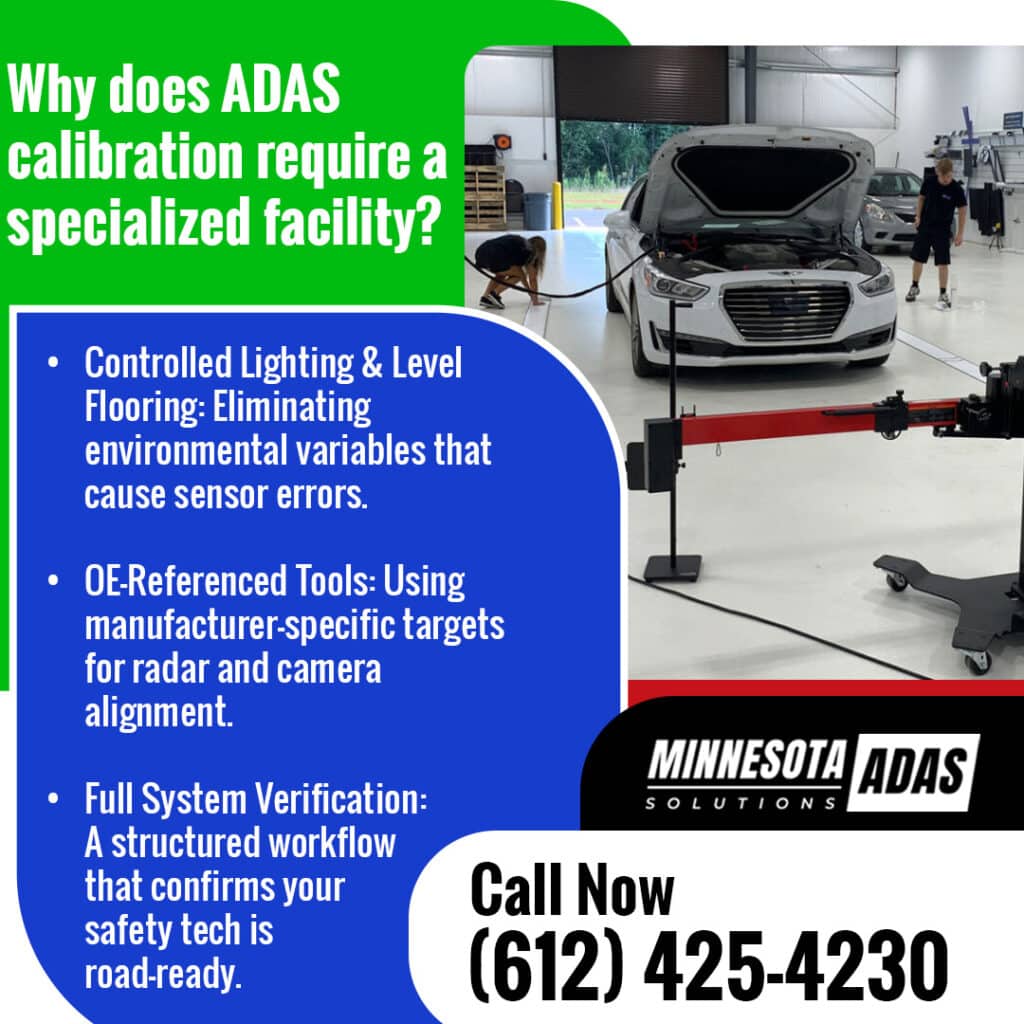
ADAS calibration depends on precise tools and a controlled workspace that supports accurate sensor alignment. Each step in the process relies on measured conditions that match the manufacturer’s service requirements.
OE-referenced Calibration Targets and Scanning Tools
OE-referenced calibration targets and diagnostic scanners are used to align ADAS systems to manufacturer specifications.
Tools include:
- Radar alignment equipment
- Camera calibration boards
- Diagnostic scan tools
Radar alignment equipment supports the correct positioning of forward-facing sensors that track distance and speed. Camera calibration boards provide reference points that help adjust image-based systems used for lane tracking and object detection. Diagnostic scan tools communicate with the vehicle’s onboard systems and read calibration data during and after adjustments.
Each tool plays a direct role in bringing sensor and camera positioning back to manufacturer reference values. Without these tools, calibration accuracy would vary between vehicles and service conditions.
Controlled Indoor Calibration Layout Requirements
A controlled indoor layout is required to maintain consistent calibration conditions for ADAS systems.
Calibration environments maintain:
- Fixed lighting conditions
- Level flooring surfaces
- Standardized measurement distances
Fixed lighting conditions support stable sensor input, especially for camera-based systems that rely on visual reference points. Level flooring surfaces allow vehicles to remain aligned during setup, reducing shifts that could affect calibration angles. Standardized measurement distances provide consistent spacing between the vehicle and calibration targets, which supports repeatable positioning across different service cases.
These controlled conditions support uniform calibration results across various vehicle makes and models, even when system designs differ.
Importance of Consistent Calibration Conditions
Consistent conditions are required to maintain calibration accuracy across all vehicle types. Variations in lighting, floor level, or spacing can influence how sensors interpret calibration targets. Small changes in the environment can lead to differences in system readings, especially in radar and camera-based technologies that depend on exact alignment.
Environmental stability also helps technicians follow manufacturer procedures without adjusting for external factors that may interfere with sensor behavior.
At Minnesota ADAS Solutions, we work with OE-referenced tools, controlled indoor layouts, and structured calibration procedures to carry out safety system calibration with consistent results inside our Bloomington center.
Step-by-Step ADAS Calibration Process: Drivers’ Experience
Drivers often arrive with questions about how ADAS calibration works from start to finish. The process follows a clear technical sequence that moves from diagnostics through final system checks. Each stage focuses on restoring proper sensor alignment and restoring communication between vehicle safety systems.
Vehicle Intake and Initial System Scan
The process begins with a full diagnostic scan of ADAS systems.
Technicians review:
- Stored fault codes
- Sensor communication status
- System warning indicators
This step helps identify active or stored issues across the ADAS network. It also shows whether cameras, radar units, or supporting modules are communicating correctly. Any irregular readings are recorded for the next stage of work.
Diagnostics and Identification of Sensor or Camera Issues
Diagnostics identify misaligned or malfunctioning ADAS components.
Common findings include:
- Camera angle deviation
- Radar signal inconsistency
- Sensor communication errors
Each result points to a specific area that requires attention. The calibration approach depends on these findings, since different systems respond to different correction methods. This step sets the direction for the calibration plan.
Calibration Procedure for Static and Dynamic Systems
Calibration is performed using static or dynamic methods depending on vehicle specifications.
- Static calibration uses fixed targets positioned inside a controlled facility
- Dynamic calibration uses controlled driving conditions that allow systems to adjust while the vehicle is in motion
Both methods follow manufacturer service procedures that define exact distances, angles, and environmental conditions. Technicians follow these specifications closely while working through each calibration step, since small variations in setup can affect system readings.
Final Verification and Documentation Review
Final verification confirms that ADAS systems respond correctly after calibration.
Technicians perform:
- System re-scanning
- Sensor response testing
- Calibration confirmation checks
Once results meet the required standards, service documentation is prepared. This record includes calibration data, system status, and details of the work completed.
At Minnesota ADAS Solutions, we follow this structured calibration process to deliver consistent ADAS calibration services in Bloomington, MN. We work through each stage of calibration with controlled procedures and detailed verification so drivers receive accurate system restoration backed by documented results.
Why Choose Minnesota ADAS Solutions for ADAS Calibration Services in Bloomington, MN
Minnesota ADAS Solutions provides specialized ADAS calibration services in Bloomington, MN, using a dedicated calibration center focused on vehicle safety systems. The facility works exclusively with ADAS technology and calibration procedures.
Focused ADAS Calibration Center Specialization
The calibration center focuses exclusively on ADAS systems, not general automotive repair. You do not find mixed repair activity here, and that shapes the way we handle each vehicle that comes in. Our work centers on camera alignment, radar positioning, and sensor communication checks tied directly to driver assistance functions. This focus helps us stay consistent across different vehicle makes and models.
This specialization supports consistent workflow, system-specific procedures, and precise calibration methods across vehicle models. You see a structured approach from intake to final checks. Each step follows defined ADAS procedures rather than general repair routines. That level of focus allows us to address calibration requirements tied to lane assistance systems, collision warning systems, and adaptive cruise functions with steady accuracy across different platforms.
Turnaround Time and Scheduling Process
Most ADAS calibration services are completed within a short service window, depending on system requirements. You bring your vehicle in for calibration, and we begin with a planned workflow that reduces unnecessary delays. Time spent on the vehicle depends on system type, scan results, and calibration method needed. Some vehicles require static setup, while others go through dynamic calibration steps.
The facility uses a structured scheduling system to manage vehicle intake, diagnostics, and calibration workflow. We coordinate intake based on appointment slots, system complexity, and equipment availability. You move through a clear sequence that starts with diagnostics and continues through calibration and final checks. This structure helps us maintain a steady service flow without affecting the accuracy of the work performed.
Documentation Standards for Insurers and Repair Shops
Each calibration service includes detailed documentation for insurance and repair verification. You receive service records that reflect every stage of the calibration process. These records support communication between repair facilities, insurers, and our calibration center.
Documentation includes:
- Calibration procedure details
- System verification results
- Service completion records
This documentation helps confirm the work completed on your vehicle. Repair shops and insurers rely on these records to match service activity with repair orders and claim requirements. At Minnesota ADAS Solutions, we maintain clear reporting so you can move forward with repair processes without gaps in service history.
What Drivers Should Expect After Vehicle Safety System Calibration
After calibration, vehicle safety systems are verified and confirmed ready for normal driving use. This step follows a structured review where each calibrated system is checked for correct function based on manufacturer requirements. The goal is to confirm that the recalibrated components are communicating properly and reacting without delay or inconsistency.
Systems are checked to confirm correct alignment and response behavior. Technicians review live system feedback and scan data to confirm that sensor readings match expected parameters. Any variation in alignment or communication is addressed during this stage before release.
System Readiness Checks Before Vehicle Release
System readiness checks confirm that ADAS components respond correctly after calibration. Technicians run final scans and observe system reactions in real time. This includes reviewing alert triggers, sensor communication signals, and calibration alignment data.
Technicians verify:
- Sensor communication stability to confirm steady data flow between modules
- Camera alignment to confirm correct field positioning and image capture
- Radar system response to confirm distance detection and object tracking accuracy
Each verification step focuses on how individual components interact with the vehicle’s safety network. Any irregular reading is reviewed before the vehicle moves forward in the release process.
Documentation Provided After Calibration
Drivers receive documentation confirming calibration completion and system status. This paperwork reflects the final condition of the vehicle’s safety systems and the type of calibration performed.
This record includes:
- Service description outlining the systems calibrated during the visit
- Calibration type used, such as static or dynamic procedures
- Final verification results confirming system response after adjustments
These documents also support communication with repair shops and insurance providers, especially in cases involving collision-related repairs or component replacement.
Driving Behavior After Recalibration Completion
After calibration, ADAS systems operate according to restored manufacturer settings. Each feature relies on updated sensor positioning, which allows the system to process lane markings, distances, and surrounding movement with corrected reference points.
Features such as lane assistance and collision warning systems respond based on recalibrated sensor data. These responses are tied directly to how accurately the system reads its environment after calibration work is completed.
Get Your ADAS Systems Calibrated with Confidence
If your vehicle has recently undergone collision repair, windshield replacement, or suspension work, now is the right time to have your safety systems checked and calibrated by a dedicated team. Minnesota ADAS Solutions provides professional ADAS calibration services with a focus on precise calibration using manufacturer-aligned procedures and specialized equipment.
You can reach our team at (612) 425-4230 or email info@mnadas.com to book an appointment or ask questions about your vehicle’s ADAS requirements. Our Bloomington ADAS calibration center is ready to support accurate system performance backed by proper documentation and structured service workflows.