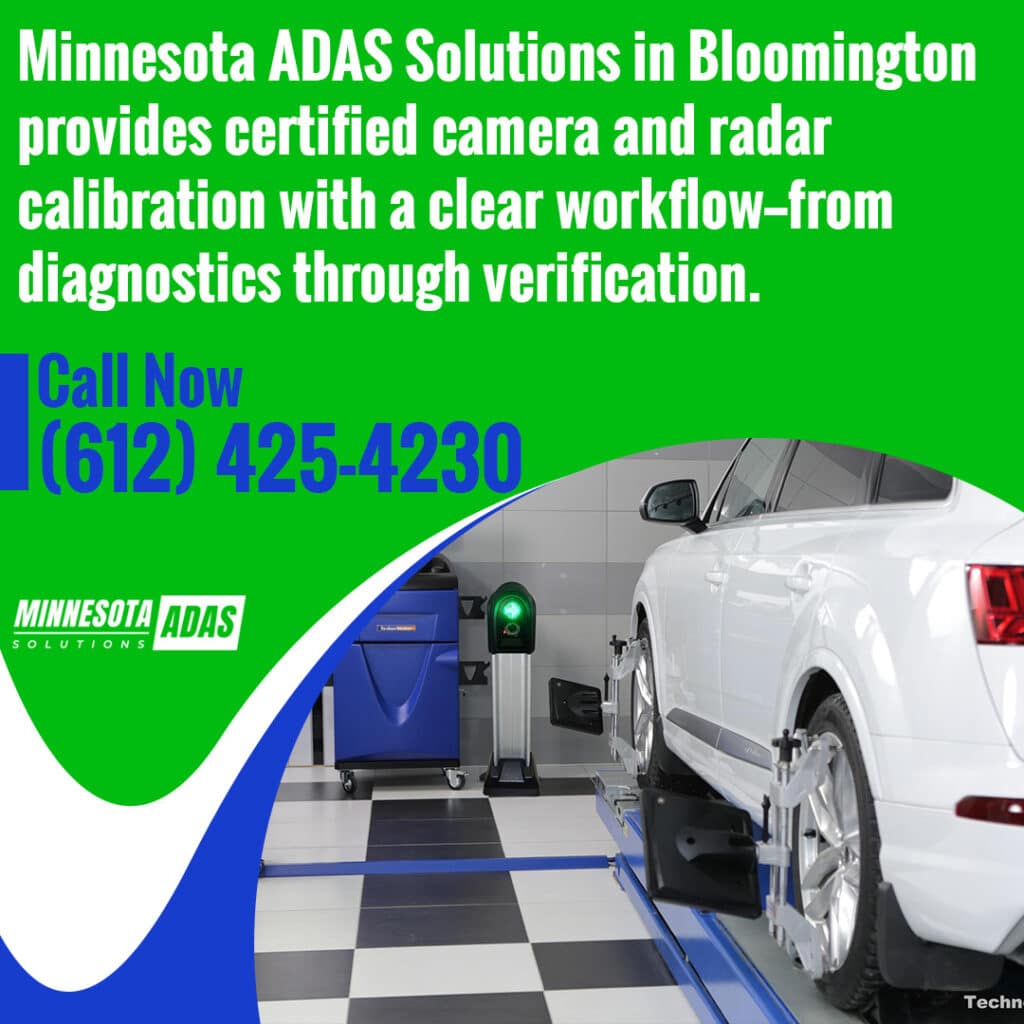
When a vehicle undergoes structural repairs, its advanced safety systems may no longer operate correctly. At MN ADAS Solutions, Bloomington, we focus on restoring these systems to full functionality through precise camera and radar calibration. Collision shops rely on our expertise to correct sensor alignment and verify ADAS performance after repairs, including adaptive cruise control, lane departure warning, forward collision warning, and blind spot monitoring.
Ignoring calibration can lead to false alerts, delayed braking, or improper lane detection, which can compromise driver and passenger safety. Our workflow addresses every step, from diagnostics to physical sensor adjustment, software configuration, and final verification. By following a structured process, collision repair teams can confidently return vehicles with fully functioning safety systems. In this guide, you will find a clear workflow outlining the tools, steps, and verification methods required for camera and radar calibration. We provide the technical guidance collision shops need to complete these calibrations efficiently and accurately.
Why Camera and Radar Calibration Matters After Structural Repairs
Camera and radar calibration restores vehicle safety after structural repairs. Every ADAS sensor, whether for adaptive cruise control calibration, lane departure warning calibration, forward collision warning calibration, or blind spot monitoring calibration, collects data that the vehicle uses to make split-second decisions. A slight misalignment can cause systems to give false alerts, fail to detect obstacles, or react too late. According to the Insurance Institute for Highway Safety, vehicles equipped with properly functioning ADAS features reduce crash rates by up to 50% for lane departure and collision avoidance events.
Misaligned sensors can lead to multiple safety risks:
- False warnings or alerts that drivers may ignore
- Delayed braking from forward collision warning systems
- Lane departure warnings failing to engage during highway driving
- Blind spot monitoring providing inaccurate feedback
- Complications for insurance claims or manufacturer warranties
At Minnesota ADAS Solutions, we address these issues by following precise procedures for calibration after any structural or sensor-related repair. This restores full system functionality and gives collision shops the confidence that vehicles leave the shop with all ADAS features operating properly.
Signs That Your Vehicle Requires Camera and Radar Calibration
After structural repairs, some vehicles show clear signs that their safety systems may not be functioning properly. Identifying these signs early allows you to address sensor and camera alignment before any safety systems are compromised.
Post-Repair Triggers
Calibration is required after any structural or body repair. There are several situations where you should schedule camera and radar calibration:
- Collision or body repair affecting the frame or panels: Even minor shifts in the frame can alter the position of sensors and cameras. Your ADAS features may behave differently if these components are not adjusted.
- Windshield or sensor replacement requiring camera and radar calibration: Replacing a windshield or any sensor that supports adaptive cruise control, lane departure warning, or forward collision warning changes the sensor’s alignment. Calibration restores the accuracy of each system.
- Suspension or alignment work affecting sensor positions: Changes in suspension geometry or wheel alignment can subtly shift sensor angles. Even small misalignments can affect how your vehicle detects lanes, obstacles, or other vehicles.
Warning Indicators
Vehicles may indicate calibration is needed through system alerts. Some warning signs are visible directly to the driver, and you should not ignore them:
- Dashboard warnings related to ADAS features: Lights or messages may appear indicating a malfunction in adaptive cruise control, lane departure warning, or blind spot monitoring.
- Malfunctioning adaptive cruise control or lane departure systems: If these features do not respond as expected, sensor calibration may be necessary.
- Unexpected alerts or braking during driving: False warnings, sudden braking, or inconsistent lane detection are strong indicators that the cameras or radar may be misaligned.
The Calibration Workflow for Collision Shops
Accurate calibration after structural repairs involves a step-by-step approach. Each stage focuses on identifying issues, correcting sensor positioning, and confirming ADAS features work reliably before returning the vehicle.
Step 1: Initial Diagnostics
Diagnostics identify sensor misalignment and system errors. You start by checking the vehicle’s cameras and radar for misalignment or faults. Using OE-compatible scanners, you can read error codes, evaluate each sensor’s performance, and determine whether repairs or adjustments are needed.
Documenting the system’s condition before repairs allows you to compare results after calibration, giving you a clear record of changes and improvements. This documentation is also helpful for insurers or body shops to confirm that the vehicle’s safety systems were properly evaluated.
Step 2: Structural Repair Completion
Structural repairs must meet manufacturer specifications. Before any calibration, the vehicle frame, panels, and windshield must be restored to exact factory measurements. If any part of the structure is off, sensors may sit at incorrect angles, causing ADAS features to misread their surroundings.
By completing repairs carefully and verifying dimensions, you create a foundation that allows cameras and radar to operate correctly. Properly repaired components reduce the risk of errors during sensor alignment and software configuration.
Step 3: Sensor and Camera Alignment
Physical alignment ensures sensors point correctly. After the body and structural work are complete, cameras and radar units are adjusted in precise positions. Technicians use calibration targets and measuring tools to confirm angles and distances match manufacturer specifications.
Correct alignment is necessary for adaptive cruise control calibration, lane departure warning calibration, and forward collision warning calibration to function reliably. Even small deviations can affect system accuracy, so taking time during this step is essential for achieving consistent results.
Step 4: Software Calibration
Software calibration programs sensors with the vehicle’s computer system. Once the hardware is aligned, you connect the sensors to the vehicle’s onboard system. Software configuration allows radar and cameras to communicate properly with the ADAS network.
Technicians confirm that all features, including blind spot monitoring, react correctly to simulated or real-world conditions. Software calibration synchronizes sensor input with the vehicle, translating the physical alignment into operational performance for every ADAS function.
Step 5: Verification and Documentation
Verification confirms system functionality. The final step tests the vehicle on the road or in a controlled environment. Test drives check that adaptive cruise control, lane departure warning, forward collision warning, and blind spot monitoring respond accurately.
After testing, detailed reports are prepared for body shops, insurers, or the vehicle owner. These reports record every step of the calibration, providing proof that the vehicle’s safety systems are fully functional.
Minnesota ADAS Solutions provides guidance and support throughout this workflow, helping collision shops complete each step efficiently and with confidence. Following this structured approach allows your team to deliver vehicles with fully operational ADAS systems, improving safety for drivers and passengers.
Tools and Equipment Used in Camera and Radar Calibration
Proper camera and radar calibration requires specialized tools that help you adjust sensors accurately. Each piece of equipment has a specific role in restoring ADAS systems to full functionality after structural repairs.
| Tool | Purpose | Notes |
| Calibration targets | Align sensors | Must meet OE specifications |
| Diagnostic scanner | Software configuration | Checks system codes |
| Measuring tools | Physical alignment | Confirm exact positioning |
| Leveling devices | Verify sensor angles | Maintain manufacturer standards |
We rely on these tools to provide precise and repeatable calibrations. Using certified equipment in a controlled setting allows your collision shop to restore safety systems reliably and maintain confidence in every vehicle that leaves your shop.
Best Practices for Collision Shops
Follow standardized procedures to maintain accuracy. Setting up a clear process helps your team complete calibrations efficiently while reducing the chance of errors. By following a repeatable workflow, each technician knows exactly what steps to take and what tools to use.
- Use a controlled calibration environment to reduce errors: Performing calibration in a stable environment keeps external factors like lighting, floor slope, or vibration from affecting sensor alignment. Controlled spaces give you consistent measurements for every vehicle.
- Follow manufacturer calibration instructions for all vehicles: Each vehicle model may have unique specifications for camera and radar placement. Using the manufacturer’s recommended procedures allows you to adjust sensors properly and maintain the system’s responsiveness.
- Document each step for verification and insurance purposes: Recording diagnostics, sensor adjustments, software updates, and final test results provides clear proof of completed work. This documentation supports collaboration with insurers, body shops, and vehicle owners.
- Schedule calibration immediately after structural or sensor repairs: Completing the calibration soon after repairs prevents misalignment caused by additional movement or handling. It keeps the vehicle’s safety systems functioning properly before it returns to traffic.
Common Challenges and How to Address Them
Camera and radar calibration can encounter several obstacles that affect how the sensors detect the vehicle’s surroundings. Being aware of these challenges allows you to address problems efficiently and maintain reliable ADAS performance.
Calibration accuracy can be affected by multiple factors. Collision shops should monitor:
- Hidden structural damage causing sensor misalignment: Even minor frame or panel deformations from previous collisions can shift sensor positions. You may not notice these issues visually, but they can cause ADAS features to operate incorrectly. Thorough inspection of the repaired areas before calibration helps detect any hidden misalignment.
- Vehicle software update conflicts: Modern vehicles rely on software to coordinate sensor data. If the vehicle’s computer has pending updates or outdated firmware, the calibration process may not complete correctly. Verifying software versions and updating them according to manufacturer guidelines prevents errors during calibration.
- Environmental conditions, such as uneven surfaces or lighting: Calibration performed on uneven floors or in poor lighting can lead to misaligned sensors. You should work in a flat, well-lit facility designed to support accurate calibration procedures.
Solutions include:
- Reassess repairs before sensor adjustment: Double-check frame measurements, panel alignment, and windshield installation to correct any deviations before starting calibration.
- Update vehicle software and firmware according to manufacturer specifications: Confirm the system has the latest updates so sensors communicate correctly with the vehicle’s computer.
- Perform calibrations in certified, controlled settings to prevent errors: Use a certified facility with proper equipment and stable environmental conditions to complete camera and radar calibration reliably.
Minnesota ADAS Solutions supports collision shops by providing controlled calibration environments and experienced technicians who can identify these challenges and apply effective solutions, helping vehicles return with fully functional ADAS systems.
Trusted Choice for ADAS Calibration
Minnesota ADAS Solutions, based in Bloomington, MN, delivers precise calibration in a certified facility. Collision repair shops can rely on a controlled setting where every sensor and camera is adjusted carefully. You will notice that having the correct tools and environment makes the process smoother and reduces the chance of errors.
Our technicians specialize in camera and radar calibration as well as all major ADAS systems. Our experience allows you to address complex repairs without delays. Most calibrations are completed in about 90 minutes, so you can return vehicles quickly while maintaining high-quality results.
Every service comes with thorough documentation. This report provides detailed records for body shops, insurers, and vehicle owners, giving you clear proof that the system was properly adjusted. Our team focuses exclusively on ADAS systems, which means you won’t find mobile or general repair services that could compromise accuracy.
Schedule Your Camera and Radar Calibration Today
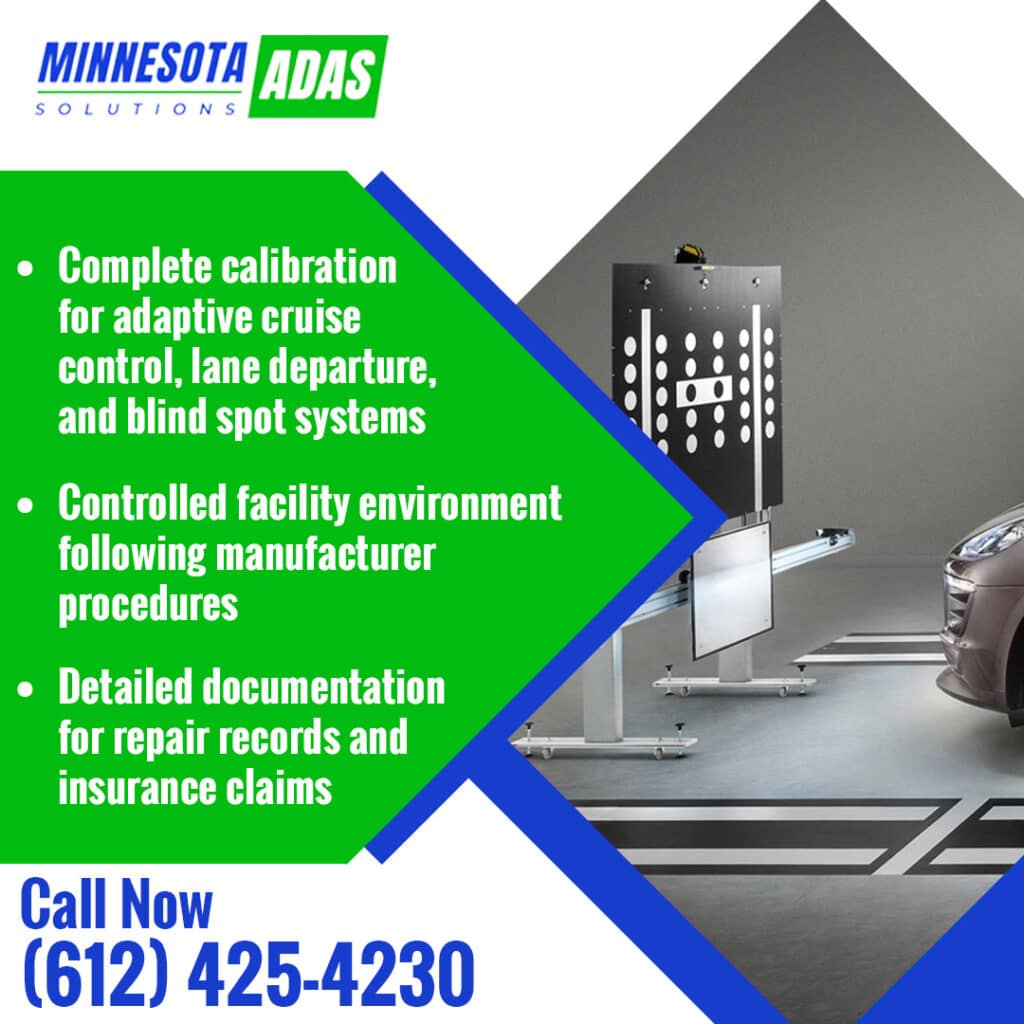
Proper calibration requires a certified facility to achieve accurate results. At Minnesota ADAS Solutions, we provide full camera and radar calibration services, including adaptive cruise control calibration, lane departure warning calibration, forward collision warning calibration, and blind spot monitoring calibration. Our certified environment and experienced technicians give collision shops confidence that ADAS systems will function reliably after repairs.
You can schedule your vehicle’s calibration quickly and conveniently. Call us at (612) 425-4230 or email info@mnadas.com to reserve your appointment. Our team is ready to guide you through the process and answer any questions about the workflow, tools, and documentation needed for your shop.