
Lane departure sensor alignment keeps your vehicle’s cameras and sensors working correctly. At Minnesota ADAS Solutions, we focus on precision calibration to maintain the performance of Advanced Driver Assistance Systems (ADAS) like lane departure warnings and lane keep assist. Our team provides expert lane departure calibration service in Bloomington, MN, for drivers and repair shops that need accurate, reliable results.
As a specialized lane departure repair shop, we work directly with vehicles that have experienced collisions, windshield replacements, or any service that could affect ADAS functionality. Our technicians follow manufacturer procedures to adjust sensors and cameras so your system responds properly on the road. With clear documentation and a controlled calibration process, you can trust that your vehicle’s safety features will function correctly.
Why OEM Standards Matter for Lane Departure Systems
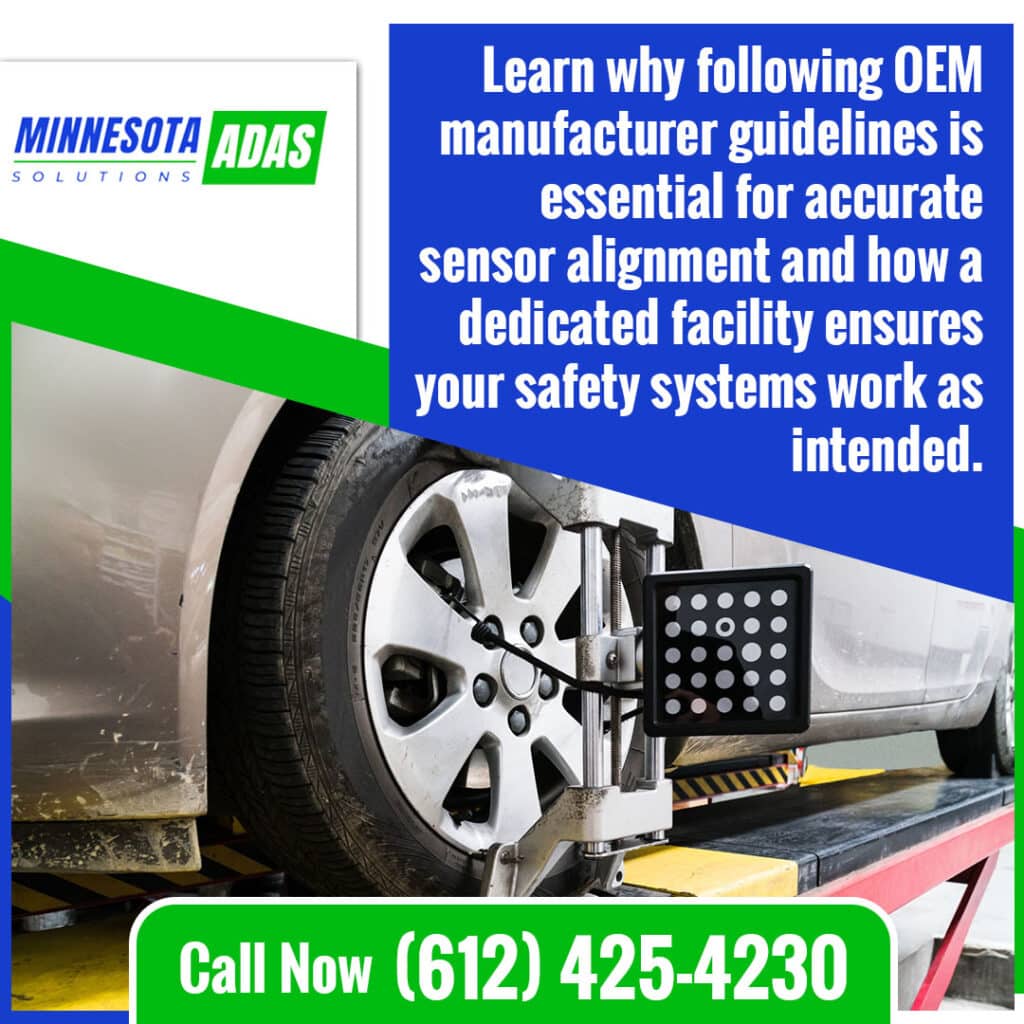
Lane departure systems rely on the precise alignment of cameras and sensors. Any variation in placement or calibration can affect how your vehicle detects lane markings and responds to driving conditions.
What Are OEM Standards?
OEM standards are manufacturer-defined procedures for calibrating vehicle safety systems. These standards outline the exact placement of sensors and cameras, the proper calibration steps, and the tests required to confirm system performance. For example, a forward-facing camera must be positioned within millimeters of its specified height and angle to track lane lines correctly. Even small deviations can cause the system to alert incorrectly or fail to detect lane departures. By following OEM procedures, you maintain reliable lane departure system function and support other ADAS features that interact with it.
Risks of Non-Compliance
Ignoring OEM standards can cause system malfunctions. If sensors are off by a few degrees, lane departure warnings may trigger too often or not activate at all. Lane keep assist may apply steering corrections at the wrong time, and emergency braking linked to lane tracking could respond improperly. Vehicles that fail to follow OEM calibration standards can also encounter issues with insurance claims and warranty coverage after repairs. For repair shops and drivers, this means higher liability risks and potential safety hazards on the road.
Lane Departure System Calibration Explained
Lane departure systems play an important role in modern vehicle safety. They work continuously to help you stay centered in your lane and respond to changes on the road.
How the System Works
Lane departure systems monitor lane markings using cameras and sensors. These systems are installed near the windshield or front grille and scan the road to detect lane boundaries. If your vehicle begins to drift, the system can issue an alert or gently adjust steering to guide the car back into the lane.
Lane departure system calibration aligns these sensors after any service that could affect their accuracy. Similarly, lane keep assist calibration focuses on adjusting steering responses, so the vehicle can correct itself smoothly if drift occurs. Both calibrations rely on precise placement and angles of the cameras and sensors. Research from the Insurance Institute for Highway Safety (IIHS) shows that vehicles equipped with lane departure warning systems, when activated, have been associated with roughly an 11% reduction in certain types of crashes (single-vehicle, sideswipe, head-on) compared with vehicles without the feature. This shows how even small misalignments can influence system performance.
Signs That Calibration Is Needed
Calibration is required when ADAS warnings appear or system behavior changes. You may notice issues after events that can affect sensor accuracy. Common indicators include:
- Post-collision repairs: Even minor fender benders can misalign sensors or cameras.
- Windshield replacement: Many lane departure sensors are attached to the windshield; replacements can shift their angles.
- Vehicle drifting or inaccurate alerts: If your car drifts within the lane or warnings trigger unnecessarily, calibration is likely needed.
- Lane departure or lane keep assist warning lights: Dashboard alerts often signal that the system is detecting errors.
Addressing these signs promptly prevents incorrect system responses, which can affect safety and may influence insurance coverage if uncorrected.
Minnesota ADAS Solutions handles both lane departure system calibration and lane keep assist calibration in a controlled environment. Our technicians follow manufacturer guidelines, use precise tools, and provide documentation to verify that sensors and cameras have been properly aligned. This approach helps maintain the integrity of ADAS features for every vehicle serviced.
Step-by-Step Lane Departure Sensor Alignment Process
Lane departure sensor alignment follows a structured process to bring your vehicle’s safety systems back to proper operation. Each step is designed to address the exact needs of your ADAS components, so you can rely on the system during everyday driving.
Diagnostics
Diagnostics identify misaligned or faulty sensors. At this stage, technicians examine cameras, radar units, and related components to detect inconsistencies in performance. Using precision diagnostic tools, they check camera angles, radar functionality, and error codes stored in the vehicle’s computer system. This step highlights which sensors need adjustment or replacement, making the subsequent calibration more accurate and effective.
Sensor and Camera Adjustment
Sensors and cameras are aligned according to OEM specifications. Technicians adjust the mounting angle, height, and lateral placement of each sensor and camera using specialized calibration equipment. Sensor alignment guarantees that your vehicle’s lane detection system responds correctly on the road. Even a few millimeters of misalignment can cause false alerts or missed lane markings, compromising system reliability. Adjustments are performed in a controlled environment to replicate manufacturer testing conditions.
System Verification
System functionality is confirmed through testing and inspection. After adjustments, the system is tested using diagnostic drives and in-vehicle monitoring tools. Each sensor is checked for accurate lane detection, proper warning alerts, and coordinated operation with other ADAS features. Full documentation captures calibration steps, sensor positions, and verification results. This documentation is essential for body shops, insurers, and fleet operators to verify that the service meets OEM standards.
Minnesota ADAS Solutions follows this structured process for every calibration, combining advanced tools with skilled technicians to deliver consistent results. By completing each step thoroughly, the vehicle’s lane departure and lane keep assist systems operate reliably, supporting safer driving experiences.
Choosing the Right Lane Departure Repair Shop
Finding a repair shop for lane departure sensor alignment can feel overwhelming. You want a team that can handle your vehicle with care and complete the calibration accurately.
What Shops Should Look For
Certified facilities with trained ADAS technicians provide accurate calibrations. You should look for shops that have technicians who specialize in Advanced Driver Assistance Systems. They must follow manufacturer guidelines and use the correct tools to adjust cameras, sensors, and radar components. Without proper training or equipment, even minor misalignments can create faulty warnings or reduce the responsiveness of lane departure and lane keep assist systems. By choosing a certified facility, you can rely on the process being carried out with precision.
Local Expertise in Bloomington, MN
Minnesota ADAS Solutions provides specialized lane departure calibration service in Bloomington, MN. Your vehicle is handled in a facility designed for exact calibration procedures. Our technicians follow proper procedures, use calibrated equipment, and complete verification steps for every system. This approach gives you confidence that your lane departure sensors and associated safety systems will operate accurately after repairs or adjustments.
Common Questions About Lane Departure Sensor Alignment
Proper sensor alignment often raises questions for both drivers and repair shops. These questions typically focus on timing, impact on other systems, and documentation standards.
How often should calibration be performed?
Calibration is recommended after any repair or service that affects cameras or sensors. If your vehicle has been in a collision, had a windshield replaced, or experienced suspension adjustments, the sensors may have shifted. Performing calibration after these events helps restore the system’s ability to monitor lane positions accurately. Regular checks during vehicle servicing can also reveal minor misalignments before they affect performance.
Does alignment affect other ADAS functions?
Yes. Misaligned sensors can affect lane keep assist, adaptive cruise control, and collision warning systems. The sensors used for lane departure also feed information to other ADAS features. If these sensors are off, other systems may respond incorrectly, creating driving challenges. Correct alignment restores the interaction between these features so your vehicle can respond as expected in various driving conditions.
What documentation should shops provide?
Complete records should show calibration steps, verification results, and compliance with OEM standards. Documentation confirms that each sensor and camera was properly adjusted. This record is important for repair shops, insurance claims, and vehicle resale, offering tangible proof of the work performed.
Minnesota ADAS Solutions: Trusted Lane Departure Calibration Partner
Lane departure sensor alignment is a technical process that demands precision and experience. You need a partner who has the equipment, training, and workflow to handle every step carefully, from diagnostics to final verification.
Minnesota ADAS Solutions specializes in lane departure calibration, lane keep assist calibration, and lane departure sensor alignment. Our Bloomington facility follows manufacturer procedures closely, completing most services in about 90 minutes. Each calibration is documented thoroughly to provide repair shops, insurers, and vehicle owners with a clear record of the work performed.
We also perform alignment verification and post-calibration testing to confirm that all components respond correctly. Minnesota ADAS Solutions is a trusted lane departure repair shop offering reliable and precise ADAS services, giving you direct access to skilled technicians who handle every detail of the process carefully.
Schedule Your Lane Departure Calibration Today
Take the next step in keeping your vehicle’s safety systems working correctly by booking a service at Minnesota ADAS Solutions, a trusted lane departure repair shop in Bloomington, MN. Our team of certified technicians provides precise lane departure calibration and lane keep assist calibration in a controlled facility. Contact us today at (612) 425-4230 or email info@mnadas.com to schedule your appointment and have your sensors, cameras, and systems fully tested and aligned for reliable performance.