
When you operate a repair shop, your clients rely on you to keep their vehicles safe on the road. Adaptive cruise control systems are an essential part of modern vehicle safety, helping drivers maintain consistent speed, safe following distances, and smoother braking in traffic. Without precise calibration, these systems can respond incorrectly, increasing the risk of accidents or system errors. At Minnesota ADAS Solutions, we specialize in adaptive cruise control calibration in Bloomington, MN, providing repair shops with a reliable, controlled facility where every vehicle receives accurate adjustments.
Partnering with a dedicated provider allows you to offer the benefits of adaptive cruise control to your customers while maintaining high safety standards. From faster service to detailed documentation, our team delivers results that protect drivers and support shops in managing complex ADAS systems effectively. Working with a certified partner gives your shop a dependable option for calibration and repairs.
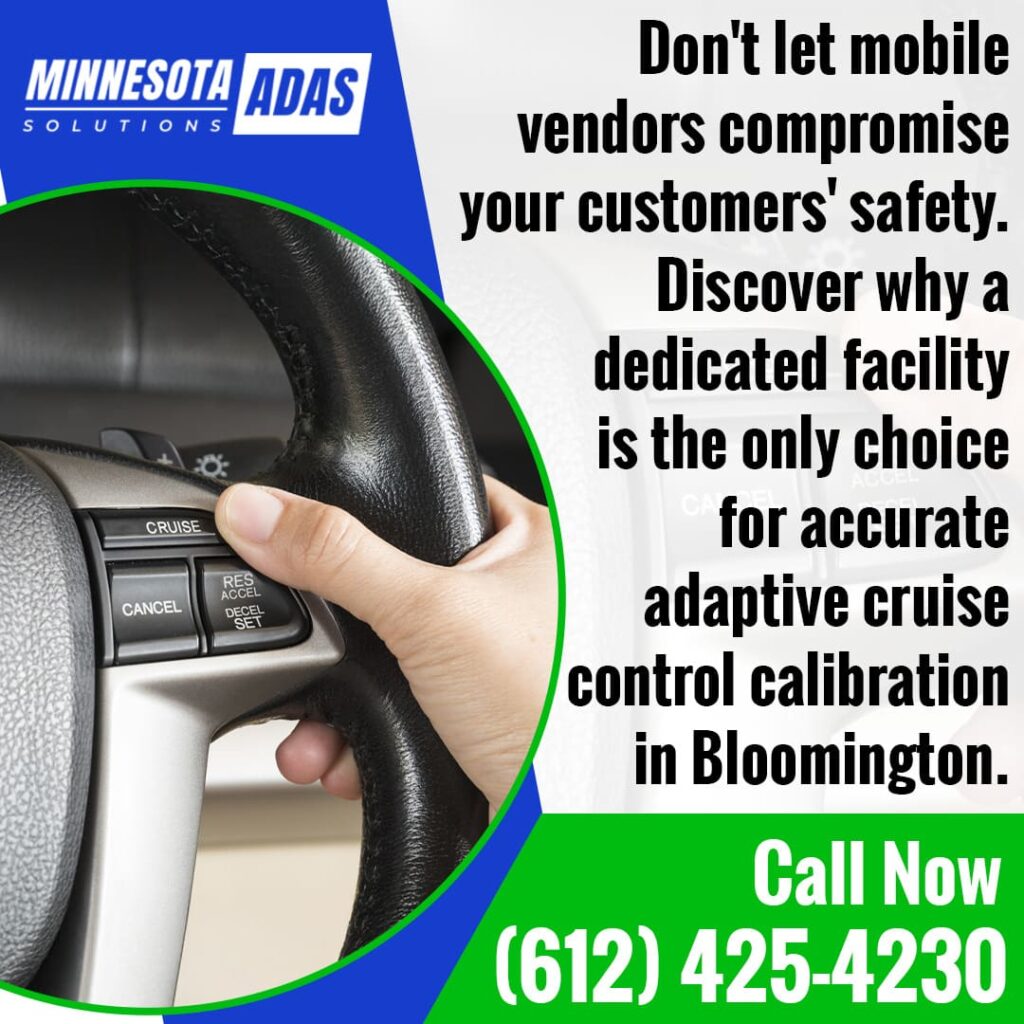
What is an Adaptive Cruise Control System
An adaptive cruise control(ACC) system maintains a safe driving distance by automatically adjusting your vehicle’s speed. This technology typically uses radar and/or forward-facing cameras, sometimes fused with other sensors, to estimate distance and relative speed with vehicles ahead. When traffic slows down, the system automatically reduces speed. Once the road clears, it accelerates back to the preset speed without requiring driver input.
This level of automation doesn’t replace the driver’s attention but supports it. ACC acts as a second layer of awareness, maintaining consistent speed and distance so the driver can focus more on steering and traffic flow. On highways, where speed variations and long drives can increase fatigue, this system plays a valuable role in reducing the mental strain of constant acceleration and braking.
Key Benefits of Adaptive Cruise Control
ACC improves driving safety and comfort. Among the adaptive cruise control benefits are reduced driver fatigue, smoother acceleration and braking, and better distance management between vehicles. By maintaining proper spacing, the system helps prevent sudden stops and reduces the risk of tailgating, one of the leading causes of highway collisions.
In urban environments with frequent stop-and-go traffic, ACC minimizes the driver’s workload by automatically handling speed adjustments. On long-distance trips, it helps drivers maintain focus by relieving them from repetitive pedal use. Combined, these advantages promote smoother traffic flow and a more relaxed driving experience.
The Importance of Proper Calibration for ACC
Proper calibration keeps adaptive cruise control accurate and reliable. A correctly calibrated system measures vehicle distance and speed variations with precision, allowing smooth acceleration and braking on highways. If calibration is off by even a few degrees, the system may misjudge the distance between vehicles, causing delayed braking or false collision alerts.
Inconsistent calibration also affects comfort and drivability. Drivers may notice abrupt speed changes or warning signals that don’t reflect actual road conditions. Over time, this not only reduces system reliability but can also damage consumer trust in a repair shop’s service quality. For shops, using a controlled calibration environment prevents these issues and supports safer vehicle performance for every customer.
Situations Requiring Calibration
Calibration is necessary after repairs or maintenance affecting sensors. ACC depends on the correct alignment of its components, and even minor disturbances can affect how it reads traffic or obstacles ahead. Below are the most common situations where recalibration is required:
- Windshield Replacement: New glass may slightly shift the camera or radar positions. Since ACC often relies on windshield-mounted sensors, recalibration is necessary to restore accurate readings.
- Collision Repairs: Front-end impacts or bumper replacements can misalign sensors and radar units, affecting how the system tracks vehicles. A recalibration after structural repairs prevents system errors.
- Routine Maintenance: Over time, exposure to vibrations, weather changes, or daily driving conditions may affect calibration. Regular checks maintain the reliability of the adaptive cruise control system.
Neglecting these steps can lead to delayed system responses or inaccurate vehicle detection, creating safety gaps that could easily be avoided. Performing recalibration at the right time protects both drivers and repair facilities from potential liability.
By partnering with Minnesota ADAS Solutions, repair shops gain a dependable calibration partner that performs every adjustment within a certified facility, preserving accuracy and meeting OE standards for every vehicle serviced.
Why Mobile Services Are Not the Best Option for Shops
Mobile ADAS calibration may sound convenient, but it introduces variables that can affect accuracy and safety. A professional repair shop must deliver consistent, verified results, something that mobile setups often struggle to achieve.
Limitations of Mobile Calibration Services
Mobile services may reduce calibration accuracy. Unlike dedicated facilities, mobile setups lack standardized equipment and controlled environments. Variations in surface level, lighting, and tools can lead to misaligned sensors and decreased system performance, compromising driver safety.
In professional calibration, precision depends on factors such as perfectly level floors, controlled lighting, and calibrated measurement tools. Even small sensor misalignments, less than one degree, can alter a vehicle’s responses. Such errors are nearly impossible to detect without controlled testing conditions.
Mobile technicians often perform calibrations outdoors or in open bays, where uneven floors, glare, or temperature shifts can affect the radar and camera alignment. The lack of fixed reference points also increases the likelihood of sensor drift. Over time, these inconsistencies can cause the ACC system to react too late or fail to maintain safe distances, putting drivers at risk.
Shops that rely solely on mobile calibration often face repeat visits or customer complaints due to inconsistent results. A dedicated environment eliminates these variables and produces verifiable outcomes that meet OE standards.
Challenges Mobile Vendors Face
Mobile vendors struggle to meet manufacturer standards consistently. Portable tools and setups cannot fully replicate OE calibration procedures, which are required for adaptive cruise control systems to operate correctly.
Automakers specify that ACC calibration must occur in facilities with level surfaces, stable lighting, and precise distance markers. Mobile vendors, working from parking lots or open spaces, often lack these controlled conditions. Inconsistent alignment setups can prevent proper sensor targeting, leading to inaccurate system readings.
Another concern is equipment variation. Some mobile providers use universal calibration kits that fit multiple vehicle brands, but these do not always match the manufacturer’s exact specifications. This can result in calibrations that pass a surface-level check but fail to meet deeper diagnostic benchmarks.
Additionally, weather and environmental conditions present challenges that cannot be controlled in mobile settings. Wind, sunlight, or shadows can disrupt radar reflections or camera calibration targets, skewing readings during the process.
Repair shops depend on verified calibration data for insurance claims and customer trust. Mobile services rarely offer comprehensive documentation that includes photos, digital reports, and OE validation, a requirement for many insurers and vehicle manufacturers.
At Minnesota ADAS Solutions, we understand how vital precision and documentation are for every shop. Our dedicated ADAS calibration facility in Bloomington provides a controlled environment, certified equipment, and trained specialists who handle ACC calibration with accuracy and consistency every time.
Advantages of a Dedicated ADAS Calibration Partner in Bloomington, MN
Choosing a trusted partner for ACC calibration helps your shop maintain accuracy, accountability, and customer confidence. Dedicated calibration facilities bring structure, expertise, and efficiency that mobile vendors cannot match.
Certified Facilities and Precision Equipment
A dedicated facility provides a controlled environment for precise calibration. ACC systems depend on cameras, radar, and sensors that must be aligned under specific conditions: flat, level flooring, stable lighting, and exact target placement. Inconsistent surroundings or uneven surfaces can affect calibration accuracy, leading to system errors. Dedicated calibration centers use OE-compliant tools and manufacturer-approved procedures to eliminate such risks.
At Minnesota ADAS Solutions, adaptive cruise control calibration in Bloomington, MN, is performed in a certified facility designed for precision. Our controlled environment replicates manufacturer standards to verify that every camera, radar, and sensor is aligned correctly.
Experienced and Certified Technicians
Modern vehicles are built with sophisticated systems that require advanced technical knowledge. Having certified professionals who focus solely on ADAS technology allows for accurate diagnosis, repair, and calibration. These specialists understand how each component interacts with others, such as how the radar communicates with the braking or steering systems.
Most of the ADAS calibration errors result from incomplete or incorrect procedures performed by non-specialized technicians. Dedicated facilities like ours reduce this risk because our teams are trained specifically in the nuances of ADAS, including adaptive cruise control. Our technicians undergo continuous education and certification programs to stay aligned with evolving OEM repair standards.
Documentation and Proof of Calibration
Comprehensive documentation verifies every calibration service. Each adaptive cruise control calibration must be traceable and verifiable, especially for insurance claims and liability protection. Detailed reports help body shops and insurers confirm that the work meets OE standards and was completed under proper conditions.
Documentation includes sensor readings, radar alignment data, environmental conditions, and before-and-after system status. This record not only protects your business but also strengthens customer trust by proving the service’s accuracy. Minnesota ADAS Solutions provides full calibration documentation for every vehicle serviced. Our process gives repair shops, insurers, and vehicle owners confidence that the ACC calibration meets manufacturer specifications.
Efficient Turnaround and Convenience
Dedicated partners provide fast, on-site service. Time efficiency matters for every repair shop. Long calibration times can delay vehicle delivery and affect workflow. A reliable partner with structured processes and specialized equipment can complete calibrations faster without sacrificing quality.
At Minnesota ADAS Solutions, most calibrations are completed within 90 minutes. Our process includes live scheduling for convenience and pick-up and delivery options for added flexibility. This allows shops to maintain steady operations while still offering advanced calibration services.
When to Seek Adaptive Cruise Control Repair Near You
ACC is a key component of vehicle safety technology, designed to help drivers maintain safe distances and react smoothly to changing traffic conditions. Like any advanced system, it can lose accuracy over time due to wear, damage, or even minor repairs. Knowing when to schedule professional service protects both drivers and vehicles.
Common Signs of System Malfunction
Warning indicators show when adaptive cruise control repair near you is necessary. Dashboard alerts, delayed braking, inconsistent speed adjustments, or unusual sensor behavior indicate the system requires professional attention to maintain reliable performance.
If the system struggles to maintain a steady following distance, brakes too late, or fails to detect vehicles ahead, it’s time for a detailed inspection. A malfunctioning adaptive cruise control system can often be traced back to misaligned sensors or blocked radar units caused by a collision, windshield replacement, or even accumulated dirt and debris. Ignoring these warning signs can compromise both safety and comfort on the road.
How Professional Shops Diagnose and Repair Issues
Expert repair centers follow precise diagnostic procedures. Technicians check electrical systems, sensor alignment, and radar functionality to restore accuracy, ensuring the ACC system meets manufacturer standards.
Professional calibration facilities begin by connecting diagnostic tools to identify error codes and analyze sensor data. This step helps locate misalignments or faulty communication between the radar and camera systems. Once identified, technicians recalibrate the sensors in a controlled environment designed to replicate road conditions. Unlike mobile setups, these facilities provide stable lighting, level surfaces, and the space required to perform accurate measurements.
Electrical and radar checks confirm that each component communicates properly with the vehicle’s braking and acceleration systems. Once testing is complete, detailed documentation is provided to verify the calibration results. This record benefits both the repair shop and the vehicle owner, proving the system was restored to manufacturer specifications.
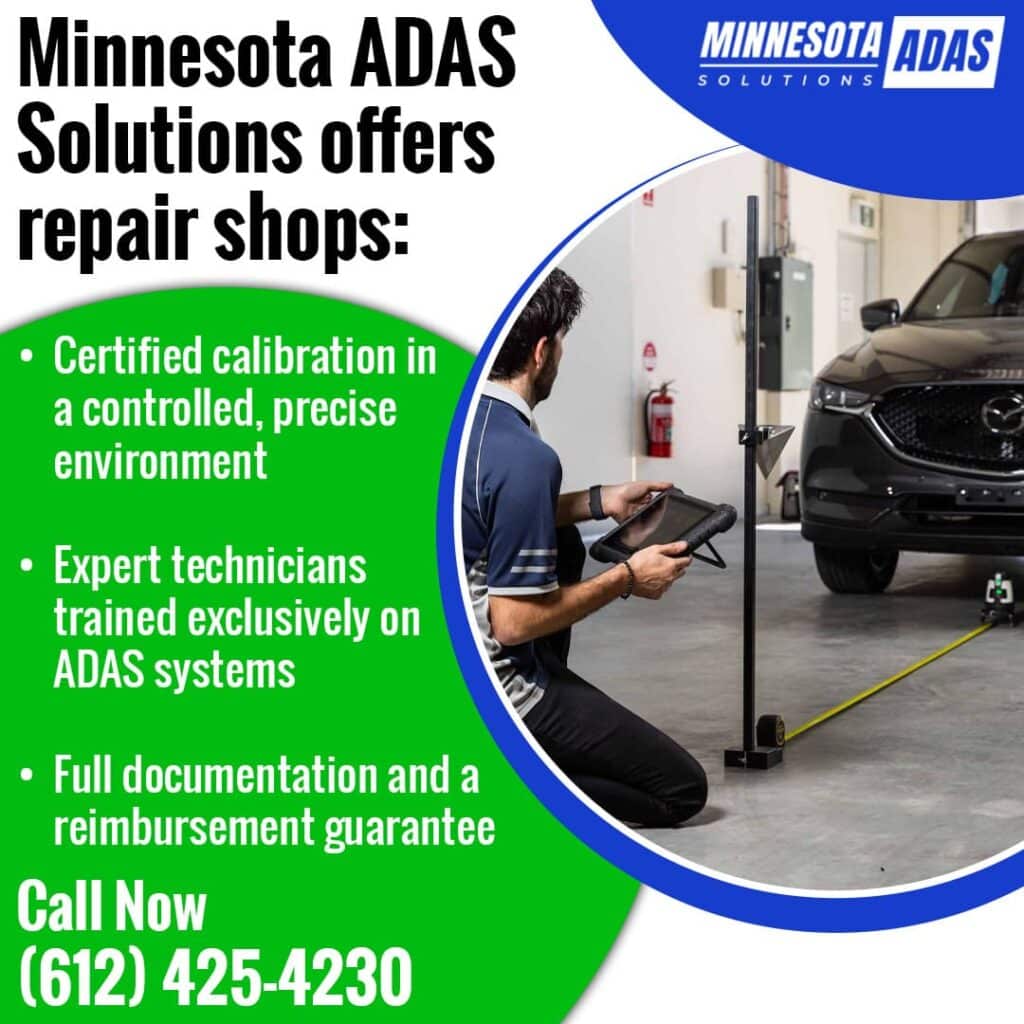
Partnering with Minnesota ADAS Solutions for Reliable Calibration
Partnering with a dedicated calibration provider gives your shop a dependable option for ACC services. Accurate calibration impacts both vehicle safety and your reputation as a service provider.
Expertise and Focus on Vehicle Safety
We deliver specialized calibration services in Bloomington, MN. Every vehicle is handled in a facility focused solely on ADAS systems, where cameras, radar, and sensors are adjusted in a controlled environment. Our certified tools follow manufacturer specifications, which allows systems to respond correctly in traffic and during emergencies. Skilled technicians can detect and correct even minor misalignments that could affect system performance, keeping vehicles operating safely on highways and city streets.
Benefits for Repair Shops and Vehicle Owners
Partnering with a dedicated provider like ours guarantees accuracy and verification. Shops receive thorough documentation of every calibration, which can be shared with clients, insurers, or service records. Fast turnaround minimizes downtime, helping you serve more customers efficiently. Vehicle owners can trust that their adaptive cruise control systems respond correctly to traffic conditions, with a full reimbursement guarantee protecting against incomplete work. By relying on us, your shop maintains credibility and can confidently offer ACC services without the uncertainties of mobile calibration.
Schedule Your ACC Calibration Today
Book your ACC calibration in Bloomington, MN, with Minnesota ADAS Solutions. Call us at (612) 425-4230 or email info@mnadas.com to set up your appointment. You can also visit our website to schedule your service online and keep your vehicle’s safety systems operating reliably.