
Accurate calibration of vehicle safety systems is vital for protecting drivers, passengers, and pedestrians. At Minnesota ADAS Solutions, we focus exclusively on advanced driver assistance calibration, providing collision centers with reliable, verified results. Our team specializes in diagnostics and calibration, addressing sensor, radar, and camera adjustments after repairs, including windshield replacements and bodywork.
Many collision centers face challenges maintaining the integrity of ADAS systems, which can lead to misaligned sensors, malfunctioning alerts, and compromised safety features. Choosing the right partner for calibration services in Bloomington, MN, allows your shop to deliver vehicles with fully functional safety systems. In this article, we outline the three most common mistakes collision centers make during ADAS calibration and explain how working with a certified facility can prevent errors. By following precise processes and professional standards, your team can restore each vehicle’s ADAS system reliably, maintaining performance and safety for every driver on the road.
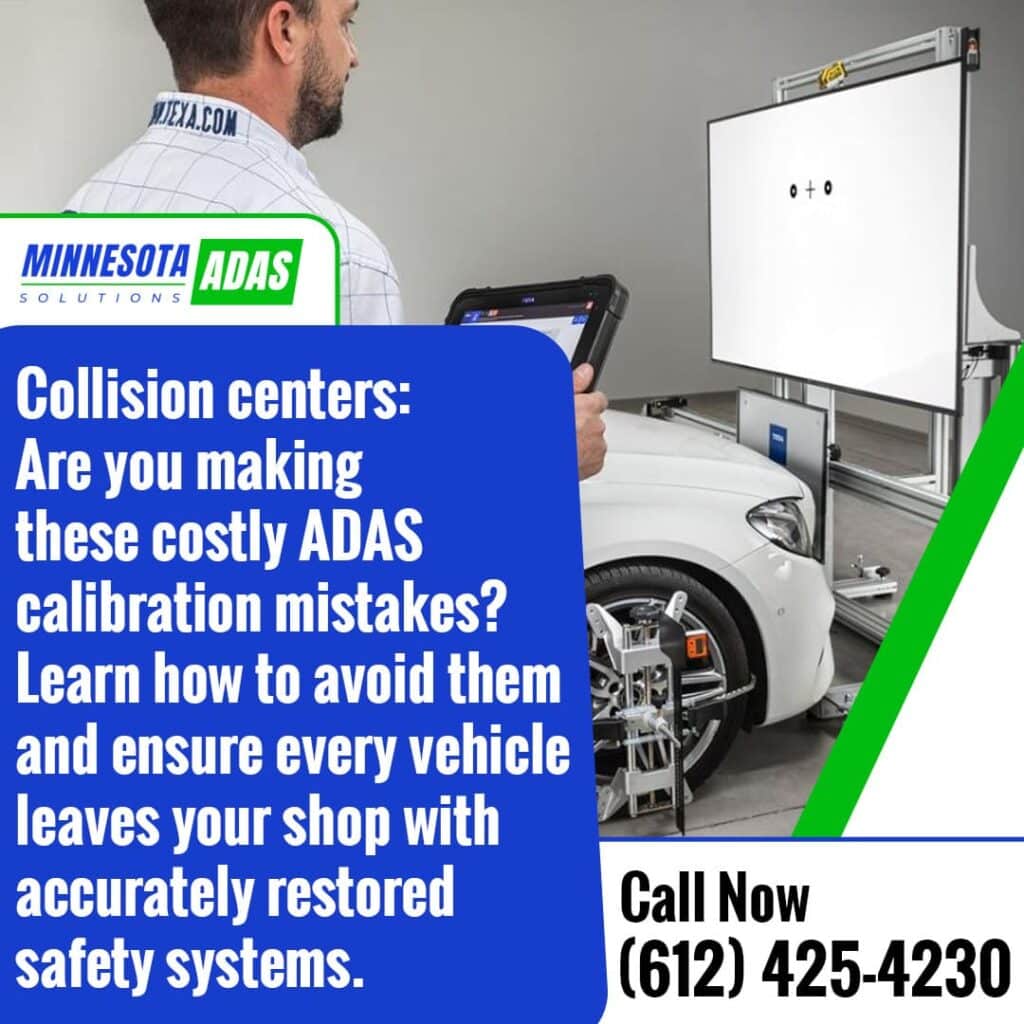
Why ADAS Calibration Is a Critical Step After Vehicle Repairs
Modern vehicles rely on sophisticated safety systems to respond quickly to changing road conditions. Even small adjustments or repairs can affect how these systems function, making professional calibration a necessary part of any post-repair process.
The Growing Role of Advanced Driver Assistance Systems (ADAS)
Advanced Driver Assistance Systems (ADAS) help vehicles detect and respond to road conditions to reduce accidents. These systems cover lane departure warnings, adaptive cruise control, blind-spot monitoring, and automatic emergency braking. Each system depends on ADAS sensor alignment and precise calibration for proper performance. Vehicles equipped with properly functioning ADAS technologies experience fewer rear-end collisions.
Most new vehicles now include at least one ADAS feature. Drivers rely on these systems to reduce risk and maintain safety on highways, city streets, and residential roads. Accurate advanced driver assistance calibration keeps these technologies responsive and consistent, preventing malfunctions that could compromise safety.
How Repairs Affect ADAS Accuracy
Even minor repairs can affect ADAS accuracy and performance. Repairs such as windshield replacement, bumper realignment, or body panel adjustments can shift cameras, sensors, or radar units by just a few millimeters. That small movement can alter how the system interprets the environment, resulting in delayed warnings, false alerts, or missed hazard detection.
For example, ADAS calibration after windshield replacement restores forward-facing camera alignment. Without recalibration, lane-keeping assistance might drift, adaptive cruise control may fail to maintain proper distance, and automatic emergency braking could engage incorrectly.
The Importance of Precision and OE Standards
Accurate ADAS diagnostics and calibration must follow manufacturer specifications in a controlled environment. Each automaker defines exact distances, target positions, and environmental requirements for calibration. Skipping these specifications or attempting calibration in inconsistent conditions can result in sensor misalignment and unreliable system performance.
Controlled indoor facilities replicate the manufacturer’s intended environment for calibration. This eliminates variables such as uneven floors, poor lighting, or vibrations that can compromise diagnostics and calibration. By following OE standards in a dedicated facility, collision centers can restore sensor accuracy, maintaining safety and operational reliability.
Mistake #1 – Performing ADAS Calibration Outside a Controlled Environment
ADAS calibration requires precise conditions to maintain the performance of vehicle safety systems. Many collision centers underestimate how much environmental factors can affect sensor alignment, which can lead to errors and compromised system functionality.
Why Controlled Conditions Matter
ADAS sensor alignment depends on stable conditions and exact positioning. Calibration requires a level surface, manufacturer-specified targets, and uniform lighting to properly position cameras and radar sensors. Even a minor deviation of just a few millimeters can cause lane departure systems or adaptive cruise control to operate incorrectly. Sensor misalignment is a common and leading cause of false alerts and degraded ADAS performance after repairs. Even small misalignments can cause incorrect warnings or missed detections, which is why precise calibration is critical. By conducting calibration indoors with stable conditions, collision centers can achieve repeatable, precise results.
Risks of Uncontrolled or Mobile Setups
Calibrating in uncontrolled environments produces unreliable results. Outdoor settings, uneven garage floors, or variable lighting can distort sensor readings, causing errors in object detection or collision avoidance responses. Mobile setups often lack calibrated targets and OE-compliant tools, increasing the risk that safety systems fail under real-world driving conditions.
The Correct Approach
The most reliable approach is calibration in a certified, controlled facility. Collision centers can restore sensor accuracy more consistently by using dedicated indoor facilities designed to meet manufacturer specifications. At Minnesota ADAS Solutions, we provide professional ADAS calibration services in Bloomington, MN, using controlled environments with precise lighting, level floors, and OE-approved calibration targets. This approach allows your team to return vehicles with fully functional and verified ADAS systems, giving drivers reliable performance across all safety features.
Mistake #2 – Skipping Post-Repair Calibration After Windshield or Collision Work
After a repair or windshield replacement, many collision centers overlook the step of recalibrating ADAS systems. This section highlights why skipping this process can create serious issues and how proper calibration restores vehicle safety.
Common Oversight in Collision Centers
Failing to perform calibration after repairs is a common but costly error. When windshields, bumpers, or mirrors are replaced, the slightest shift in sensors can affect system performance. Cameras and radar units rely on precise alignment to detect lane markings, objects, and surrounding traffic. If calibration is skipped, the vehicle may report inaccurate distances, misinterpret obstacles, or trigger alerts incorrectly.
Even small misalignments, just a few millimeters, can reduce sensor accuracy, impacting features like adaptive cruise control or lane departure warnings. Collision centers that neglect post-repair calibration risk sending vehicles back on the road with compromised safety systems, which could lead to accidents or liability claims.
The Safety Impact
Misaligned sensors create real-world safety risks. When sensors are off by even a small degree, lane-keeping assistance can drift or fail, forward collision warning may be delayed, and emergency braking might not activate promptly. These failures put both drivers and pedestrians at risk, especially in high-traffic areas or during emergency maneuvers.
Vehicles with properly calibrated ADAS features reduce crash rates compared with uncalibrated systems. Driving with misaligned sensors can effectively undo these safety benefits, leaving drivers exposed to hazards that the technology is designed to prevent.
The Right Practice
Recalibrate every time a camera, radar, or sensor is disturbed. Following manufacturer specifications after any repair restores sensor alignment and system reliability. Post-repair calibration should include both static adjustments, using precision targets and measured distances, and dynamic calibration that tests sensors during controlled vehicle operation.
Minnesota ADAS Solutions performs ADAS calibration after windshield replacement, bumper repair, or any work that could shift sensors. By completing detailed ADAS diagnostics and calibration, we restore the vehicle’s safety systems to the performance levels intended by the manufacturer.
Mistake #3 – Relying on Incomplete or Unverified Calibration Documentation
Accurate records are a critical part of any collision repair process. Without proper documentation, your team may face disputes with insurers or question the reliability of the work performed.
The Problem with Insufficient Proof
Incomplete calibration records expose repair shops to liability and insurance disputes. If your collision center does not maintain verified documentation, there is no clear evidence that calibration was completed according to manufacturer requirements. An incomplete proof leaves your shop vulnerable to claims if a safety system malfunctions, potentially increasing legal exposure and complicating insurance reimbursements.
Missing or partial reports also create uncertainty for technicians who may need to reference prior calibration details during follow-up repairs or vehicle inspections. Without this information, you risk repeated calibration errors or misaligned sensors that can affect system performance over time.
Why Documentation Matters
Detailed reports validate the accuracy of every calibration. Accurate documentation provides a complete record of sensor positions, camera alignment, and radar functionality, giving both your team and insurers tangible evidence that the vehicle meets manufacturer standards. Documented calibrations also support liability coverage by proving that repairs were conducted under proper procedures.
Shops maintaining detailed calibration records face fewer insurance disputes and reduced warranty claims. Proper documentation supports shop credibility, minimizes repeat repairs, and helps maintain smooth, efficient operations.
The Minnesota ADAS Solutions Standard
We deliver full calibration documentation and warranty support. Every service includes verified calibration reports, data logs, and photographic evidence of sensor alignment. By providing these detailed records, we help your collision center demonstrate compliance to insurers and maintain a clear audit trail for each vehicle. Partnering with us allows your team to handle ADAS calibration services in Bloomington, MN, with confidence, knowing every procedure is documented and verified.
How Collision Centers Benefit from Professional ADAS Calibration Partners
Accurate calibration requires specialized equipment, trained technicians, and precise processes. Working with a dedicated partner allows your collision center to focus on repairs while knowing the vehicle’s safety systems are handled professionally.
Reducing Liability and Insurance Risk
Partnering with certified calibration experts protects shops from costly errors. When you perform ADAS work without the proper tools or controlled conditions, even small misalignments can lead to system malfunctions. This exposes your shop to insurance claims and potential liability.
Certified ADAS facilities follow manufacturer specifications for every sensor, camera, and radar system. Vehicles with misaligned sensors can experience false braking events or missed lane departure alerts, both of which may increase accident risk. By collaborating with professionals, your shop can avoid disputes with insurers and confirm that every calibration meets required standards.
Faster Turnaround, Greater Accuracy
Certified ADAS facilities like Minnesota ADAS Solutions complete most calibrations in about 90 minutes. Working with skilled technicians allows you to maintain workflow efficiency without sacrificing precision. Each vehicle undergoes detailed diagnostics and calibration, including sensor alignment and verification. Collision centers benefit from predictable timing, allowing repaired vehicles to return to clients quickly. Controlled indoor calibrations reduce errors compared to unverified or makeshift setups, keeping operations both fast and reliable.
Reliable Collaboration for Safety and Efficiency
Working with a trusted calibration partner strengthens repair quality and safety. Outsourcing ADAS calibration to a certified facility guarantees consistent results across all vehicle types. Your team receives complete documentation of every calibration, helping manage accountability and maintain customer trust. By relying on verified data, your collision center avoids mistakes that may occur when performing calibration with limited resources or outdated equipment.
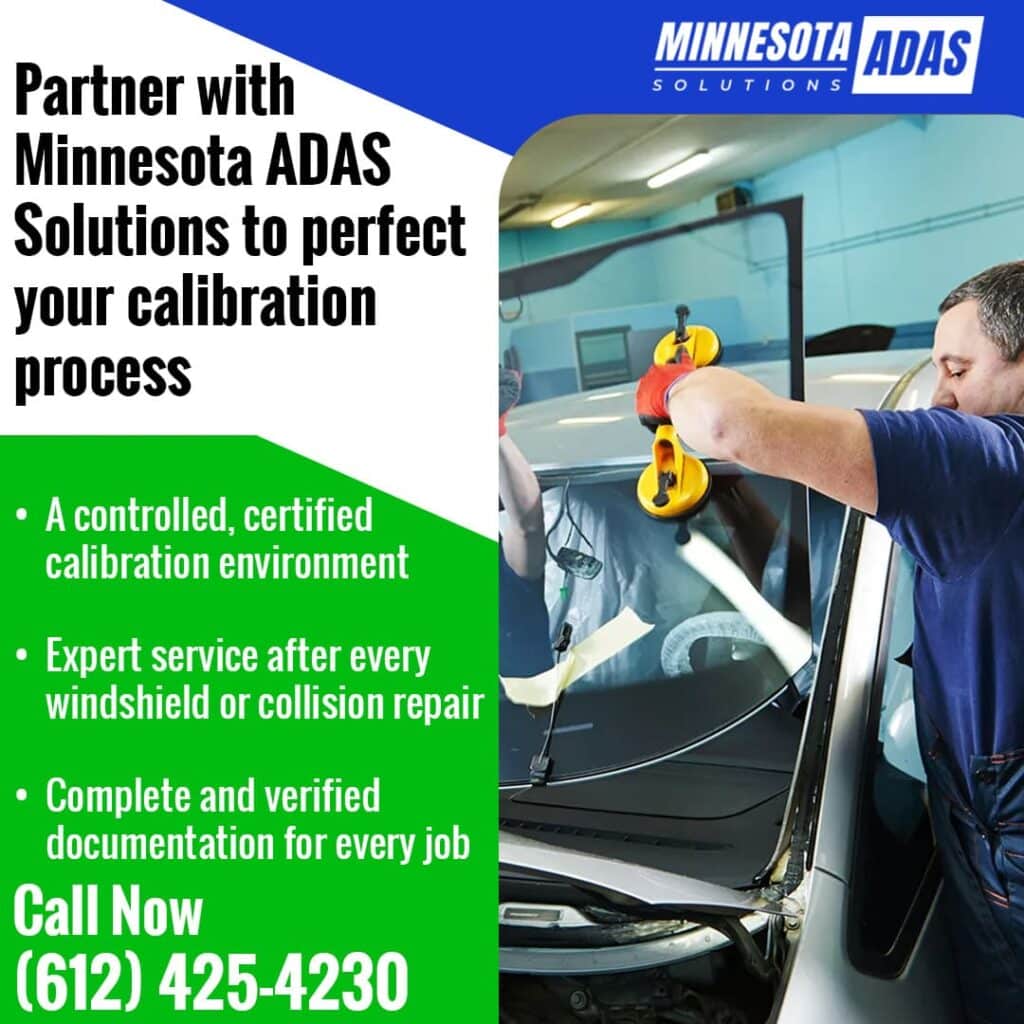
Partner with Minnesota ADAS Solutions for Certified ADAS Calibration Services in Bloomington, MN
Accurate calibration of advanced driver assistance systems can be challenging without specialized tools and trained technicians. Working with a certified facility allows your team to rely on precision equipment and standardized procedures for every vehicle that comes through your shop.
Expert Calibration for All Vehicle Makes and Models
Minnesota ADAS Solutions provides calibration services for all major vehicle brands. Our facility handles a wide range of vehicles, from domestic sedans to luxury imports, and all calibration processes follow manufacturer specifications. We adjust radars, lidars, cameras, and ultrasonic sensors to restore the vehicle’s ADAS functions accurately. Each system requires careful measurement and alignment, and even a few millimeters of misalignment can alter performance. By providing complete support across multiple makes and models, your collision center can deliver vehicles with restored functionality, avoiding repeat repairs and customer dissatisfaction.
Commitment to Safety and Precision
Our mission is to improve driver safety through accurate calibration. Every procedure follows the manufacturer’s specifications to adjust sensors and cameras precisely. Our team performs thorough diagnostics and reports results for each vehicle, giving your shop verifiable proof that safety systems have been restored. This level of detail reduces potential liability and helps shops maintain the reliability of every repair.
Schedule a Service or Partner With Us
Collision centers and repair shops can rely on Minnesota ADAS Solutions for precise ADAS diagnostics and calibration. Contact our certified team in Bloomington, Waite Park, or at any of our Minnesota locations, to book a service or discuss partnership opportunities. Call us at (612) 425-4230 or email info@mnadas.com to connect with our experts and keep your vehicles’ advanced safety systems performing at their best.